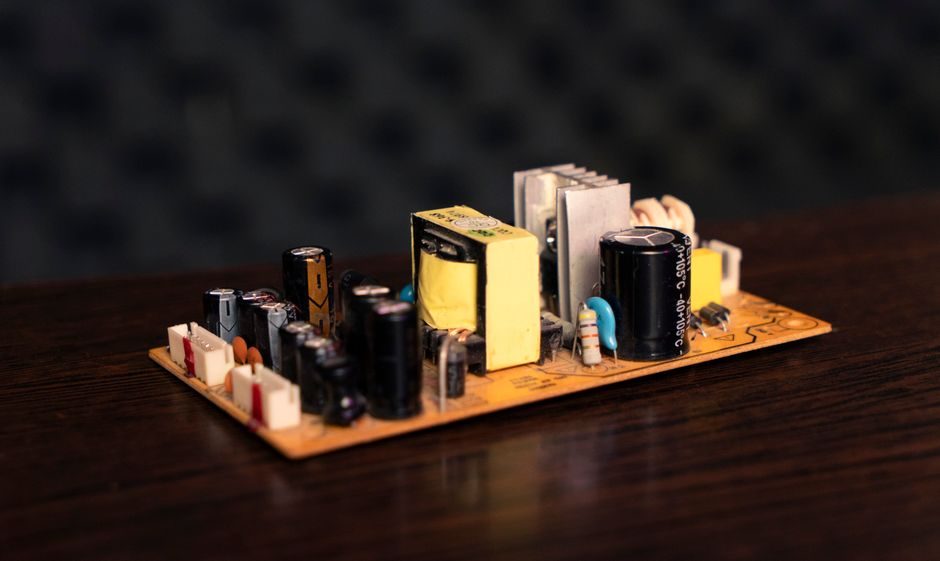
An 8-channel remote I/O controller priced in the $89–$96 band on global B2B marketplaces exposes 8DI/AI plus Modbus TCP, RS-485, and Wi-Fi in a single DIN-rail block, confirming that remote I/O modules are I/O-density products, not transport products [S3].
An unmanaged 16-port industrial Ethernet switch such as the Red Lion N-Tron NT116 is purpose-built for L2 frame forwarding between Ethernet devices on the plant floor, with no analog or discrete I/O terminals and no Modbus mapping [S1]. That single product reality — one exposes signals, the other moves frames — is the decision axis this article quantifies.
Definition and Functional Scope
A remote I/O module is a signal-conditioning gateway: it samples discrete inputs, analog inputs, or thermocouple/RTD signals at the field end and republishes them as process data over a fieldbus or industrial Ethernet protocol. The M-System R3-DC16AS, part of the R3 series discrete-output family, is a 16-point DO module whose datasheet allocates 27.5 mm of DIN-rail width and full terminal-assignment tables — a hardware layout that makes no sense for a frame-forwarding device [S6]. The module's job ends when the process variable is on the wire as a register.
An industrial Ethernet switch operates one layer below that on the OSI stack: it receives Ethernet frames on one port and retransmits them on another, with industrial-grade hardening (extended temperature, conformal coating, vibration tolerance, redundant power). The Ethernet Direct Iguana Series uses a store-and-forward architecture with CSMA/CD, IEEE 802.3/802.3u/802.3x compliance, 1500 Vrms Ethernet isolation, and IP-20 housing — all transport-layer concerns [S2]. A switch has no concept of "channel 1 input high" or "4–20 mA loop trim."
Selection Criteria, Line by Line
Channel count vs port count: remote I/O modules are specified in DI/AI/DO/AO points per module (8, 16, 32 are common), and the M-System R3-DC16AS datasheet shows 16 discrete outputs in 27.5 mm of rail width [S6]. Industrial switches are specified in Ethernet ports (5, 8, 16 are common), and the Iguana Series covers 5-port IUE-413E(C), 6-port IUE-421E(C), 8-port IUG-800E(C), and similar unmanaged SKUs [S2]. These two metrics do not substitute for each other.
Protocol stack: a remote I/O module typically supports Modbus TCP/RTU, PROFINET, EtherCAT, EtherNet/IP, or CC-Link IE on the network side. The 8-channel controller cited above publishes its 8DI/AI as Modbus TCP, RS-485 Modbus RTU, and a Wi-Fi serial server path [S3]. A switch supports none of those application-layer protocols; it only passes L2 frames and may add ring redundancy features such as Ethernet Direct's Direct Ring on redundant IRE-series models [S2].
Environmental hardening: switches are usually rated by operating temperature and conformal coating. The Iguana Series is rated −40 °C to +75 °C operating, with optional conformal coating for moisture, dust, and corrosion protection, plus IEC-compliant shock, vibration, and free-fall tests [S2]. The Red Lion NT116 is likewise aimed at "mission-critical" industrial applications requiring dependable performance [S1]. Remote I/O modules carry their own environmental ratings but their hardening budget is usually spent on channel-to-channel isolation, surge protection on inputs, and wrong-wiring protection — for example, the KEYENCE GC-R48 safety remote I/O specifies Min. 11 V/2 mA ON level, Max. 5 V/1.5 mA OFF level, and a 100 m maximum safety cable length [S7].
Safety and integrity: a safety-rated remote I/O such as the KEYENCE GC-R48 provides PNP transistor safety outputs classified DC-13/Type 0.5 with protected outputs and a 3 mA short-circuit current limit per channel [S7]. A standard industrial switch has no equivalent per-channel safety output; functional safety on switches is generally limited to compliance with standards like IEC 61850-3 (substation) or EN 50155 (rail), not per-port safety logic. Mixing the two roles at specification time is the most common sourcing error on small skid builds.
Side-by-Side Comparison on Decision Criteria
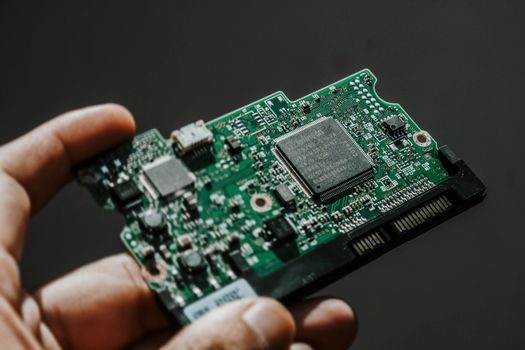
Cost per signal vs cost per port: the 8-channel remote I/O at $89.76–$96.49 works out to roughly $11–$12 per I/O channel including comms [S3]. A 16-port unmanaged industrial switch in the same vendor tier costs more per port in absolute terms but the comparison is meaningless — one price is per signal, the other is per Ethernet drop. Spec sheets that ask for "an 8-channel industrial switch" almost always mean a remote I/O module was the real requirement.
Integration effort: a remote I/O module requires PLC tag mapping, GSD/GSDML file import for PROFINET/Profibus, or Modbus register polling — a multi-hour engineering task even on small nodes. An unmanaged industrial switch is plug-and-play at the L2 level, with no tag database, and the only configuration is DIP-switch ring-mode selection on redundant variants like the Iguana IRE-500E(C) [S2].
Failure mode: a remote I/O module failure takes the connected field device offline at the process layer — the PLC loses that input or output until the module is replaced. An industrial switch failure typically partitions the network, dropping all downstream Ethernet devices but leaving the field wiring intact. The blast radius of a switch failure is therefore larger in device count but smaller in process-signal complexity.
Topology position: remote I/O modules sit at the field edge, one hop from sensors and actuators, with the network port facing the controller. Industrial switches sit in the aggregation layer, fanning out to multiple remote I/O nodes, HMIs, and vision systems. Putting a switch where a remote I/O is needed yields an Ethernet device with zero usable I/O; putting a remote I/O where a switch is needed yields an 8-port I/O block that does not extend the network.
Who Each Is For, and Who Each Is NOT For
Choose a remote I/O module when the requirement reads: "I need to read 8 limit switches and publish them to a Modbus TCP PLC" or "I need 16 solenoid outputs on this header, controlled from a PROFINET controller." The M-System R3-DC16AS, with 16 DO points and a 27.5 mm DIN-rail footprint, is the textbook answer for the second case [S6]. A remote I/O is NOT for extending the network between two Ethernet devices — that is a switch job.
Choose an industrial Ethernet switch when the requirement reads: "I need to connect a PLC, two HMIs, a vision camera, and four remote I/O nodes in a ring with 100 m cable runs" or "I need a −40 to +75 °C unmanaged switch with conformal coating for a wet area." The Iguana Series explicitly lists humid/harsh-environment, surge, and corrosion use cases, plus CE/FCC compliance, 1500 Vrms isolation, and a 5-year warranty [S2]. A switch is NOT for digitizing 4–20 mA loops or driving 24 VDC solenoids directly.
Hybrid cases exist: a controller with built-in switch ports (e.g., a PLC with an integrated 3-port switch) can collapse one device out of the BOM, but it does not change the functional split. A safety controller like the KEYENCE GC-R48 combines safety remote I/O with interlock logic, but its 8-pin interlock switches still terminate on safety-input channels (Min. 11 V/2 mA ON, Max. 5 V/1.5 mA OFF) rather than on Ethernet ports [S7].
Use Cases From Recent Vendor Activity

Conformal-coated switching for wet lines: the Ethernet Direct Iguana Series is a 2026 catalog update covering unmanaged, gigabit, and redundant models with conformal coating, −40 to +75 °C operation, redundant power inputs, and Direct Ring redundancy on the IRE-500E(C) family [S2]. Typical placement: between a wet-area PLC panel and outdoor remote I/O drops.
High-density mission-critical switching: the Red Lion N-Tron NT116 is a 16-port unmanaged industrial Ethernet switch announced for industrial applications needing dependable performance for mission-critical applications, positioned for control cabinets where 16 Ethernet drops converge [S1].
Multi-protocol signal exposure: low-cost 8-channel remote I/O controllers exporting 8DI/AI over Modbus TCP, RS-485, and Wi-Fi simultaneously are now standard catalog lines, with prices around $90 per node on global marketplaces [S3]. These nodes sit at the very edge, often powering small skid retrofits.
Safety interlock I/O: the KEYENCE GC-R48 is a remote I/O module in the safety-controller family, with Type 3 PNP-compatible safety inputs and PNP safety outputs rated DC-13, Type 0.5, with a maximum 100 m cable length and a 3 mA short-circuit current limit per input [S7]. It coexists with — but does not replace — industrial switches on the same machine.
Limits, Failure Modes, and Common Sourcing Errors
Common sourcing error #1: specifying an "industrial Ethernet I/O module" and receiving a switch. If the deliverable is per-channel Modbus registers or PROFINET slots, the part number must be a remote I/O, not a switch SKU like the NT116 [S1] or the IUE/IUG/IRE family [S2].
Common sourcing error #2: using a remote I/O module as a network extender. A single-port remote I/O node with a daisy-chained Ethernet uplink still uses only one MAC address on the network; it does not multiply Ethernet drops the way a switch does. To get more Ethernet ports, you need a switch or a controller with switch ports built in.
Common sourcing error #3: ignoring safety classification on remote I/O. The GC-R48 explicitly states its safety inputs accept "Contact output device or PNP output device" with Type 3 characteristics, and its safety outputs are PNP DC-13/Type 0.5 protected outputs — these ratings are not interchangeable with a generic 24 VDC DO module like the R3-DC16AS, which is a standard discrete output, not a safety output [S6][S7].
Common sourcing error #4: under-specifying the environment. A switch rated 0–60 °C will fail in an unventilated outdoor cabinet at +50 °C ambient plus solar load. The Iguana Series −40 to +75 °C rating plus conformal coating is the spec target for those sites [S2].
Standards, Sourcing, and Spec Discipline
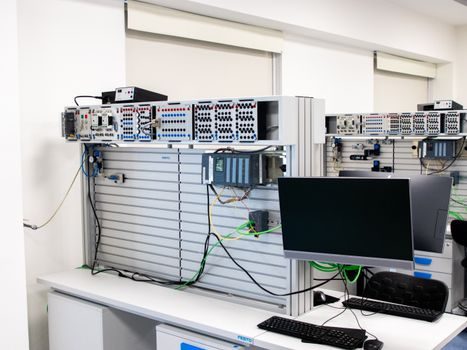
For industrial Ethernet switches, key compliance targets are IEEE 802.3/802.3u/802.3x for L2 operation, CE/FCC for EMI, and IEC 60068-family shock/vibration tests, all of which the Ethernet Direct Iguana Series documents [S2]. Red Lion positions the NT116 for industrial applications requiring dependable performance for mission-critical applications without claiming a specific safety standard [S1].
For remote I/O modules, the relevant documents are the fieldbus standards (IEC 61158 / IEC 61784 for PROFINET, EtherCAT, etc.), the safety standard IEC 61508 / ISO 13849 for safety-rated modules such as the GC-R48 (which lists Type 3 input behaviour and PNP DC-13/Type 0.5 outputs) [S7], and the EMC immunity standards applicable to industrial automation. Confirming these on the datasheet — not on the marketing page — is the cheapest way to avoid retrofit costs.
For deeper decision criteria, a remote I/O selection guide 2026 walks through variant, protocol, and duty-cycle trade-offs, while an HMI vs industrial display spec map covers the operator-side display decisions that often sit on the same Ethernet backbone. The two product types are complementary on the same skid, but they are not substitutes.
For component-level specifications, see o ring.