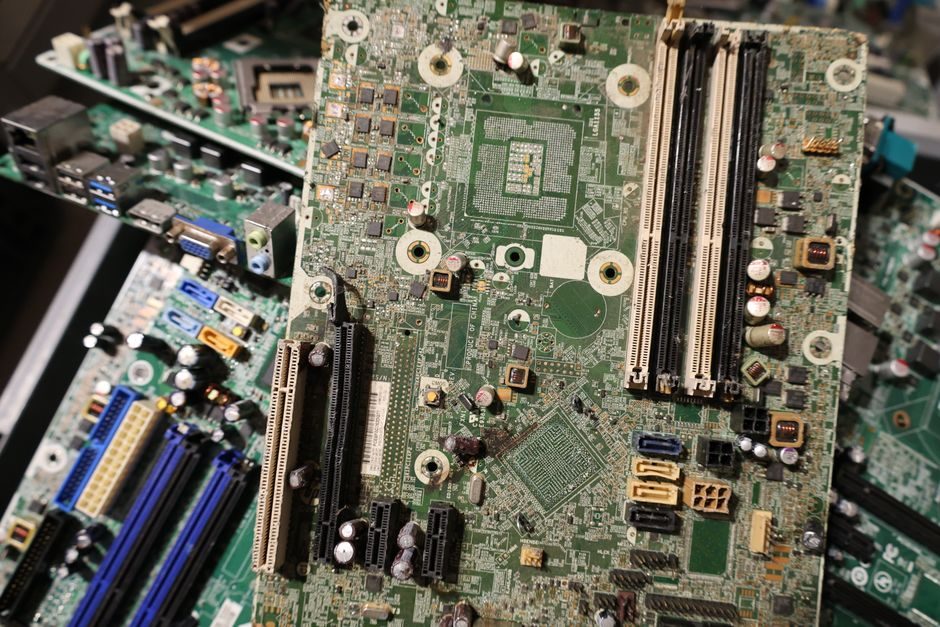
A fieldbus gateway such as the Bürkert Type ME43 terminates a proprietary sub-bus (büS/EDIP) and exposes it on Industrial Ethernet protocols including PROFINET, EtherNet/IP, Modbus/TCP, PROFIBUS DPV1 and CC-Link, with ATEX/IECEx variants documented in the 889.7 kB hazardous-area supplement [S1]. A remote I/O fieldbus coupler such as the Weidmüller UR20-FBC-MOD-TCP-ECO instead concentrates up to 16 u-remote modules on a single 100 Mbit/s Modbus/TCP segment, with 48 Mbit/s on the backplane and 1 kByte of process, parameter and diagnostic data per coupler [S2]. Both devices look similar in a control-cabinet photo, but the function they perform is fundamentally different: the gateway is a protocol translator, the remote I/O coupler is an I/O concentrator.
Specifying the wrong one is one of the most common green-field errors in 2026 plant builds, because both terms get used interchangeably in vendor brochures. The practical rule a senior engineer applies is: if the only thing the system needs is more DI/DO/AI/AO points on a bus that is already chosen, a remote I/O module beats a gateway on cost per point. If the system needs to coexist with another protocol family (e.g. PROFIBUS DP on one skid and PROFINET on the plant backbone, or a proprietary sub-bus from a valve island), a fieldbus gateway is mandatory — no amount of extra I/O solves a protocol mismatch.
What Each Device Actually Does on the Wire
A fieldbus gateway functions as a two-port protocol converter: on one side it speaks the sub-bus or lower-level network, on the other side it speaks the upper-level Industrial Ethernet or PROFIBUS segment, and the mapping is described in objects the PLC engineer imports as a GSD/GSDML/EDS file [S1]. The Bürkert ME43 documentation set, weighing 4.4 MB for the English operating instructions alone, explicitly enumerates the upper-side protocols — büS to Industrial Ethernet, PROFIBUS DPV1, CC-Link, plus the CANopen supplement at 368.4 kB — confirming that the upper side is multi-protocol, not single-protocol [S1]. The CANopen supplement and the büS/EDIP cabling guide (3.2 MB EN) further prove the lower side is a structured sub-bus with its own addressing, not a loose bundle of discrete wires [S1].
A remote I/O module coupler, by contrast, is single-protocol on the upper side — the Weidmüller UR20-FBC-MOD-TCP-ECO is hard-locked to Modbus/TCP at 100 Mbit/s with Full/Half Duplex, Auto-MDI/X and Autonegotiation, and the backplane runs the u-remote system bus at 48 Mbit/s to a maximum of 16 slice I/O modules per coupler [S2]. Pepperl+Fuchs' FB Remote I/O Field Unit FB9248 pushes the density the other direction: up to 48 single-width or 24 dual-width I/O modules per bus termination, with a 24 V DC / 115 V AC / 230 V AC rated supply that depends on the power-feed module, and screw terminals rated up to 10 mm² on the supply side [S4]. In other words, the gateway's complexity is in its protocol stack, the remote I/O's complexity is in its point count.
Selection Criteria: Five Specifications That Decide the Choice
Upper-side protocol count is the first hard fork: a gateway must list at least two upper-side protocols in its datasheet (or one upper and one lower sub-bus); a remote I/O coupler lists exactly one upper-side protocol, and a GSDML/ESI/EDS file does not exist for it because it is a slave, not a translator [S1][S2]. Second, I/O density per node: the Weidmüller ECO coupler is rated for 16 u-remote modules per head [S2], the Pepperl+Fuchs FB9248 head is rated for up to 48 single-width modules [S4], and a gateway's I/O capacity is only what the lower sub-bus can address — for the ME43 that is the büS/EDIP device count, not a discrete I/O count. Third, backplane or sub-bus speed: 48 Mbit/s on the u-remote system bus [S2] versus the deterministic cycle times büS/EDIP targets for valve islands and process instruments, which are tuned for sub-10 ms update on small device counts rather than aggregate I/O throughput.
Fourth, hazardous-area certification scope: a gateway like the ME43 ships a separate ATEX/IECEx supplement (889.7 kB) and a separate UL supplement (863.2 kB) [S1], because the unit itself sits in Zone 2/22 or Div. 2 and bridges into the safe area. A remote I/O coupler's certification is typically tied to its I/O modules, not the head — the FB9248 is a field-mount unit whose rating propagates from the installed I/O cards [S4]. Fifth, configuration tooling: gateways ship with a software manual plus a central configuration management supplement (1 MB) plus a cabling guide (3.2 MB) [S1], a footprint that screams "you will spend a day on this"; remote I/O couplers ship with a STEP model and a user manual only, and the bulk of the engineering effort goes into the GSDML of the I/O modules, not the head [S2].
Decision Matrix: Gateway vs Remote I/O Coupler

Lining the two up against four decision criteria: on protocol-bridging, the gateway wins outright because the remote I/O coupler is a slave on one fixed bus and cannot translate [S1][S2]. On I/O density per node, the remote I/O coupler wins — 16 modules on the Weidmüller ECO and 48 single-width modules on the Pepperl+Fuchs FB9248 [S2][S4], against the gateway's "whatever the sub-bus carries" which is usually tens of process instruments, not hundreds of discrete I/O. On hazardous-area flexibility, the gateway has a published ATEX/IECEx supplement as a head-level approval [S1], while the remote I/O field unit FB9248 carries its rating through the installed I/O population [S4] — both approaches work, but the documentation cost sits in different places. On configuration engineering hours, the remote I/O coupler is materially cheaper: the ME43 gateway requires importing büS objects, mapping them to the upper-side protocol, and maintaining the central configuration database, with three separate manuals totalling roughly 9 MB of PDF [S1]; the UR20-FBC-MOD-TCP-ECO drops onto the segment and advertises 1 kByte of process, parameter and diagnostic data per the datasheet, no manual object-mapping required [S2]. For a fuller cross-protocol view, see the Fieldbus Gateway Spec-Map 2026.
Use Cases That Force One or the Other
A skid with 32 solenoid valves, six mass-flow controllers and a pH probe from a single valve-island vendor, integrated into a PROFINET plant backbone, is the textbook gateway case: the ME43 sits on the skid, translates büS/EDIP to PROFINET, and the PLC sees one device on the network instead of 40 [S1]. A packaging line with 256 digital inputs from proximity sensors, 64 digital outputs to relays, and 24 analog inputs from temperature transmitters, all on a single Modbus/TCP segment, is the textbook remote I/O case: the Weidmüller UR20-FBC-MOD-TCP-ECO handles the head, the I/O modules behind it handle the points, and no protocol translation is needed because the PLC and the I/O already speak the same Modbus/TCP [S2]. Mixed systems are common: a skid builder ships a gateway, and the end-user bolts remote I/O behind it on the plant side — this is also the pattern where a protocol gateway gets mislabelled as a "fieldbus gateway" in the purchase order, and the engineer inherits the resulting configuration debt.
Failure Modes and Specification Traps
Three traps come up repeatedly. First, treating the gateway as an I/O concentrator: if the sub-bus is already at its device-count limit, adding more field instruments will not work regardless of what the gateway's head-spec says, because the limitation is on the lower side, not the upper. Second, ignoring the backplane speed on remote I/O: the Weidmüller u-remote system bus tops out at 48 Mbit/s [S2], which is fine for digital I/O and slow analog, but a stack of high-speed analog inputs sampled at 1 kHz will choke it — at that point a linear module approach with dedicated analog cards on a faster fieldbus is the right answer. Third, mixing hazardous-area certifications: the ME43's ATEX/IECEx supplement covers the gateway as a head, but the büS devices downstream carry their own ratings, and the engineer must sum the two — a single device with a lower rating voids the whole chain. The Weidmüller ECO coupler's UL file E141197 [S2] covers the head only, not the I/O behind it, which is a similar split-responsibility pattern.
When a Gateway Is the Wrong Tool
Specifying a gateway to "future-proof" a system that has no current protocol mismatch is a classic over-spec. The ME43 documentation footprint — 4.4 MB operating instructions, 821.7 kB software manual, 653.1 kB f(x) configuration manual, plus three supplements [S1] — is the real cost driver, not the unit price. For homogeneous Modbus/TCP or PROFINET panels with I/O counts under 64, a remote I/O coupler with discrete I/O modules and a relay module for the output side will cut panel cost, cut configuration hours, and remove a single point of failure. The gateway earns its slot when there are at least two protocols in play, when the sub-bus carries more than 16 process devices, or when the cabinet sits in a Zone 2 area and the bridge to the safe area must be a single certified device.
Next signal to watch: the WAGO 750-333-025-000 (2nd-generation PROFIBUS DP coupler, 12 MBd) and the Weidmüller 2614380000 (IP20 PROFIBUS DP-V1 remote I/O fieldbus coupler) both remain in active distribution as of late July 2026 [S3], confirming PROFIBUS DP is not being deprecated by the major European I/O vendors despite the PROFINET push. Track whether Pepperl+Fuchs publishes a next-generation FB9248 variant with PROFINET upper-side in the next two quarters — that release will signal whether the remote I/O head is finally collapsing into the gateway category, or whether the two product lines stay distinct.