A remote pump station that wires a VFD, RTU, level probe and pressure transmitter through uncertified terminal blocks is the single most common audit finding on greenfield lift stations and booster skids, and the four certification gates that close it are zone match, electrical rating, ingress, and traceable third-party test data [S2][S7].
Practical baseline at 600 V class: screw terminal blocks with 2.5 mm² max core cross-section, removable construction, color-coded by function (blue for neutral, green for protective earth), and a packaging unit of 5 pieces for K-System or equivalent I/O carriers, per published datasheet values [S7].
Gate 1, ATEX/IECEx Zone match for terminal and junction boxes
Zone classification must be set before any terminal block is ordered: Zone 1 for the pump-skid junction box and Zone 2 for the marshalling cabinet are the two typical assignments on a remote pump station, and the chosen block must carry an Ex marking that explicitly covers that zone, not a generic "Ex e" claim [S2]. Pepperl+Fuchs K-System accessories list a packaging unit of 5 pieces and Ex-relevant classifications under ECLASS 13.0 27219090, which is the auditable cross-reference auditors check against the issued IECEx CoC or EU Type Examination [S7].
Blocks fitted inside an Ex e enclosure have to satisfy the creepage and clearance distances of IEC 60079-7, and the certificate scope must list the rated conductor cross-section, not just a generic voltage figure. Common failure during audits: the terminal block has an ATEX certificate for 4 mm², but the installer has landed 6 mm² lugs on it. The certificate scope is the binding number, not the catalog headline.
Gate 2, electrical rating, UL, CE, IEC and the 600 V question
Three electrical marks show up on a remote pump station spec: UL 1059 for the North American market, CE under the LV Directive for Europe, and an IEC 60947-7-1/-7-2/-7-3 rating for the engineering baseline. A 3-pin screw terminal block rated to 600 V, 24 A with a 2.5 mm² conductor range, such as the KF-ST-5BU used with K-System I/O modules, fits the typical 24 V DC signal and 120/230 V AC auxiliary power lanes found at a remote pump station [S2].
For barrier terminal blocks the datasheet typically lists 300 V at 10 A, 600 V at 20 A, and a 2.5 mm² wire range, which covers most pump-station analog loops, and the alternative 2-pin KC-ST-5GN at 2.5 mm² and 4 g unit mass gives a 600 V class option in green for protective-earth or signal-isolated circuits [S7]. CE-marked Chinese-made high-current PCB terminal blocks from Ningbo and Cixi suppliers typically carry both UL and CE marks on the same catalog line, with ISO 9001 and ISO 14001 management certification at the factory level, but those management marks are not a substitute for the product-level UL/CE evidence [S10].
Gate 3, IP66 ingress and the marshalling cabinet reality
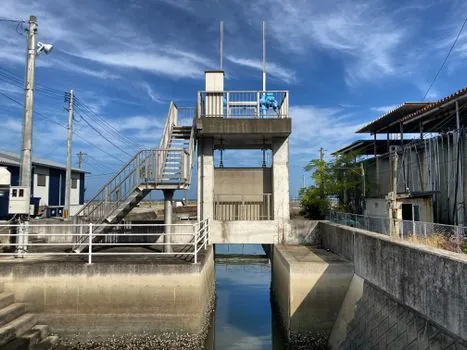
Remote pump stations run outdoors, often at a riverbank or wellhead where humidity and dust load are continuous, and the marshalling cabinet must be rated IP66 minimum to keep the terminal block assembly serviceable over a 10-year maintenance interval. Leipole and other barrier-block datasheets list DIN-rail and direct panel mount as the two standard fitments, but neither the rail nor the block contributes to the IP rating on its own; the cabinet door seal, gland plate and cable gland are what the IP66 test actually measures [S6].
A typical audit defect: the terminal block is correctly specified but the cable gland is wrong, so the whole enclosure is downgraded. Stainless-steel glands rated to the same IP66 with the right thread standard (metric M20/M25 or NPT 3/4") are the matching part. Push-in or PUSH-SNAP spring terminal blocks from Chinese vendors (Degson, Joinect) are increasingly offered for fast-loop marshalling, with pre-opened springs that accept a range of wire sizes, but the spring mechanism has to be specified to the same IEC 60947-7 family and the same ATEX/IECEx scope as a screw terminal would be [S3][S9].
Gate 4, traceable test data and the certificate scope audit
The most expensive finding on a remote pump station audit is not a missing CE mark, it is a CE mark that traces back to a test report issued for a different model or a different voltage class. A defensible file needs the issued test report number, the issuing lab's accreditation scope (ISO/IEC 17025), and a side-by-side check that the catalog model number, the rated voltage, and the rated conductor cross-section all match the certificate schedule [S10].
For stations that also carry a remote I/O module over Ethernet-APL or HART, the terminal block sits at the same hazardous-area boundary as the I/O, and a SIL-capable SIL-2 or SIL-3 block family from the same vendor simplifies the safety-case cross-reference [S2]. Routine supplier-vetting steps: confirm the certificate is within validity dates, that the model code in the schedule is exact (not a wildcard or a "series" statement), and that the manufacturer's quality system has been audited within the past 12 months by an accredited body.
Who this checklist is for, and where it does not apply
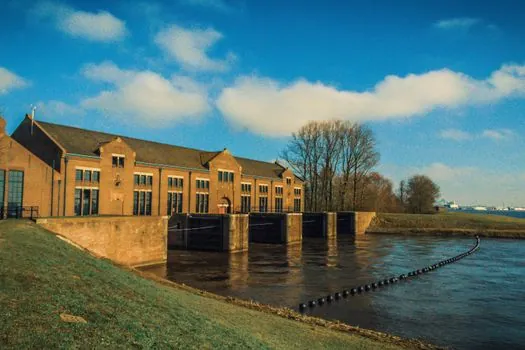
This four-gate checklist applies to outdoor, fixed remote pump stations in water utility, irrigation, oilfield injection and booster service, where an RTU or PLC is interfacing field devices to a SCADA master. It does not apply to cabinet-internal signal-level marshalling in a benign factory environment, where a general-purpose UL 1059 block with 300 V / 10 A rating is sufficient and ATEX does not apply [S6][S7].
It also does not substitute for a SIL loop audit when the pump is part of a safety function, such as an emergency shut-down or over-pressure trip; the SIL certificate is per-loop, not per-block, and a SIL-2 block is not the same as a SIL-2 loop. Station designers who confuse the two end up over-specifying the block while leaving the loop unverified, which is the more common failure mode than the reverse.
Comparison of the three common block families for a remote pump station
On the four decision criteria, ATEX scope, voltage class, conductor range, and tooling, the three common families line up as follows: (1) Pepperl+Fuchs KF/KC screw terminals for K-System, with explicit Ex e and ECLASS-coded documentation, 2.5 mm² max conductor, screw tooling, and a 5-piece packaging unit optimized for modular I/O service; (2) barrier terminal blocks (Leipole-style), 300 V/10 A to 600 V/20 A, 2.5 mm² range, screw or fast-on, no integrated Ex scope, cheaper for non-hazardous marshalling; (3) push-in / PUSH-SNAP spring terminals (Degson, Joinect) with pre-opened springs, 28-12 AWG range typical, faster loop wiring, Ex scope varies by part number and must be checked on a per-catalogue-line basis [S2][S3][S6][S7][S9].
For a Zone 1 pump-skid junction box, only the first family (with confirmed Ex certificate) is appropriate; for a Zone 2 RTU cabinet, any of the three works as long as the block's certificate explicitly covers Zone 2; for a non-hazardous indoor booster, the barrier or push-in families are acceptable and save cost. The weather station protection philosophy (IP66 enclosure, UV-resistant cable glands, surge protection on analog lines) is directly applicable to a remote pump station cabinet, and the same checklist logic carries over.
On 2026-08-12, the published K-System datasheets (KF-ST-5BU 3-pin screw, KC-ST-5GN 2-pin screw) remain the current standard catalog references for K-System module accessories [S2][S7]. Trackable signals for the next 90 days: the IEC 60079-7 revision status for creepage/clearance tables, the IECEx CoC renewal cycle for K-System terminal accessories, and the supplier-side price lead time for 2.5 mm² barrier blocks with dual UL/CE marks.
Background reading: Cleanroom embedded parts: 2026 spec gates for ISO 5-8 environments.