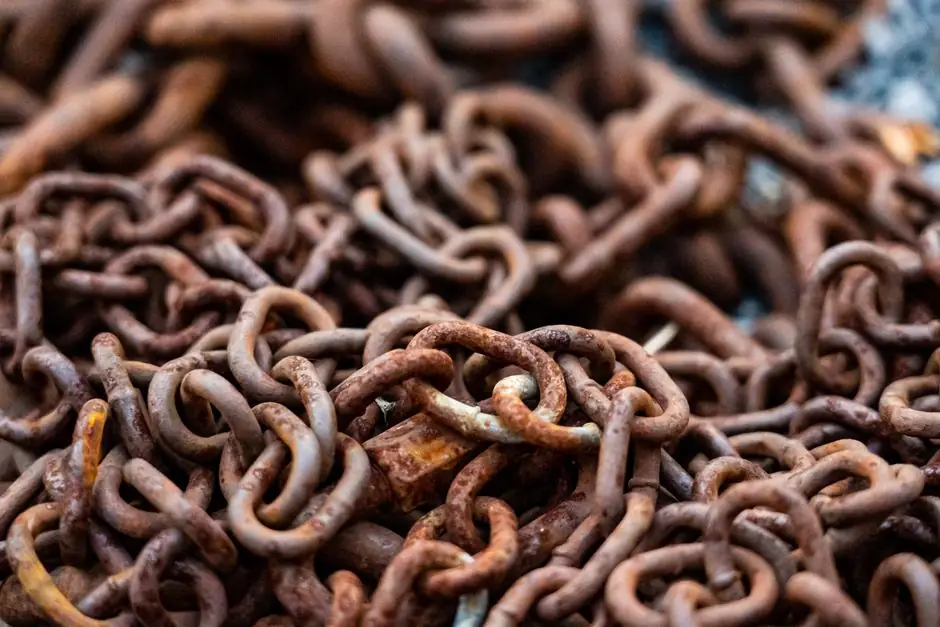
Steel-mill roller chain selection is governed by ANSI B29.1 / ISO 606 pitch series, a calculated design horsepower that includes a service factor of 1.0 (uniform) to 1.7 (heavy shock with mechanical-drive engines), and the choice between a single-strand chain and a duplex/triplex strand of the same pitch [S2][S3]. A baseline roller chain decision flow for a hot-strip mill, billet conveyor, or coil-handling line therefore resolves to pitch, strand count, and the heat-treatment scope of the chain itself.
The two heavy-duty welded steel mill families that come up most often in mill procurement are the WR series (pins and bushes heat-treated) and the WH series (pins, bushes, and sidebars all heat-treated), both available in standard sizes such as WR82/WH82 at 66.27 mm pitch and 25.40 mm inner width, WR106/WH106 at 76.20 mm pitch, and WR110/WH110 at 88.90 mm pitch [S5]. Standard ANSI single-strand sizes ANSI 40, 50, 60, and 80 cover the lighter end of mill auxiliaries, with double and triple strand options multiplying capacity on the same pitch [S7].
Inputs to lock down before opening a catalog
The minimum input list that any chain maker or distributor will ask for is fixed: input power type (electric motor, ICE, hydraulic), driven equipment class, rated horsepower, full-load RPM of the fastest shaft, desired RPM of the slow shaft, driver and driven shaft diameters, shaft center distance, and any space or environmental limits [S2]. Drives with more than two sprockets, idlers, abrasive or corrosive atmospheres, widely fluctuating loads, or frequent start-stop cycles are explicitly flagged as cases that need application-engineering review rather than a chart look-up [S2].
For steel-mill duty, that list grows: ambient temperature near the run (above 200 °C, common above a reheat furnace, derates standard lubrication and rules out polymer-coated chain), dust and scale load, presence of water or acidic coolant, and the duty cycle in starts per hour on approach tables and coil conveyors [S3]. Conveyors and slow drives can be selected on a load/tension basis rather than a horsepower basis, which matters for billet and slab transfer tables where the chain speed is below 60 m/min [S3].
Design horsepower: HP × service factor
Design horsepower is the catalog-driving number: multiply the transmitted horsepower by the service factor from the driven-load class [S2]. For a uniform load driven by an electric motor the factor is 1.0, for moderate shock it rises to 1.3, and for heavy shock it reaches 1.5; with an internal combustion engine on a mechanical drive, those numbers step up to 1.2, 1.4, and 1.7 respectively [S2]. Smoother mill auxiliaries such as a steady-speed cooling-bed drive typically sit in the moderate-shock band at Ks ≈ 1.3, while a reversing coiler or a slabbing-mill main drive pushed through peak torques falls into the heavy-shock band at Ks ≈ 1.5–1.7 [S2][S3].
Once the design horsepower and the small-sprocket RPM are known, the chain pitch is read off a quick-selector chart by intersecting the two axes; the smallest number of strands that lands above that intersection is the economical choice, with a borderline reading meaning both adjacent pitches should be evaluated [S2]. For drives that do not fit any reasonable pitch at single strand, a duplex or triplex chain of the same pitch multiplies the rating through a multiple-strand factor, at the cost of tighter alignment and a heavier sprocket [S2][S3].
WR vs WH: heat treatment is the difference
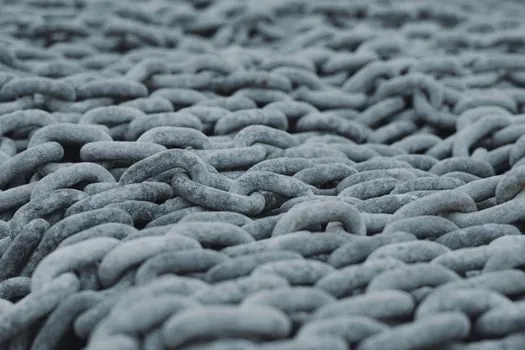
For welded steel mill chain, the WR and WH series are dimensionally identical and run on the same sprockets, so a mill can drop-in upgrade from WR to WH without modifying the conveyor [S5]. The single specification that separates them is heat-treatment scope: WR heat-treats the pins and bushes only, which is enough for moderate-to-heavy conveying at a lower first cost, while WH heat-treats the pins, bushes, and sidebars, giving maximum wear resistance on the load-carrying plates for continuous, abrasive service [S5]. In practice, WH is the right call for high-tonnage, high-abrasion slag, scale, ore, sand, or ash duty that runs around the clock, while WR is the cost-balanced pick for shock-loaded bulk lines with manageable downtime [S5].
Material and coating options on top of that base specification are what push chain life from months to years in a mill: carbon steel for general use, stainless or special alloys for wet or chemically aggressive zones, and nickel-plated or plastic-surfaced chain for corrosion or product-contamination concerns [S6][S7]. The selection process deliberately treats load capacity, speed, environment, maintenance access, and budget as co-equal inputs rather than a checklist, because the cheapest chain on the chart is the most expensive one once it is paired with the wrong sprocket steel or the wrong lube regime [S3].
Options lined up against selection criteria
The four chain families that show up on a mill-engineering desk are best compared on the criteria that actually drive replacement intervals: pitch standard, maximum allowable speed, typical tensile/horsepower envelope, and heat-treatment scope. Single-strand ANSI B29.1 (sizes 40–80) handles the lower horsepower envelope at the lowest cost per metre and the widest local stock [S7]. WR series welded mill chain covers the moderate-to-heavy drag conveyor and bucket-elevator class on the same sprockets as WH, with a lower first cost and a shorter service interval in abrasive service [S5]. WH series welded mill chain shares those dimensions but adds through-hardened sidebars for the longest wear life in 24/7 abrasive duty [S5]. Duplex and triplex chains of the same pitch multiply power capacity proportionally but require sprocket alignment inside 0.050 in/ft and add envelope mass to the drive [S3][S7].
The decision shortcut is straightforward: for an existing conveyor that already runs WR82 or WH82 sprockets, the question is purely about upgrade economics on the chain side, because the sprockets do not need to change [S5]. For new equipment, the pitch is fixed by the design-horsepower and small-sprocket-RPM intersection, and the strand count is the next gate, followed by material, coating, and the heat-treatment scope that matches the abrasive load on the sidebars [S2][S3]. A useful sanity check before sign-off: a tapered roller bearing on the head shaft and a matched roller bearing on the tail shaft, both with the right dynamic load rating for the peak chain tension, are what keep the sprocket alignment that the chain selection assumes in the first place.
Installation, wear limits, and replacement triggers
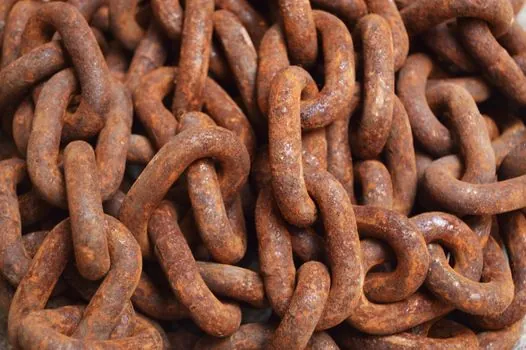
Mill conveyor chain is typically replaced when wear elongation, the growth from pin-and-bushing clearance, hits roughly 1.5% on power-transmission drives and 2–3% on slower conveyors, because beyond that point the chain climbs the sprocket teeth, accelerates sprocket wear, and risks jumping teeth under shock load [S3]. Alignment between driver and driven sprockets should be inside 0.050 in/ft, and slack should be set at about 1/120 of the center distance so that the chain can absorb start-up transients without hammering the sprocket tips [S3].
Lubrication and environment are then the operating variables that decide whether a chain meets its design fatigue life: standard petroleum lubes are usually rated up to about 150–200 °C, while high-temperature synthetic greases and protective shrouds are mandatory above that band [S3][S4]. Maintenance access matters as much as the chain spec, because a mill chain that cannot be re-tensioned or lubricated from a safe position will be run dry, which collapses the fatigue life that the original selection assumed [S3]. For plants also overhauling their drive-side hardware, a side-by-side review with the disc coupling selection for wind turbine drivetrains logic helps keep torque, misalignment, and isolation budgets consistent across the line shaft.
Common failure modes and constraints in a steel mill
The four failure modes that drive most steel-mill chain replacements are wear elongation, abrasive side-plate wear, corrosion pitting on pins and bushes, and fatigue fracture at the link plates. Wear elongation is by far the most common and is what the 1.5%/2–3% replacement rule is built around [S3]. Abrasive side-plate wear is the specific failure mode that the WH heat treatment is engineered to delay, and the practical evidence is that drop-in WH chain on existing WR sprockets extends interval between rebuilds in slag and scale service [S5].
Corrosion and fatigue are controlled by material selection and lubrication: nickel-plated or stainless chain in wet or acidic zones, and synthetic high-temperature grease in reheat-furnace areas where ambient temperatures exceed the petroleum-lube ceiling [S3][S7]. On the conveying side, a heavy-duty roller conveyor running in parallel with a chain-driven transfer table needs its own alignment check, because the two systems share a common structural frame and any twist in the frame shows up as uneven chain wear long before it shows up as a bearing temperature alarm.
Standards, sourcing, and what to ask the supplier
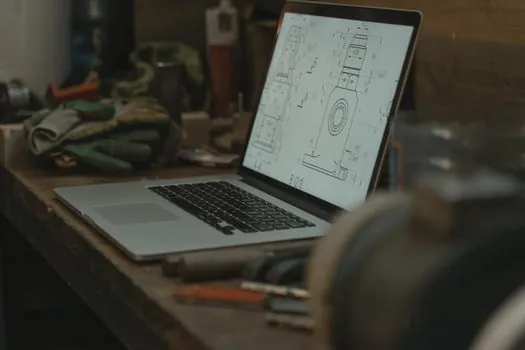
Two standards cover nearly every chain on a mill engineering drawing: ANSI B29.1 for the inch-series single and multi-strand roller chain sizes 25 through 240, and ISO 606 for the metric short-pitch transmission chain, with BS/DIN 8187 and BS/DIN 8188 covering the equivalent metric series [S1][S8]. Welded steel mill chain such as WR/WH is typically specified against manufacturer standards that match these pitch series and against the user's conveyor duty class [S5]. Sourcing is straightforward from industrial distributors that stock HKK, Renold, Wipperman, Allied Locke, and Tsubaki among others, with ANSI and synergy chains both readily available off the shelf for sizes 40 through 80 [S6].
The question to put to any supplier before signing a PO is short and specific: confirm chain pitch in millimetres, strand count, heat-treatment scope (WR or WH equivalent), material and coating, minimum tensile strength, and the recommended service factor table that the supplier's horsepower ratings are based on [S2][S5][S8]. With those numbers in hand, and with the design-horsepower, small-sprocket RPM, and wear-limit thresholds already in the spec, the mill gets a chain that is dimensionally interchangeable across vendors, fits existing sprockets, and is rated for the actual load class instead of the optimistic one on the front of the catalog. A final procurement-side check worth doing in parallel is to confirm that the line-side linear-motion hardware, for example a linear module selection for mining spec, uses the same IP and dust-sealing logic as the chain enclosure, because dust ingress is the single biggest uncontrolled variable on either system.
Trackable signals over the next procurement cycle: WH-series share of welded mill chain orders on slag and scale conveyors, and the number of mills publishing a 1.5% wear-elongation replacement trigger in their standard operating procedures instead of running chains to fracture.