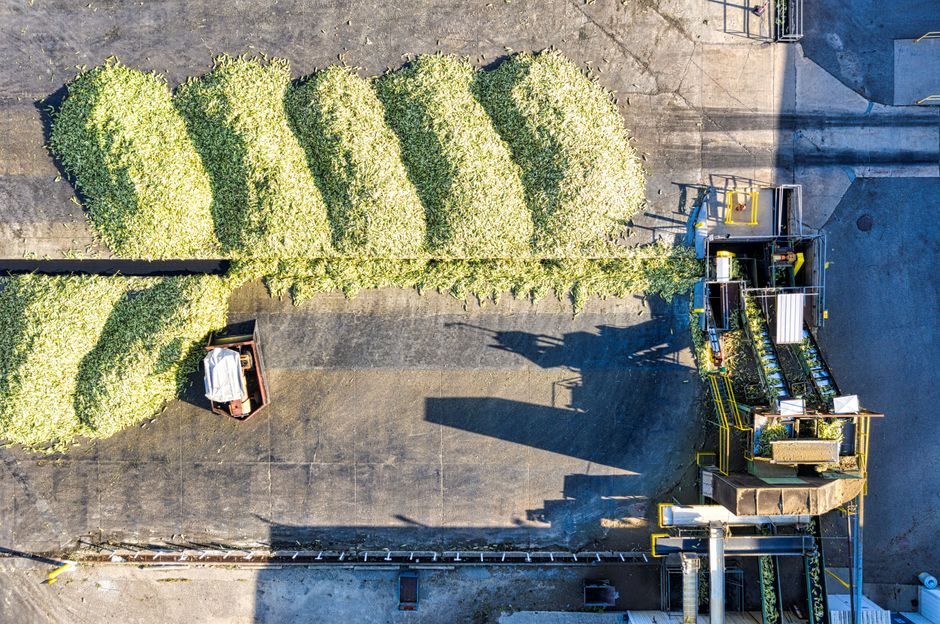
Roller conveyors and bucket elevators solve opposite problems on a process line: a roller conveyor carries packaged or rigid unit loads — cartons, totes, pallets, drums — across a horizontal or shallow-incline path at fixed pitch between tube centers, while a bucket elevator carries loose bulk solid — grain, cement, sand, feed, sugar, fertilizer — vertically inside a casing on buckets bolted to a belt or chain [S4].
The 2026 supplier base in the research covers both extremes on one platform: Henan-based powder elevator factories list chain and plate-chain bucket elevators for grain, cement, sand, silo, limestone, powder, sugar, coal and fertilizer with reference export pricing around US$4,000 per unit [S4], while Indian system integrators such as Rollcon Engineers and Avismatic Solutions list roller, belt, slat, screw and bucket elevator lines as part of a single material-handling portfolio [S1]. Specifying one for the other duty is the most common line-design error in 2025-2026 mill and packaging retrofits.
Duty Profile: Unit Load vs Free-Flowing Bulk
Roller conveyors are engineered for unit loads with a defined bottom — the tube carries the load through rolling contact, so the load must have a flat, rigid face and the tube diameter (commonly 50 mm, 60 mm or 89 mm) must be selected against the point load per roller [S1][S3]. Tube material splits between mild steel (galvanized for warehouse duty), stainless steel (food/pharma wash-down, supplied by India-based FTE) and PVC/HDPE sleeves for lightweight cartoning [S3]. Drive options split into gravity (1.5–3° decline), line-shaft (legacy), belt-driven live roller (BDLR) and motor-driven roller (MDR) with 24 VDC or 48 VDC zero-pressure-accumulation logic [S1][S3].
Bucket elevators are engineered for free-flowing bulk — the buckets scoop, lift and discharge by centrifugal or positive-discharge geometry; the load is not a rigid object but a particulate whose bulk density, angle of repose, moisture and abrasiveness decide the casing, belt and bucket spec [S4]. Capacity is rated in m³/h or t/h, with typical industrial ranges from 5 t/h (small feed mill) to 800 t/h (port-handling cement) depending on belt width (200–1,250 mm) and bucket projection [S4][S6]. Zhenjiang AGS Machinery lists CE-style testing and shipment to 30+ countries including Thailand, the Philippines, Vietnam, Malaysia, Indonesia, India, Russia, Colombia, Brazil, Spain, the UAE, Saudi Arabia and South Africa for its bucket elevator and chain conveyor lines.
Selection Criteria: 6 Levers That Decide the Decision
Lever 1 — Load type. Cartons totes and pallets are roller territory; powders grains and chips are bucket territory. Trying to elevate a pallet on a bucket elevator destroys the belt within minutes; trying to carry loose grain on a roller spills through the gaps and stalls the drive [S4][S5].
Lever 2 — Trajectory. Roller conveyors run flat or at ≤5–7° for gravity or ≤12° for motorized cleat-belt hybrids; bucket elevators are built for vertical or steeply inclined (typically 60–90°) lift up to 80 m in cement and grain service [S4]. For a 6 m vertical rise, no roller geometry exists that will do the job.
Lever 3 — Throughput. Roller lines are throughput-capped by roller pitch and load length — a 100 mm pitch on 50 mm tubes handles roughly 30–60 unit loads per minute on a single-accumulation lane. Bucket elevators are throughput-capped by belt speed (1.0–2.5 m/s) and bucket volume — a 630 mm-wide belt with 8.0 L buckets at 1.6 m/s delivers 200–300 t/h in grain service [S4]. The two metrics do not compare directly; the right question is kg or units per shift, not metres per minute.
Lever 4 — Hygiene and finish. Food and pharma duty (snacks, rice, feed, dairy) defaults to stainless-steel bucket elevators with USDA/FDA-eligible food-grade belt and plastic or metal-detectable buckets, as supplied by Guangdong-based packer-integrators such as Loyalpack on a 50-set-per-month production cadence [S6]. Roller conveyors for the same duty default to SS tubes with sealed bearings and IP65 motor rollers [S3].
Lever 5 — Energy and noise. MDR roller lanes draw 50–100 W per powered roller and idle cleanly on zero-pressure-accumulation zones, which is why they dominate parcel and e-fulfilment lines. Belt bucket elevators draw 5–30 kW on mid-size units, with the head pulley being the dominant energy sink; noise is typically 75–85 dB(A) and is normally enclosed [S4].
Lever 6 — Cost and lead time. Made-in-China listings for stainless-steel bucket conveyors sit in the US$822–928/piece range at 1-piece MOQ, with pneumatic vacuum conveyor units from US$1,500–8,000 for granule and powder duty. Indian system integrators quote roller conveyor and bucket elevator systems per project rather than per metre, with the bucket elevator as the higher-cost assembly inside a green-field mill [S1].
Sub-Types and Where Each Sub-Type Fits
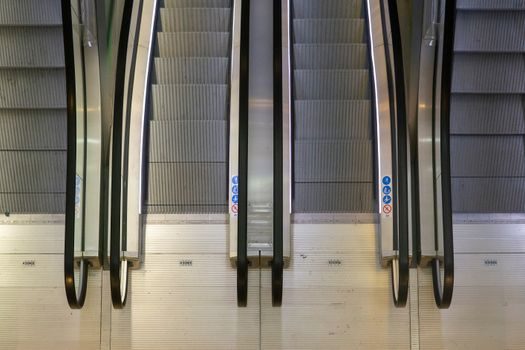
Roller conveyor sub-types split into gravity roller (no power, declines 1.5–3°), line-shaft roller (legacy, single shaft drives rollers via O-rings), belt-driven live roller / BDLR (a flat belt under the rollers drives them, common in distribution), motor-driven roller / MDR (24 V or 48 V brushless DC roller motors, dominant in 2024-2026 zero-pressure-accumulation lines) and chain-driven roller (heavy pallet loads, 1,000–2,000 kg/m line load) [S1][S3]. MDR is the 2025-2026 default for new parcel and e-commerce fulfilment builds because each zone is independently controllable and the line can be reconfigured without shaft changes.
Bucket elevator sub-types split into centrifugal discharge (high belt speed 1.5–2.5 m/s, used for free-flowing granular such as grain, sand, sugar, fertilizer), positive or continuous discharge (slow belt 0.5–1.0 m/s with buckets on the up-leg discharging at the top by gravity, used for fragile or sticky product such as meal or cake), and internal-discharge or "paddy" style (compact head for low-headroom rice mills) [S4]. Chain bucket elevators replace the belt with double-pitch roller chain for hot product (>120 °C), abrasive product (cement clinker, slag) or higher capacity at given casing width, with plate-chain designs supplied by Henan manufacturers for grain, cement, sand, silo, limestone, powder, sugar, coal, fertilizer and rice-mill service [S4].
Failure Modes and Engineering Limits
Roller conveyor failures cluster on bearing seizure (IP rating too low for wash-down), tube deflection (pitch too long for load), and drive-roller burn-out (24 VDC MDR card mis-wired on a long slave run). The standard mitigation is to derate roller load by 25–30 % in dusty or wet service and to specify sealed-for-life greased bearings in food-grade applications [S3].
Bucket elevator failures cluster on belt slip (head pulley lagging worn), bucket tearing (abrasive product + worn boot), casing explosion (grain dust ignition — a documented ATEX hazard for mills handling combustible dust) and back-leg flooding (ingress of water in outdoor service). For grain and feed mills the standard mitigation is rubber-grooved lagging on the head pulley, nylon or polyurethane buckets on abrasive duty, and explosion relief panels on the casing [S4].
Standards, Sourcing Map and Where to Look
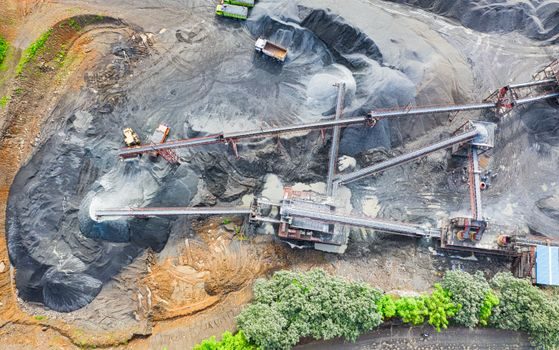
Material-handling equipment in this duty class is generally not governed by a single product standard; instead it is governed by regional safety standards — the European Machinery Directive 2006/42/EC and EN ISO 12100 for general machine safety, EN 618 for continuous mechanical handling equipment, and ATEX 2014/34/EU for mills handling combustible dust — alongside the conveyor's own mechanical-design calculations against CEMA (USA), JIS B 8801 (Japan) or equivalent national codes. Where a roller line or bucket elevator is CE-marked for export, the supplier typically issues a Declaration of Conformity against the Machinery Directive plus, for grain/feed service, the ATEX equipment category for the dust zone [S4].
The 2026 sourcing map is bipolar. For bucket elevators, the China cluster around Henan (Zhengzhou, Xinxiang) and the Jiangsu/Zhejiang export channel (Zhenjiang AGS, Loyalpack in Guangdong) dominates volume, with Indian suppliers (Rollcon, Avismatic, Digidale) covering domestic and South Asian markets [S1][S2][S4][S6]. For roller conveyors, supply is more fragmented: Indian system integrators cover the domestic packaging and food markets (Rollcon, Avismatic, FTE, Digidale) [S1][S2][S3], while MDR roller lanes are increasingly sourced from global automation vendors (Interroll, Itoh Denki, Hytrol) on lead times of 6–10 weeks for new lines. Reference price points in the research are US$822–928 per piece for SS bucket conveyors at 1-piece MOQ from Guangzhou Kaixi, US$1,500–8,000 for pneumatic vacuum conveyors from various China suppliers, and US$4,000 reference for chain/plate-chain bucket elevators from Henan factories [S4].
When the Two Are Used Together
In a green-field rice or feed mill, the typical flow is intake pit → bucket elevator to a distributor → gravity roller conveyor to storage bins → MDR roller conveyor to bagging → check-weigher → bucket elevator to dispatch loader. In a snack-food line, the flow is typically Z-type or inclined bucket conveyor out of the fryer → SS roller or flat-belt cooling conveyor → inspection MDR lane → packing [S6]. The roller and bucket therefore sit on the same line, with the bucket doing the vertical lift and the roller doing the horizontal accumulation; this is also why Indian system integrators such as Avismatic and Rollcon list both product lines in a single portfolio [S1].
For more on warehouse hardware adjacent to this decision, see the Storage Cage Buying Guide 2026 for downstream pallet staging, the Storage Cage vs Plastic Pallet Box: 2026 Spec Cut for the tote decision, and the Industrial Flooring Selection Criteria for the floor load and chemistry that the line has to roll onto. Trackable signals: ATEX 2014/34/EU re-classification of grain elevators under combustible-dust rules, and the 2025-2026 shift of roller conveyor line volume from BDLR to 48 V MDR in new e-fulfilment builds [S3][S4].