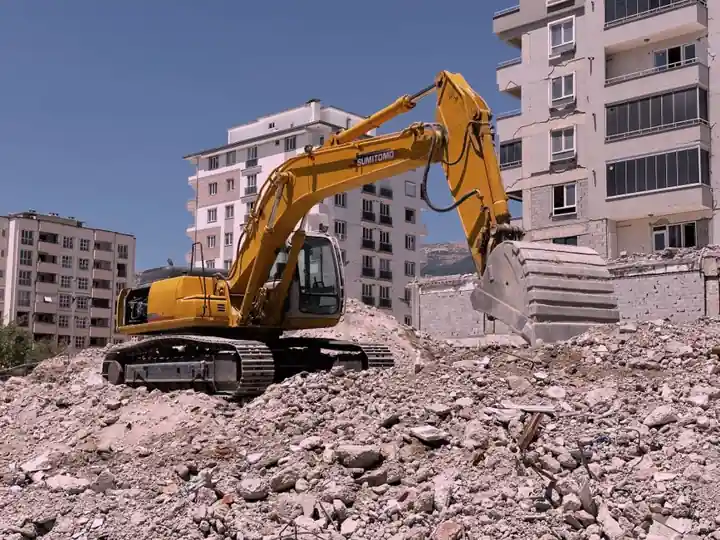
Rotary drilling rigs see a defined role in demolition preparation where controlled, full-diameter boreholes precede hydraulic splitting, wire sawing, or shearing, with hydraulic crawler units such as the 88 kW, 13 m depth, 600-1600 mm diameter class [S1] sized for high-rise and bridge dismantling rather than mass rock fragmentation [S1].
On 2026-04-22 Keller North America added a Liebherr LRB 23 piling and drilling rig to its national fleet, citing productivity and application versatility across deep foundation, ground improvement, and dewatering work [S4], the same attachment-flexibility logic that brings a rotary drilling rig into selective demolition scopes.
Borehole Method Match: Rotary, Rotary-Hammer, or Core
Rotary, percussive, and diamond-supported methods are the three families used in concrete and rock demolition prep, with rotary-hammer drilling dominant for productive pattern holes, core drilling reserved for precise starter openings and penetrations, and pure rotary drilling preferred in brittle natural stone where percussive energy causes spalling [S3]. For demolition sequences feeding hydraulic splitters, the borehole is an upstream process whose positional accuracy, hole straightness, and ovality directly govern wedge force transmission [S3].
A practical rule from the Darda technical reference: borehole depth should equal 90 to 110% of the intended splitting zone so the active wedge length is fully engaged, with pilot holes recommended for inclined work to keep runout inside the splitter's tolerance [S3]. Where steel reinforcement density is high, percussive or rotary-hammer bits outperform pure rotary bits because the impact energy shears rebar rather than riding over it [S3].
Power, Depth, and Diameter Envelope for Demolition Prep
Demolition-prep boreholes are shallow compared to foundation or geotechnical production holes, so the relevant envelope is 5-15 m depth at 50-200 mm diameter for splitter circuits, and 100-600 mm diameter for starter openings, wire saw pass-throughs, and material-removal penetrations [S3]. YG's hydraulic rotary rig class delivers 600-1600 mm diameter at up to 13 m depth from an 88 kW powerpack, which over-specs the splitter-feed case but covers concrete chunk pre-drilling and bridge-pier reduction work [S1].
For deep demolition-adjacent work such as secant pile walls, underpinning, or mass foundation removal, 40-60 m piling-and-drilling rigs with quick-change rotary, CFA, and Kelly attachments apply, as reflected in the Liebherr LRB platform added to Keller's fleet for nationwide deep-foundation and remediation work [S4]. Demolition contractors who already own a demolition hammer for top-down breaking typically pair it with a smaller rotary rig only where the structure geometry forces borehole-led sequencing.
Who Rotary Specs, Who It Does Not
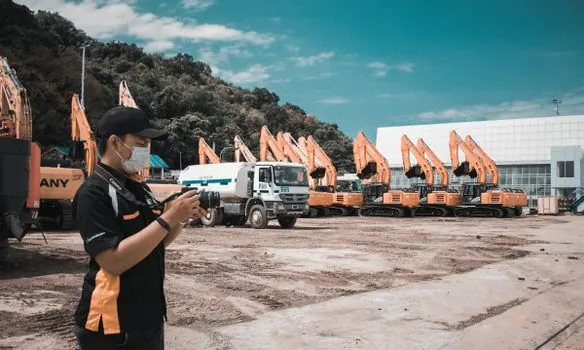
Rotary drilling rigs fit demolition projects that require true-to-size, low-breakout boreholes, controlled vibration, low noise, and predictable splitter or wire-saw engagement; they fit poorly on mass-concrete slabs where percussive breakers or rotary hammer tooling deliver higher m³/h at lower cost. They also fit poorly in confined interiors where a 10-25 t crawler cannot access and a hand-held core drill or wall saw is the only practical tool [S3].
Cross-check the host material: reinforced concrete of C30/37 and above benefits from rotary-hammer or DTH assist to break rebar cleanly [S3]; brittle masonry and natural stone fracture cleanly under pure rotary, avoiding the spalling that percussive action initiates [S3]. If the demolition sequence relies on blasting rather than mechanical splitting, a blast-hole rig in the same 88-600 kW class is the closer match, since blast pattern geometry, not splitting force, governs hole quality [S2].
Decision Comparison: Rotary vs Rotary-Hammer vs Core on Demolition Criteria
On four demolition criteria the three methods line up as follows, drawing on Darda's method definitions and the rotary rig envelopes in [S1] and [S3]. Productivity: rotary-hammer leads on reinforced pattern holes; pure rotary leads on brittle stone; core is slowest but gives the cleanest cylinder. Vibration and noise: pure rotary is the lowest-impact option and is preferred near occupied structures or vibration-sensitive neighbours; percussive methods need monitoring against local thresholds. Diameter range: core bits cover a few millimetres to large-format service penetrations; rotary-hammer typically stays in the small-bore splitter range; piling-class rotary rigs cover 600-1600 mm [S1]. Re-bar tolerance: rotary-hammer handles rebar with the right bit geometry; pure rotary rides over steel and burns bits; core bits cut rebar slowly but cleanly when diamond-grade is matched.
Method selection should follow the rule of thumb that splitting zone depth drives borehole depth at 90-110% of that zone [S3], which means a 1.0 m thick slab typically takes 0.9-1.1 m deep holes and a 2.0 m thick pier takes 1.8-2.2 m, regardless of which rotary-class rig drills them.
Standards, Sourcing, and Fleet Signals
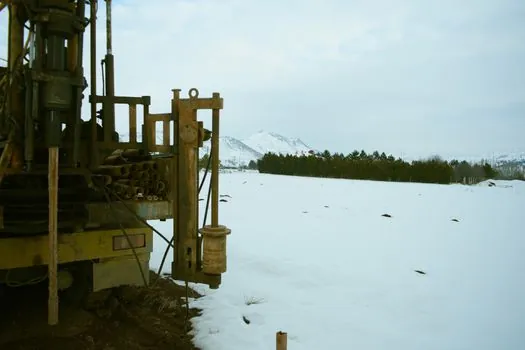
No single ISO or EN standard governs demolition-prep borehole geometry across regions, so quality is contractually defined by hole diameter tolerance, straightness, edge distance, and grid pattern relative to the splitter or saw that follows [S3]. For piling-class rotary rigs used in adjacent deep-foundation or underpinning work, OEM documentation and project specifications typically reference EN 16228 for drilling and foundation equipment safety, with operators holding category-specific training.
Two trackable signals frame the 2026 market: Keller North America's LRB 23 purchase at Conexpo 2026 expanded a national Liebherr fleet used across commercial, infrastructure, and environmental work [S4], and Master Drilling's 40-plus-year raise-boring and shaft-boring fleet continues to anchor the larger-diameter end of rotary drilling for mining and energy projects [S2]. For road-building scopes that share tooling with demolition prep, the 2026 spec map for rotary drilling rig selection for road construction covers the production-pile case that complements, rather than replaces, the demolition-prep envelope. Demolition contractors should track Liebherr LRB and equivalent piling-drilling rig deliveries through 2026-09, and confirm rotary bit inventory against rebar-dense reinforced concrete before mobilising.