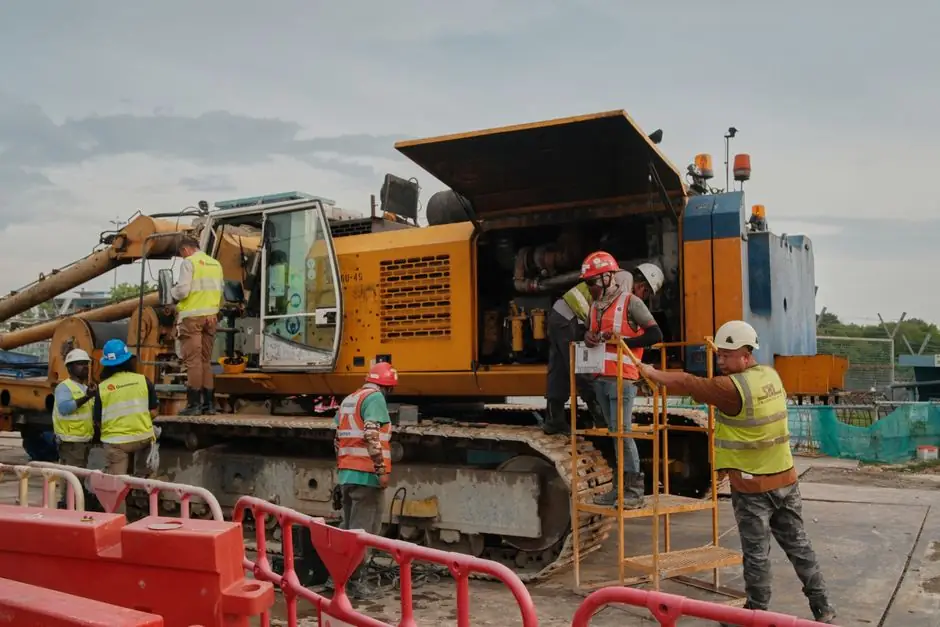
For 2026 road and bridge pile programs, hydraulic rotary drilling rigs in the 8,000–26,000 kg operating-weight band cover drilling depths of 13 m on small wheeled units up to 40 m on mid-range crawlers, with torque output of 235–240 kN·m on the SANY SR235 and XCMG XR240 [S2][S3].
The category spans two drive philosophies (mechanical and hydraulic) and two chassis layouts (wheeled and crawler), with rotary cutting serving clay, sand, gravel, and moderately weathered rock layers at hole diameters from 600 mm to 2.5 m, depending on rig class [S1][S2]. Used 2026 pricing for mid-range SR235/XR240 units lands in a $160,000–$300,000 band, with the XCMG typically listing $20,000 under the SANY at equivalent working weight [S3].
How Rotary Rigs Map to Road and Bridge Pile Work
Rotary drilling is the go-to method for highway and bridge pier foundation piles because it produces a continuous, in-situ bored hole that can be cased, reinforced, and poured without driving displacement into adjacent strata [S1][S2]. On road projects, the rig assembles torque and downforce at the tool to cut through overburden and socket into weathered rock, lifting cuttings via auger, drill bucket, or core barrel depending on ground conditions [S1].
Bridge pier pile diameters typically run 0.8–2.5 m at depths of 30–80 m, while expressway interchange piles and overpass footings usually sit at the shallower end of that band [S2]. For deeper sockets, large-diameter rotary rigs extend hole depths to 80–120 m, which puts the work outside the mid-range SR235/XR240 envelope and into heavy-class machines [S2]. Selection on a road job is therefore driven by three numbers first: required hole depth, required hole diameter, and the unconfined compressive strength of the socket horizon [S1][S2].
Wheeled vs Crawler Chassis: Matching the Site
Wheeled hydraulic rotary rigs in the ~8,000 kg class travel at 50 km/h on their own chassis, reposition quickly between bridge-pier bores on a completed subgrade, and need a prepared, level pad to operate [S2][S4]. Their transport efficiency makes them the default for urban municipal road work and short-span bridge jobs where bores are 0.6–1.6 m in diameter and capped near 13 m deep [S2].
Crawler rotary rigs trade road speed for ground pressure distribution: the tracked chassis delivers superior off-road capability on muddy, mountainous, or uneven terrain, and it is the configuration specified for soft-ground expressway approaches, river-crossing bridge piers, and reservoir-adjacent work [S4]. Compared to the rotary piling machine, which targets high-efficiency piling on level ground, the crawler rig is the better fit whenever the access track or working platform is unimproved [S4].
Mid-Range Comparison: SANY SR235 vs XCMG XR240
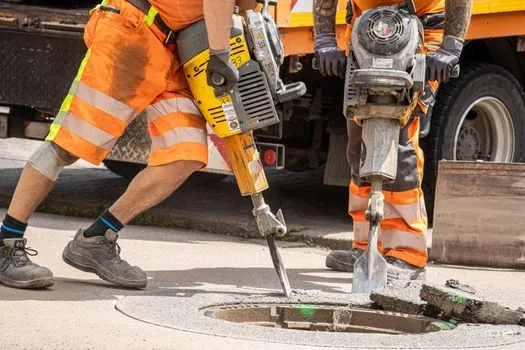
On a 2026 spec sheet, the SANY SR235 and XCMG XR240 sit within 5 kN·m of each other on torque (235 vs 240 kN·m), share a 24–26 t working weight, and both reach 35–40 m maximum drilling depth with Cummins or domestic engine options [S3]. The mechanical differences show up in three areas that matter to a road-site superintendent: fuel consumption, hoist wire-rope life, and chassis geometry [S3].
The SR235 leans on Isuzu engine calibration and a Kelly bar visualization locking system, with manufacturer guidance citing 10–15% improved fuel efficiency over comparable rigs and a real-time lock indicator that reduces wire rope wear from misoperation [S3]. The XR240 counters with single-layer main and auxiliary hoist ropes, which the manufacturer states extend wire rope lifespan 2–4 times over multi-layer rope drums, and a dual-arm parallelogram swing mechanism that widens the support angle for better stability on uneven pads [S3].
For heavy-duty bridge piling in hard soil or mixed ground, the SR235's reinforced chassis joints and structural rigidity read as the more robust choice; for tight urban interchanges and confined interchange ramps, the XR240's compact hydraulic crawler is easier to spot and reposition [S3]. Used pricing in 2026 lists the SR235 at $180,000–$300,000 and the XR240 at $160,000–$280,000, a roughly $20,000 spread that reflects the Isuzu content and the Kelly bar instrumentation in the SANY [S3].
Spec Bands, Formations, and Operating Limits
Small-frame hydraulic rotary rigs (8,000 kg class, 88 kW engine, 20–25 MPa hydraulic system pressure, 80 ml/r gear pump displacement) drill 600–1,600 mm diameter holes to 13 m, with a 180° rotation angle for offset boring on tight pads [S2][S4]. These are the units that show up on municipal road, urban utility corridor, and landscaping foundation work, and they accept drill buckets, auger bits, tubular drills, and rock-socketed bits as the formation changes [S2][S4].
Mid-range 24–26 t rigs at 235–240 kN·m torque drill 35–40 m deep, with pile diameters typically 0.8–2.5 m and single-pile bearing capacity increases of 20–40% achievable through underreaming in suitable ground [S2][S3]. Static mud-wall protection keeps borehole disturbance low, producing a thin, rough mud cake that improves pile side friction, and reduces bottom sediment for cleaner end-bearing capacity [S2]. Noise below 75 dB and dry or low-mud circulation cutting mud consumption to 1/10–1/20 of conventional rigs makes the hydraulic class viable for urban residential corridors [S2].
Selection Criteria for Road Project Engineers
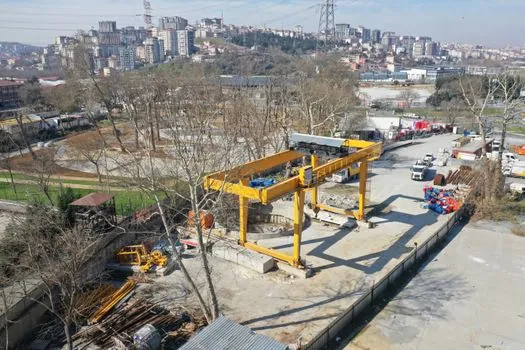
Match the rig class to the governing hole specification, not the headline torque. If the bridge-pier design calls for 1.2 m diameter at 30 m depth in clay and sand, a wheeled small-frame rig covers it at low mobilization cost; if the same pier needs a 2.0 m socket 40 m into moderately weathered rock, the mid-range crawler class is the floor [S2][S3].
Secondary criteria line up against the comparison table: torque (kN·m), engine brand and fuel map, working weight, maximum drilling depth, and the price band of the used market in 2026 [S3]. On the SR235 vs XR240 split, the criterion that swings the decision is site geometry: open rural expressways favor the SR235's stability margin, while confined urban interchanges favor the XR240's compact crawler [S3]. For broader drill fleet context and how these rigs compare to other foundation tools, the rotary drilling rig overview consolidates drive-system and chassis-class options.
Use Cases, Limits, and Failure Modes to Engineer Around
Beyond pile foundations, crawler rotary rigs handle foundation-pit support (soil nailing and pile walls), water-conservancy seepage prevention in reservoirs and dams, and transmission-tower foundation work in remote hilly terrain, with the tracked chassis enabling site-to-site transfer without a low-loader in many cases [S4]. In road work specifically, they cover bridge pier piles, highway overpass footings, and interchange ramp foundations, with the ability to handle heavily weathered rock layers when paired with rock-socketed bits [S2][S4].
The hard limits: hydraulic rigs hit diminishing returns above 80–120 m depth regardless of class, they cannot match the mobility of wheeled rigs on completed pavement, and underreaming's 20–40% capacity uplift only applies where soil structure allows controlled expansion [S2]. Failure modes in practice include borehole collapse from inadequate mud pressure, drill rod jamming when torque limits are ignored in harder rock, and wire rope wear from multi-layer spooling on hoists that lack the single-layer design used on the XR240 [S2][S3]. GPS positioning, verticality monitoring, and torque overload protection on modern units flag these conditions in real time rather than after the fact [S2]. For comparison with road-surface compaction equipment that follows the piling phase, the road roller spec context is a useful adjacent read; for the broader tooling ecosystem on a road job, the construction tools reference covers the surrounding machine classes.
Track three signals through the rest of 2026: used-market price drift on SR235/XR240-class 24–26 t crawlers, OEM announcements on electric or hybrid rotary drive packages replacing the current 88 kW diesel base, and any update to bridge-pier pile depth or diameter specifications in the expressway design codes that would push road projects from the mid-range class into the >80 m heavy rigs. For a cross-check on the compaction side of the same bridge construction workflow, the laser screed spec map for bridge construction documents the deck-finish equipment that runs after the piles cure.