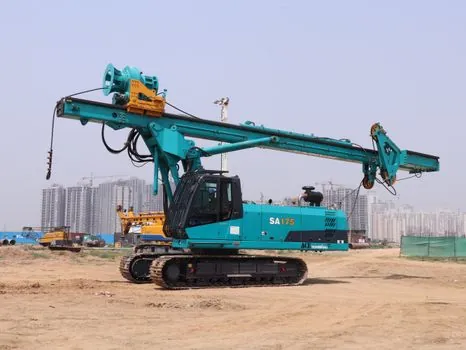
Rotary drilling rigs are designed for deep and large-diameter boreholes and remain the workhorse of soft overburden and competent rock drilling in open-pit mining, with torque and downforce as the primary selection criteria and base material plus power output as secondary factors [S1][S5].
In the mining context, crawler-mounted diesel-hydraulic rotary rigs dominate hard-rock benches, while pneumatic explosion-proof variants are mandatory for gassy underground coal mine roadways; the rotary drilling rig family is therefore split by application scenario, chassis, drive system and hole-depth class rather than by a single horsepower figure [S2].
Operating Principle and Where Rotary Rigs Fit
A rotary drilling rig cuts rock by rotating a bit under axial downforce while circulating air or mud to evacuate cuttings, a method widely used for deep observation wells, ore sampling, and production blastholes in open-pit mines [S1][S7].
Compressed air is the standard flushing medium for rotary blast-hole rigs because it lifts cuttings from the borehole in real time and cools the bit, which is why down-the-hole and rotary rigs both use pneumatic flushing on hard-rock benches [S7]. For a broader look at the platform category, the rotary drilling rig reference page covers how kelly bars transmit torque from the rotary table to the bit, a critical interface when sizing for deep foundations or shaft drilling [S6].
Selection Criteria: Torque, Downforce, Depth and Diameter
For rotary blasthole and exploration rigs, the binding spec is torque, not engine horsepower: a machine lacking sufficient torque will stall in broken ground, while a machine lacking high-end RPM will fail to cut hard rock efficiently, so operators must read ground conditions and adjust mechanical inputs continuously [S1][S4].
Depth and hole diameter share an inverse relationship, with common wireline core sizes BQ, NQ, HQ, and PQ used in mineral exploration; PQ systems deliver large-diameter cores but limit total depth because the heavier drill string exceeds the rig's pullback capacity much faster, while BQ systems reach deeper but yield smaller samples [S4]. A practical depth band used by Chinese suppliers places light rigs below 30 m, medium rigs at 30–80 m, and heavy-duty rotary rigs above 80 m for large-diameter production boreholes [S2].
Drive System: Mechanical vs Hydraulic, Diesel vs Electric
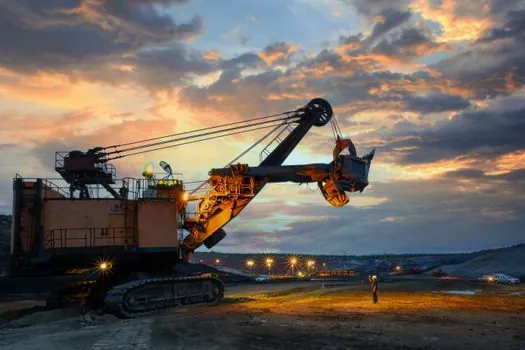
Mechanical drive rigs remain widely adopted for their simple structure, ease of operation, and convenient maintenance, but hydraulic systems are now the mainstream in mining because they offer adjustable tool height and overcome the spatial limits of purely mechanical linkages, delivering superior operational flexibility on uneven bench faces [S1].
For power source, diesel-hydraulic rigs are specified for ventilation-sufficient open pits where autonomy matters, while electric rigs align with underground ventilation constraints and tightening site emissions rules; pneumatic explosion-proof rigs are still mandatory in gassy underground coal mines, with regulatory compliance driving the choice between diesel, hydraulic, and electric platforms [S2][S4].
Chassis and Mobility: Crawler, Skid and Split Portable
Crawler mining drill rigs are the mainstream chassis in mining because they handle rugged, muddy bench terrain with strong cross-country capacity, while skid-mounted rigs stay fixed at long-term operation zones and split portable rigs disassemble for transport to steep mountain mining areas where road access is poor [S2].
Mobility is a direct cost multiplier: terrain accessibility, especially in remote or high-altitude locations, determines whether crawler, truck-mounted, or modular rigs are required, and this decision should be locked before torque and RPM are finalised [S4]. For projects co-located with heavy hauling fleets, the haul-cycle side is covered separately in the mining dump truck spec page, which is worth reading alongside any rig procurement to keep matched-equipment logic consistent.
Comparison: Rotary vs DTH vs Core Rigs on Decision Criteria
Three rig families compete for the same mining budget: rotary, DTH, and core. On hard rock penetration, DTH rigs using bottom-hammer impact drill faster, but rotary rigs are preferred in soft overburden and where large-diameter blastholes are needed; for intact ore samples during resource evaluation, core rigs are specified instead, because they preserve stratigraphy that rotary cuttings destroy [S2][S4][S5].
On decision criteria: (1) ground type: rotary for soft overburden, DTH for hard rock, core for mineral evaluation; (2) depth class: rotary and DTH cover 30–80 m medium and 80 m+ heavy bands, while core rigs trade diameter for depth (BQ deep, PQ shallow); (3) mobility: all three are commonly crawler-mounted, but split portable configurations exist for steep terrain access; (4) sample integrity: rotary delivers cuttings, DTH delivers chips, core delivers intact cylinder [S2][S4]. Operators therefore shortlist by ground first, then depth, then sample requirement.
Limitations, Failure Modes and Standards Context
Rotary rigs fail predictably when spec is misaligned: insufficient feed pressure polishes diamond bits in core mode, excessive pressure causes premature bit wear and core blockage, and broken or shifting formations will stall any machine lacking torque headroom, which is why procurement teams must match rig specifications to specific geological realities rather than to generic horsepower [S4].
Underground deployments add the explosion-proof constraint: gassy coal mine roadways require pneumatic explosion-proof rigs, and ventilation capacity must be confirmed before any diesel-hydraulic unit goes below ground, since the regulatory driver here is personnel safety, not productivity [S2]. For related safety hardware on the same sites, safety interlock switch selection for mining operations covers the confined-space entry and gate-interlocking side, which is typically reviewed in the same procurement package as the rig itself.
Project Context and Application Scenarios
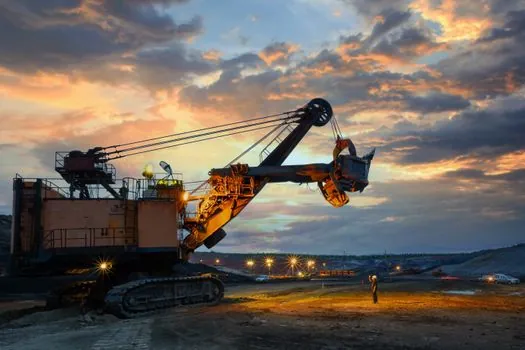
Rotary drilling rigs support four mainstream mining scenarios: blasthole drilling on open-pit benches, ore sampling during exploration, mine-shaft and tunnel pilot holes, and water-well or dewatering boreholes around active pits; across all four, the same torque and downforce logic applies, but mobility and power-source constraints shift dramatically between open-pit and underground settings [S2][S5].
For highway and infrastructure projects adjacent to the mine, the same rotary platform with augers, drilling buckets, and core drill rods is reused, which is why fleet owners prefer hydraulic drives: the same rig can be redeployed between mining and civil construction with only tooling changes [S1]. A complementary angle for procurement teams running mixed fleets is covered in slewing ring bearing selection for material handling, since slewing bearings sit inside the rotary head and the crawler turntable of most modern rigs.
Trackable signals for the next 90 days: watch for new heavy-duty rotary rig releases in the 80 m+ depth band, updated Chinese supplier catalogues listing explosion-proof certifications for underground coal models, and any tightening of underground diesel-emissions rules that would shift fleets from diesel-hydraulic toward electric or pneumatic platforms; the depth-class split of 30 m, 30–80 m, and 80 m+ is the cleanest way to keep vendor proposals comparable during that window [S2][S4].
The underlying component specifications are covered under rotary encoder.