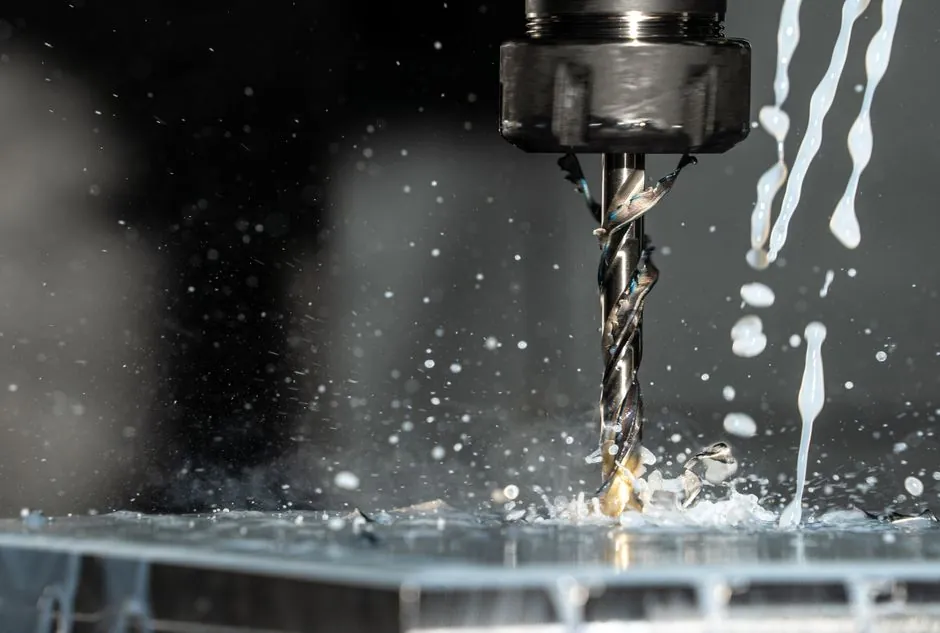
Rotary drilling rigs pair a rotating drill string (50 to 120 rpm at the bit) with continuous cuttings evacuation, giving the fastest hole-in-ground cycle in most hard-rock and deep-pile projects [S4].
The trade-off is real: higher capex, faster bit consumption in abrasive formations, and a hard limit on inclined bores, so spec selection should be driven by geology, hole depth, and load demand rather than headline productivity [S1][S3].
What the Rotary Drilling Rig Class Actually Covers
A rotary drilling rig is a machine that transmits torque and crowd force to a rotating bit while circulating air or drilling fluid to clear cuttings and cool the cutter structure; the 50 to 120 rpm operating window cited by Borehole Solutions covers most fixed-cutter (PDC) and roller-cone work [S4]. The 2025 market maps split the class into compact/low-headroom units, standard crawler rigs, and deep-hole oilfield/gas rigs, each with different transport envelopes and torque ratings [S7][S8].
For pile foundations, rotary rigs are routinely used in place of driven piles where vibration limits, urban noise codes, or required load-bearing capacity rule impact hammers out; the same bit-string principle scales from a 20 m foundation pile to multi-thousand-metre mineral and geothermal holes [S2][S4].
Advantages: Where the Rotary Rig Wins
Rotary drilling maintains hole verticality through continuous rotational cutting, which is why high-precision cast-in-place piles default to rotary over percussion in urban jobsites [S1]. The same mechanism gives quieter operation and lower vibration than percussive or driven-pile methods, so the rig is typically permitted in residential and brownfield redevelopments where noise limits apply [S1][S2][S6].
Depth capacity is the second hard advantage: rigs configured with mud or air rotary routinely drill to depths of thousands of metres, while auger-cast and driven piles cap out much shallower, limiting their use for tall-structure foundations [S2][S4]. Continuous cuttings removal also keeps the bit engaged, so metres-per-shift on hard rock runs well above percussive methods, which stop to retract and clear [S1][S4]. Pile quality is the third win: drilled shafts from rotary rigs show higher and more predictable load-bearing capacity than auger-cast piles, where concrete quality control through the full depth is harder to guarantee [S2].
Disadvantages: Where Rotary Underperforms
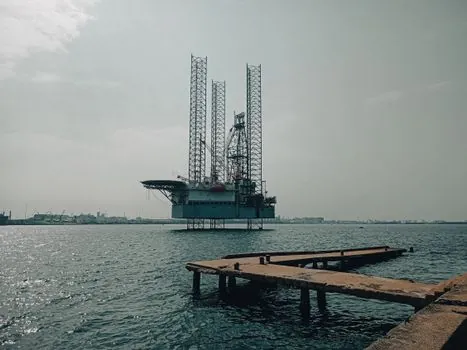
Capex and opex sit at the top of the cons list: purchase price, hydraulic system maintenance, and skilled-operator wages are all higher than for percussion rigs or driven piles, which is why contractors avoid rotary on shallow, low-budget jobs [S1][S2]. Bit wear is the second structural disadvantage: in hard, abrasive rock, PDC or roller-cone cutters must be replaced frequently, and trip time for a bit change erodes the very cycle-time advantage rotary is bought for [S1].
Geology kills the third set of cases. Soft soils, loose sands, and formations with large boulders are poor matches: cuttings evacuation stalls, hole deviation rises, and production rate falls below what a percussion rig or auger-cast pile can deliver [S1][S2]. A separate geometric limit shows up in production drilling: rotary rigs are not suitable for inclined boreholes, which is why blasthole contractors still pair rotary with separate angled-hole tooling rather than asking one rig to do both [S3].
Rotary Table vs Top Drive: Sub-Architecture Trade-off
Inside the rig class, the choice between a rotary table and a top drive system changes the operating envelope. Top drives mount on the derrick, deliver continuous rotation, and remove most kelly-handling steps, so drilling speed and directional control are higher, especially in complex wells and deviated holes [S5].
Rotary tables win on three other axes: simpler mechanical design, lower upfront cost, and easier field maintenance in harsh, remote sites, which is why conventional vertical drilling on shallow or older rigs still standardises on the table [S5]. For a contractor matching the sub-architecture to a project, the decision rule is straightforward: pick a top drive when hole complexity, continuous-rotation cycles, or personnel safety drive the ROI; pick a rotary table when capital, mechanical simplicity, and remote-area serviceability are binding constraints [S5].
Decision Matrix: When to Choose Rotary (and When Not To)
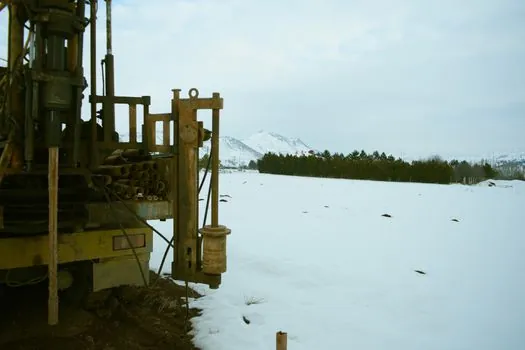
Use rotary drilling rigs when the site has hard rock or dense soil, requires deep foundations or deep boreholes (tens to thousands of metres), demands high verticality and load-bearing capacity, or sits inside an urban noise/vibration envelope [S1][S2][S4]. Avoid rotary when the formation is soft or boulder-rich, the project budget is tight, the required depth is shallow, or the bore must be inclined; in those cases, percussion drilling, driven piles, or auger-cast piles will be cheaper and faster [S1][S2].
Driven piles remain the speed option on tight schedules but bring high noise, vibration, and pile-head damage risk; auger-cast piles are cheaper in soft soils but cap load capacity and slow down on deep pours [S2]. Compact low-headroom rotary rigs, in turn, open up indoor or constrained-overhead jobsites where standard rigs cannot pass under existing structure, extending rotary's addressable market without changing its core operating principle [S8].
Operating Signals Worth Tracking
Watch torque and rotation speed together: sustained operation outside the 50 to 120 rpm band with rising torque usually means bit balling or cutter wear, and is the leading indicator of an unscheduled trip [S4]. Track cuttings volume versus penetration rate on every shift; a falling cuttings-to-metres ratio in stable geology is the earliest signal that a PDC cutter has failed, long before surface torque alarms fire [S4][S1]. For contractors standardising on rotary, the cost line that moves most is bit consumption, not fuel or labour, so a per-metre bit-cost KPI, not machine hours, is the right control variable for fleet-level TCO.
The underlying component specifications are covered under rotary encoder, and rotary hammer.
Background reading: Overhead Bridge Crane TCO: Cost Drivers, Price Bands, and 20-Year Lifecycle Math.