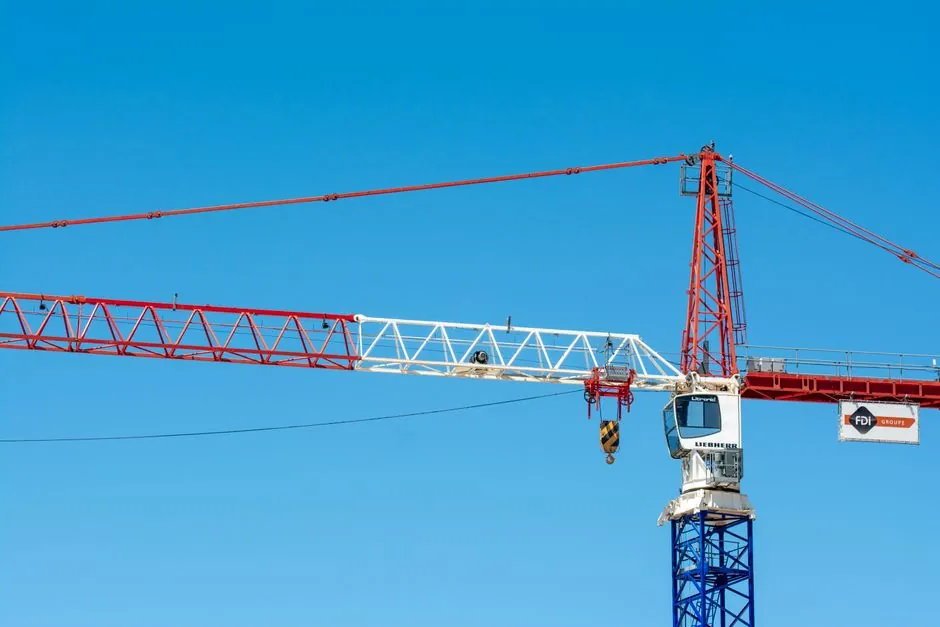
A new 20-ton tower crane lists at $350,000-$450,000 and a 50-ton class machine exceeds $750,000, with the step-up driven by reinforced jib sections, higher hoist motors, and heavier slewing rings [S1]. The sticker is the smallest line on a real TCO sheet: delivery, erection climbing, certified operator wages, energy, inspections, and end-of-project dismantle routinely add 40-80% of the purchase price across an asset's first five years.
Buy vs rent is therefore a financial-structure question, not a sticker question. The global tower crane rental market was $16.29B in 2024 and is forecast at $22.10B by 2030, a 5.2% CAGR, which tells you that most buyers on most projects still choose the rental path [S8]. On the other side, ownership pays back only when utilization clears roughly 60-70% of the year, a threshold most single-site contractors never hit [S2].
What "total cost of ownership" actually includes on a tower crane
TCO for a tower crane covers seven line items that project budgets usually split: acquisition (purchase or financed lease), mobilization and erection, certification and permits, energy, labor (operator + rigger + signal crew), preventive maintenance and spare parts, and finally dismantle plus site remediation. Maintenance, storage, and insurance are explicitly called out as ownership-side overhead that renters avoid [S3]. The same paper notes that "more often than not," a properly sized tower crane on a site boosts productivity enough to offset rental cost against alternative lift methods [S2].
A workable split for a 1-2 year high-rise deployment: acquisition 45-55%, erection/climb/dismantle 12-18%, energy 4-6%, operator and ground crew 18-25%, maintenance and inspections 5-8%, insurance and storage 3-5%. These ratios shift with project length: short jobs get dominated by mobilization, long jobs by labor and maintenance. For comparison, a crawler crane on the same site typically scores lower on vertical-lift productivity but higher on mobilization reuse, which is why mixed fleets are common on tower-heavy builds.
Cost drivers that move the price the most
Four drivers do almost all the work. First, capacity and jib length: a 20-ton unit at 60 m jib sits at the low end of the price band, while a 50-ton at 70 m+ jib crosses $750,000 because of thicker chord sections, larger hoist drums, and dual-speed slewing drives [S1]. Second, height under hook: every additional tie-in above 60 m adds a climbing cycle, a hydraulic climbing frame rental, and 1-2 days of certified climbing crew, each climb commonly billed as a separate work package [S3].
Third, project duration: rentals are priced daily, weekly, or monthly, and longer terms unlock tiered discounts that swing effective monthly rates by 20-35% [S5]. Fourth, site accessibility: urban sites with tight streets, restricted laydown, or night-only delivery windows add 10-25% to mobilization through permits, escort vehicles, and overtime pay [S5]. A 75% share of stakeholders prioritize higher load capacity and faster setup when specifying a rental unit, which is itself a market signal that erection cost is now part of the buying decision, not an afterthought [S5].
Buy vs rent: a five-year cash-flow comparison
For a contractor running 30 or more tower-crane months per year, ownership usually wins. For everyone else, rental wins. The break-even sits where annual utilization crosses roughly 60-70%, a level that requires either a multi-project pipeline or a long single high-rise [S2]. Below that line, the math is simple: a $400,000 crane depreciating while parked still costs insurance, storage, and a mandatory annual inspection, while a comparable rental unit would have been off the books for months between deployments [S3].
Where ownership clearly loses: sites shorter than 9-12 months, single-project owners without a follow-on pipeline, and any project requiring a capacity jump (for example, a 20-ton rental being swapped for a 50-ton as the build rises) [S3]. Where ownership wins: large residential or mixed-use developers running continuous 3-5 year programs, large civil contractors with dedicated erection crews, and rental fleets themselves, who treat the asset as inventory and recover TCO through day rates [S8]. The same TCO logic that pushes contractors toward renting a tower crane is also why heavy-lift buyers of crawler cranes often cross-shop with gantry options for site reuse.
Rental-side cost stack and the hidden line items
A typical rental quote looks like a single monthly rate, but the invoice splits into base rental, delivery, erection and dismantle, certified operator (often mandatory in the EU and on union sites in North America), and a usage allowance above which an overtime fuel or hours surcharge kicks in [S5]. Projects with uncertain timelines should price in at least one extension window, because mid-project swaps are the most expensive way to change crane class [S5].
Two specific cost lines are routinely underestimated. First, the climbing or "tie-in" cycle: every additional anchorage above free-standing height is a separate billable event that includes the collar kit, structural verification, and a wind-window requirement that can stall a site for a full day [S3]. Second, end-of-hire dismantle, which on tight urban sites often costs 30-50% of the original erection due to permit windows, smaller assist cranes, and overtime. Both lines are why a gantry crane on ground-level industrial work can out-cost a tower crane on short projects despite the lower hourly rate.
Operating cost levers that change TCO materially
Three operating levers move lifetime cost more than the purchase decision. Preventive maintenance, scheduled against the OEM's hour-based intervals, typically holds lifetime maintenance spend to 4-7% of acquisition cost; deferred maintenance can push that to 12-18% through accelerated slewing-ring wear and hoist-motor rebuilds [S6]. Operator and ground-crew productivity is the second lever: union-scale operator rates around $175/hr vs independent $90/hr shift effective hourly cost by 90%, and crew composition (operator alone vs operator + oiler + rigger) changes site throughput more than crane class does [S4].
The third lever is energy and duty cycle. The same lifecycle mindset is what a crane scale buyer applies when weighing indicator electronics against expected service hours under load.
Standards, certification, and the compliance drag on cost
Every jurisdiction touches a tower crane differently, and the compliance load is a real cost line. In the EU, erection, climbing, and dismantle are typically performed under EN 13000 series procedures with a competent person on site, and post-erection load testing is mandatory before service. In North America, ASME B30.3 covers construction tower cranes, with third-party annual inspection required and a documented load-test record retained. Site-specific items, wind-speed limits, out-of-service protocols, and signaling, layer on top through local occupational-safety rules, which is why a project budget should carry a dedicated compliance line rather than folding it into maintenance. [S5]
For buyers running the same crane across multiple jurisdictions, the cheapest path is to standardize on a model whose OEM documentation already covers the strictest regime (typically EU plus a major North American state) so that the same asset can be redeployed without re-certification engineering on every move. The cross-border pattern is similar to what a total station buyer faces when the same instrument has to be calibrated to different national tolerances.
Failure modes and the costs they impose

The three costliest failure modes on a tower crane are not mechanical, they are procedural. First, underspecified jib configuration: a 20-ton class crane on a 70 m radius job runs out of capacity long before the site admits it, forcing mid-project crane swaps that burn $50,000-$150,000 in mobilization premium [S5]. Second, ignored wind restrictions: tower cranes must be taken out of service above manufacturer-stated wind thresholds, and a site that cannot accept lost days should price a standby machine into the schedule.
Third, late-stage scope creep. When the project adds floors, height, or a heavier curtain-wall package without revisiting the crane selection, the crane becomes the bottleneck, and removing the bottleneck mid-build is more expensive than specifying it correctly at award [S2]. The same logic drives spec discipline on adjacent packages, for example, metal curtain wall panel selection is set early so that the chosen crane and crew are not re-specified late.
Decision matrix: buy, rent, or hybrid
Three profiles cover most decisions. Pure rental fits single-project contractors, projects under 12 months, and any job where peak capacity differs materially from steady-state capacity. Pure ownership fits large contractors and rental-fleet operators with multi-year pipelines, in-house erection crews, and a depreciation schedule that benefits from tax treatment. Hybrid, meaning a long-term rental with a purchase option, fits developers and mid-size contractors who want the rental cash-flow profile but want to capture residual value at project end; most major rental houses now structure this as a standard product [S8].
The selection test is short: if your five-year utilization forecast is below 50%, rent; between 50% and 70%, run the hybrid; above 70% with a stable pipeline, buy. Outside those bands, the answer is sensitive to local labor rates, certification cost, and the resale market, which is why the same contractor can land on different answers in two adjacent regions. The geometry of that choice is not unique to lifting, and it is the same shape as the crawler vs overhead bridge crane decision: utilization rate, not sticker price, is the dominant variable.
Sourcing notes and the next node to track
For a working engineer, the cleanest primary sources are the OEM price-and-spec sheets (Manitowoc, Potain, Liebherr, Zoomlion, Yongmao) cross-checked against the MarketsandMarkets 2025-2030 rental forecast [S8], with the Cal Poly construction-productivity paper for project-level productivity math [S2]. Two signals to watch into late 2026: the OEM response to EU Stage VI plus equivalent emissions tiers on diesel-powered erection assist equipment, and the creep of telematics-based "per lift" pricing that several majors have piloted, both of which will move the TCO curve more than any change in steel prices. Where energy and hoist duty dominate the model, the same shift is already visible in adjacent equipment categories such as crane scale electronics, where usage-based pricing is replacing straight sale.