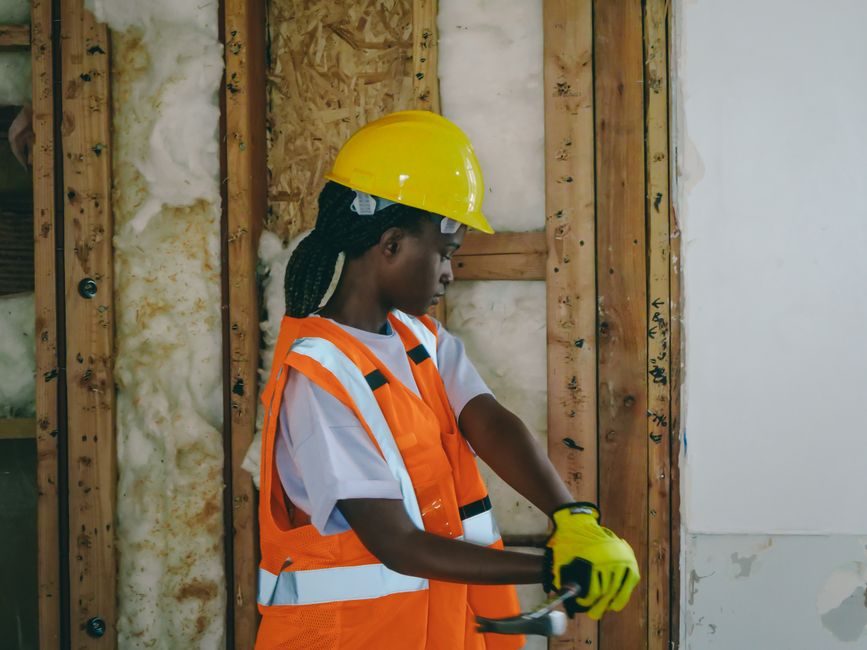
Rotary hammers for steel construction split cleanly across three power platforms — mains electric at 220-240 V 50 Hz, compressed-air pneumatic and hydraulic — with the chuck system (SDS-Plus, SDS-Max, keyed 1/2" three-jaw, or hex) determining the bit envelope and impact energy class that the tool can deliver [S1][S2][S4][S7].
Steel-site work, including anchor setting into structural members, weld-prep descaling, and rivet removal, lives almost entirely above 12 J single-stroke impact and below 12 kg tool mass, a band defined by the SDS-Max 8 kg "rotary hammer class" and serviced by mainstream 1,500 W mains platforms [S4][S8]. Pneumatic scaling hammers sit adjacent for surface-prep on steel plate, with bit energies mapped to stroke rate, not joule rating [S3].
Chuck System and Bit Envelope: SDS-Plus, SDS-Max, and Keyed Chucks
SDS-Plus shanks remain the default for steel-construction anchor work, with rotary hammer bits and demolition steel offered as a single matched accessory family covering carbide drills, core bits, chisels, scrapers and spade bits [S6]. The SDS-Plus shank envelope is sized for holes and chipping strokes typical of rebar-anchoring and small-format demolition on structural members [S7].
SDS-Max is the 8 kg-class platform specified for production demolition chisels and heavy concrete breaker work, with "High Power" mode taking the single-stroke impact energy up to 12 J on rotary hammer class "8 kg" machines [S4]. Bosch's professional rotary and demolition hammer line is structured around this same class separation between light and heavy platforms, with SDS-Plus for precision anchor work and SDS-Max for sustained chiselling on steel and concrete [S8].
For conversion to straight rotary drilling in steel and wood, 1/2" three-jaw keyed chucks remain relevant: a 7 lb (3.175 kg) pneumatic rotary hammer with a 3/4 H.P. pneumatic motor, composite handle, stainless steel gear housing and 1/2" 3-jaw chuck illustrates the configuration for steel bit-holding on small-format, spark-free sites [S2]. The 1/2" chuck is the practical cap for hole diameter in steel on this class; above that, dedicated magnetic drills take over for hole-work on plate and section [S2].
Power Source: Electric, Pneumatic, Hydraulic
Electric mains platforms at 220-240 V 50 Hz with double-insulated motors remain the workhorse on open construction sites, where the lighter 3 kg-class machine is used for on-site vibration of concrete in moulds with a 22 mm standard hammer diameter and a 1.5 m cable [S1]. This is the configuration most steel-erection fixers and small anchor crews will encounter on a typical shift.
Pneumatic rotary hammers are specified where electric-spark ignition risk must be removed, including underwater work and petrochemical or solvent-loaded sites: the 7 lb CS UNITEC platform is rated for impact drilling of holes up to 1/2" diameter in concrete, brick and masonry, converts easily to straight drilling for steel and wood, and is described by the manufacturer as ideal for underwater use [S2]. Pneumatic drive also scales up into the heavy scaling-hammer class, where triple-head 3SH units weighing 59 kg or 64 kg (130.073 lb / 141.096 lb) deliver 2500 blows per minute per piston with tungsten-carbide cruciform or bush-hammer single-piece piston heads for rapid take-down of concrete, coating removal from steel, and non-skid or epoxy stripping [S3].
Hydraulic platforms are the heavy end of the family and are mounted on carriers rather than held: the ISS 8/13 rotary rail cutter shear is a hydraulic, excavator-mounted tool for cutting, shearing and breaking rails and profiles on steel-construction and railway sites [S5]. This is the tier above what a hand-held rotary hammer covers, but it sets the upper bound of the same family of percussive steel-cutting and chipping tools.
Comparison: Electric SDS-Plus vs SDS-Max vs Pneumatic Scaling Hammer on Steel-Construction Tasks
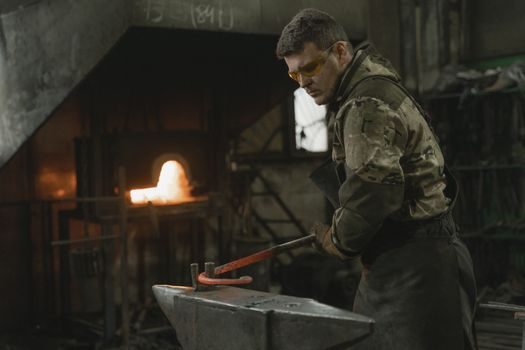
Three platforms dominate steel-construction selection and line up against four decision criteria: anchor-setting under 16 mm, sustained chiselling over 12 J per stroke, spark-free or wet-site operation, and surface-prep on steel plate [S1][S2][S3][S4][S8].
The electric SDS-Plus 3 kg-class platform with 22 mm hammer capability is the lowest-cost entry and the best fit for anchor and small rebar work on dry sites [S1]. The electric SDS-Max 8 kg-class platform with up to 12 J single-stroke impact and two-mode (hammer-drilling / chiselling) operation is the correct choice for sustained demolition, with anti-vibration rear and side handles, safety clutch, LED overload indicator and double insulation as standard features on SPARKY's BP 860CE [S4]. The pneumatic 3SH scaling-hammer is the right tool when the job is coating, rust or non-skid removal on steel plate rather than hole-making or chipping, with 2500 bpm per piston and tungsten-carbide heads as the differentiating spec [S3]. Pneumatic 1/2" chuck machines fill the niche for spark-free steel drilling in hazardous or wet locations up to 1/2" hole diameter [S2].
Use Cases on Steel Sites: Anchors, Demolition, Surface Prep, Rail
Setting anchors into steel plate and structural sections, drilling for self-tappers, and small demolition around welded attachments are the daily use cases for the 3 kg-class electric SDS-Plus platform, and the same 22 mm hammer / 1.5 m cable / 220-240 V mains configuration is repeated across multiple electric rotary-hammer SKUs aimed at site use [S1]. For higher-cycle chiselling on structural members, the SDS-Max 8 kg class with 12 J "High Power" mode is the production-grade option [S4].
Surface preparation on steel, including rust, epoxy, non-skid coating and high-build coating removal, is covered by the 3SH triple-head pneumatic platform with cruciform or bush-hammer heads, where the design target is fracturing thicker, tough-to-remove materials rather than drilling holes [S3]. Steel-structure demolition on a larger scale, including rail and profile cutting, crosses over into hydraulic excavator attachments such as the ISS 8/13 rotary rail cutter shear [S5].
For a sourcing context, stainless steel coil grade selection, slitting tolerances and China-supplier price bands shape the steel stock the hammer will be used on, and that article's spec map is a useful cross-reference when a steel-construction hammer fleet is being matched to a structural material: Stainless Steel Coil 2026: Grades, Coil Slitting, and China Sourcing Map.
Limitations, Failure Modes, and Standards Anchors

Hand-held rotary hammers are not the right tool for thick-plate hole-making above the chuck's rated capacity: a 1/2" three-jaw chuck platform is rated for impact drilling of holes up to 1/2" (12.7 mm) diameter in concrete, brick and masonry by the manufacturer, and straight drilling in steel and wood is the secondary mode rather than a production-steel alternative to a magnetic drill [S2]. Above that hole size, switch to a dedicated magnetic drill such as the MAB 825 / MAB 845 or MAB 1300 platforms from the same vendor family [S2].
Brush wear, motor overload and vibration exposure are the three chronic failure modes on mains electric platforms: the BP 860CE carries an LED 8-hour brush-wear indicator, LED overload indicator, soft-start constant electronics, and an anti-vibration system on the rear and side handles specifically to manage those failure modes [S4]. Double-insulated motors, as used across the same mains class, are the baseline insulation safety feature for site use [S1][S4]. On pneumatic scaling hammers, brush-seal piston technology and a screw top cap for head and piston replacement are the maintenance features that govern service intervals on the 3SH [S3].
Hammer and chisel selection is governed by the OEM accessory family, with carbide drill, core and dust extraction bits, chisels, scrapers and spade bits matched to the rotary hammer's chuck and impact class [S6]. Industrial handheld demolition tooling, including the rotary hammer family, is catalogued against IEC 60745 / IEC 62841 series requirements for hand-held motor-operated electric tools, with the manufacturer's "double isolation" claim on the 3 kg-class C063 platform a direct reference to the Class II construction those standards encode [S1]. Pneumatic hammers additionally follow ISO 11843-class tool-safety practice and vendor duty-cycle ratings, while the 1/2" pneumatic model is explicitly promoted for spark elimination in hazardous locations and for underwater use, which constrains component choice to corrosion-resistant materials such as the stainless steel gear housing on the CS UNITEC 2 1266 0010 [S2].
Selection Criteria and Trackable Signals
Selection reduces to four questions answered in order: chuck system and bit envelope, drive source relative to site hazard class, single-stroke impact energy relative to demolition depth, and mass / vibration class relative to shift duration [S1][S2][S4][S8]. For anchor work under 16 mm on a dry structural site, the answer is an SDS-Plus 3 kg-class electric platform; for sustained chiselling above 12 J per stroke, it is an SDS-Max 8 kg-class electric platform; for spark-free or wet sites, it is a 1/2" chuck pneumatic; for surface-prep on plate, it is a triple-head pneumatic scaling hammer; for rail and profile work, it crosses over to hydraulic excavator attachments [S1][S2][S3][S4][S5].
For the steel material the tool is being used on, alloy steel and carbon steel selection drive the bit-grade choice, and the broader rotary-hammer platform's role in concrete-vs-steel work is captured in the rotary hammer reference page. Two trackable signals to watch are Bosch Professional and Makita accessory line refreshes on the SDS-Plus / SDS-Max boundary, and any new pneumatic scaling-hammer models crossing the 2500 bpm-per-piston threshold, both of which indicate where steel-construction hammer design is heading next [S6][S8].