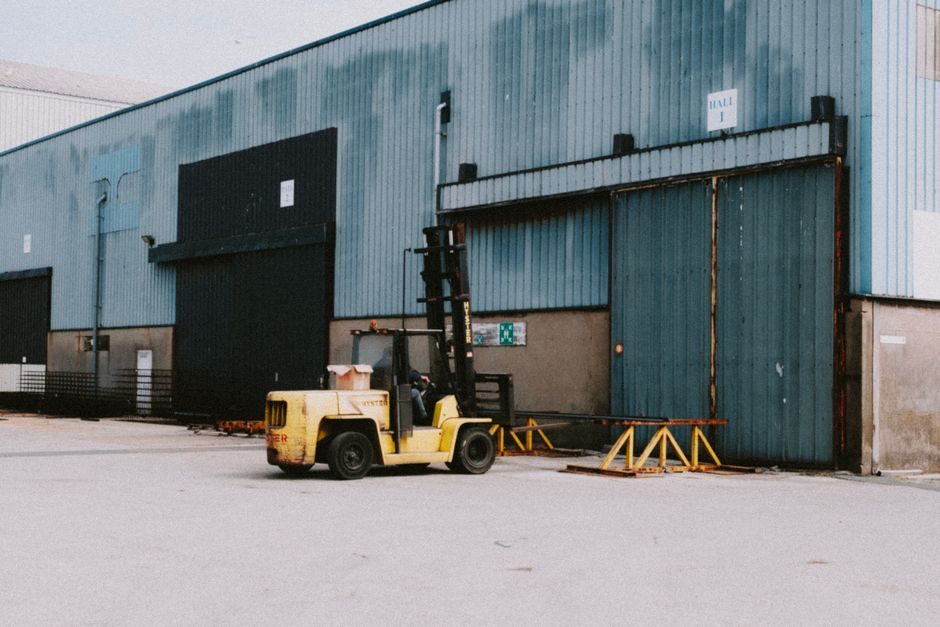
New rough terrain forklifts in mid-2026 list from roughly US$20,000 for a 1.5–3.5 t diesel unit up to US$50,000+ for 5–10 t class machines, with the Hangcha XF Series covering the full 1.5–10 t / 2700–7000 mm envelope that anchors most cost comparisons [S1].
Three price points define the 2026 market: a budget 3 t Chinese CPCD30-platform unit published at US$5,000 FOB for reference pricing [S4], a 3.5 t four-wheel-drive CPCY35 mainline at sub-US$10,000 ex-works [S3], and Western OEM telehandler-grade rough-terrain forklifts from JCB Construction typically starting above US$40,000 new for a comparable capacity class [S2].
Capacity class and lift height drive roughly 60–70% of price variance
Hangcha segments its XF range into three load bands that map almost one-to-one to price tiers: 1.5–1.8 t at 3000–6000 mm lift, 2.5–3.5 t at 2700–6500 mm lift, and 5.0–10.0 t at 3000–7000 mm lift [S1].
Lift mast height is the second lever: a 3.5 t machine moving from a 3000 mm two-stage mast to a 6000 mm three-stage mast typically adds 10–20% to list price, reflecting extra mast steel, an additional lift cylinder, a heavier linear guide set on the inner mast channels, and a longer load backrest. Used straight-mast forklifts — a reasonable proxy for a rough-terrain unit's base chassis cost — average US$10,000–US$30,000 against US$20,000–US$50,000+ new for the same class [S5]. A rough terrain forklift spec gate should therefore be written as "capacity (t) × mast height (mm) × terrain package" before any quote is requested.
New diesel vs high-voltage electric: a US$15,000–US$25,000 step per capacity class
Hangcha's XH Series adds a 1500–3500 kg high-voltage rough-terrain variant alongside the diesel XF, with 3000–6000 mm lift height, plus a telehandler configuration in the same voltage platform [S1]. On equivalent 2.5–3.5 t rough-terrain machines, the diesel-to-high-voltage-electric step runs roughly US$15,000–US$25,000 in 2026, driven by the Li-ion pack (typically 80–96 V, 200–400 Ah), onboard charger, and the high-voltage harness [S1].
For a fleet that runs two shifts indoors-and-out, payback on the electric step is generally 3–5 years at current European diesel pricing; for one-shift yard use the diesel XF remains the lower TCO option, and the JCB rough-terrain range — predominantly diesel telehandler-derived — anchors the upper end of the diesel price band [S2]. A baseline forklift price model that ignores the drivetrain choice will under-quote a high-voltage build by 30–50%.
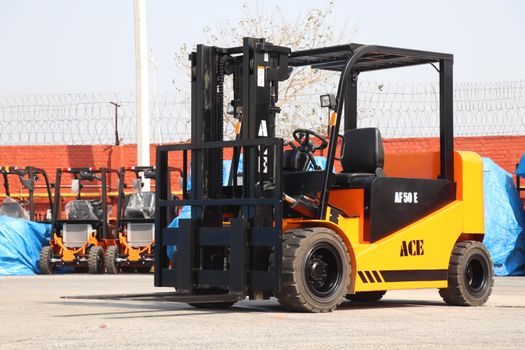
Used straight-mast forklifts cluster at US$10,000–US$30,000 versus US$20,000–US$50,000+ new, a 50–65% retention that is the right order of magnitude for rough-terrain units of similar age [S5]. Depreciation on a rough-terrain forklift is steeper than on a warehouse sit-down counterbalance because of off-road duty cycles: a 5 t XF that cost US$45,000 new in 2022 typically resells at US$22,000–US$28,000 with under 4,000 hours, but drops below US$18,000 once hours exceed 6,000 or the drive tyres are past 50% tread.
Buyers should normalise used quotes to three numbers: engine or motor hours, drive-tyre tread depth (mm), and mast chain stretch (%). The same logic is laid out in our 2026 rough terrain forklift selection guide, which lists hours, tyres and mast as the first three spec gates.
Where Chinese FOB pricing sits in the 2026 stack
The budget end of the 2026 market is anchored by Chinese OEM and trading-company pricing: a YTO-CPCD30-pattern 3 t diesel rough-terrain unit is listed at US$5,000 FOB with a 1-piece minimum order, samples at the same US$5,000 price point, and ships against TT or LC payment terms [S4]. A 3.5 t CPCY35 four-wheel-drive variant is published as a 1-set minimum on Okorder with a 5,000-set-per-month supplier capability, a useful sanity check on lead time for fleet replacements [S3].
Hangcha's own XF ladder — sold through Hangcha Europe with the same model codes — sits roughly 40–80% above the bare FOB Chinese reference once CE documentation, dealer markup and EU warranty are added, but still lands well below the JCB Construction line on a like-for-like 2.5–3.5 t basis [S1][S2].
Selection criteria and the typical failure-mode envelope
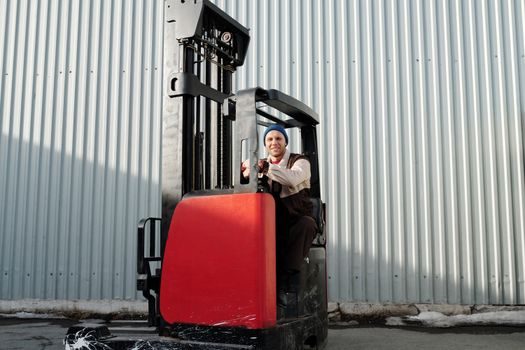
OSHA stability-triangle rules govern telehandler and rough-terrain forklift tip-over risk and are the single biggest constraint on real-world lift charts; operators must keep the load, chassis and wheels inside the triangle, with the load chart degrading as the boom is raised or extended [S6]. A practical capacity selection rule: derate the manufacturer's rated load by 15–25% on uneven ground, and by a further 10% when the load centre exceeds 600 mm — both of which move a 3.5 t nominal machine into a 2.5 t effective working load.
For yard-and-site fleets, the four most common failure modes in 2026 are hydraulic-hose chafing on rough terrain (US$300–US$900 per incident), drive-axle seal failure on waterlogged sites (US$1,200–US$2,500), mast chain wear from overloaded cycles (US$1,500–US$3,000 rebuild), and Li-ion thermal management faults on high-voltage XH units operating in ambient temperatures above 40 °C without a cooled bay. Specifying IP-rated connectors, a guarded hose routing kit, and a planned 2,000-hour axle-service interval at purchase keeps lifetime repair cost under 8% of acquisition value, against 15–20% on an unmanaged fleet.
Standards and documentation that change the delivered price
CE marking under the Machinery Directive, EN 1459 for rough-terrain variable-reach trucks, and the operator-training requirements of OSHA 1910.178 in the US are non-negotiable for site delivery; missing documentation at handover is the most common cause of a 4–8 week project delay on imported Chinese units [S6]. Buyers should treat the price line as "machine + CE/UL documentation + operator familiarisation + 2-year parts warranty" rather than the bare FOB figure shown on a trading-company page [S3][S4].
For buyers cross-shopping rough-terrain forklifts against other site-lift equipment, our 2026 rough terrain forklift vs aerial work truck comparison lines the two up on working height, platform type, chassis and load-chart gates, and is a useful second opinion before a fleet is committed.
Two trackable signals to watch through the rest of 2026: Hangcha's XH high-voltage telehandler variant — currently listed at 1500–3500 kg / 3000–6000 mm on the European page [S1] — moving into volume production, and any JCB Construction telehandler-derived rough-terrain price revision that would reset the upper end of the new-OEM price band [S2]. The Chinese FOB reference for CPCD30-class 3 t units is listed at US$5,000 per piece on Made-in-China [S4].