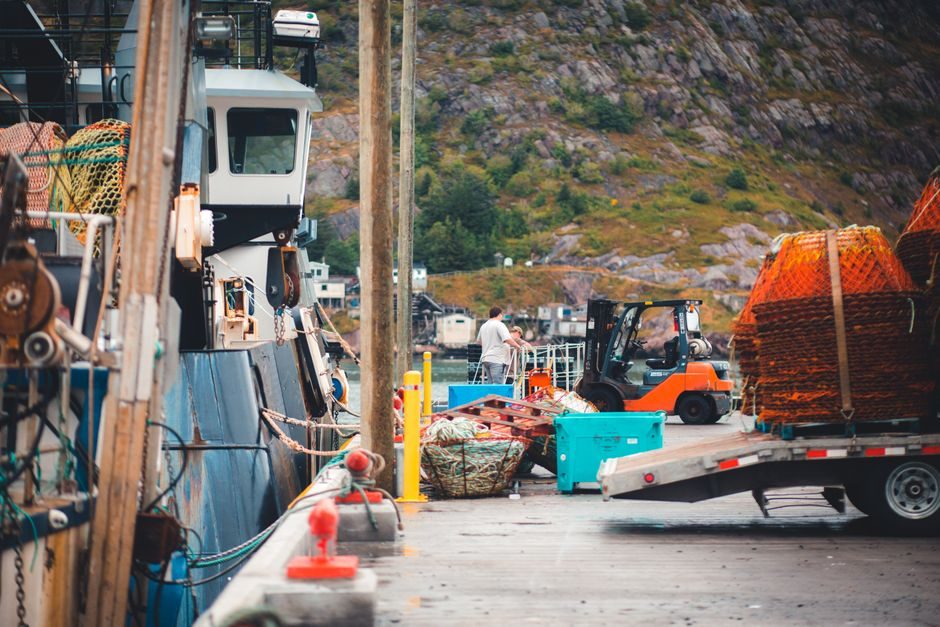
Rough terrain forklifts cover 4,000–12,500 lb (≈1,815–5,670 kg) lift capacities across current OEM line-ups, with Harlo offering six models from the H4 Compact at 4,000 lb to the 12-FIVE at 12,500 lb [S1]. Hangcha's XF series extends the upper end to 10,000 kg (10.0 t) at 3,000–7,000 mm lift height, while the XH high-voltage series covers 1,500–3,500 kg at 3,000–6,000 mm [S8].
Selection turns on five engineering axes: ground condition, lift capacity at load centre, lift height, powertrain (diesel vs hydrostatic vs high-voltage Li-ion), and emission tier for the duty cycle. A spec-first pass on those axes — not dealer brand loyalty — is what prevents a 30% productivity gap on a muddy lumber yard or a beekeeping apiary [S1][S3][S8].
Capacity and Lift-Height Bands by Class
Rough terrain forklifts segment cleanly into three capacity bands. The compact class (4,000–6,500 lb) suits orchards, apiaries, landscaping and tree care — Hummerbee's compact RTF platform is explicitly engineered for "specialized tasks in the beekeeping industry, orchards, and warehouses" [S3]. The mid-range (5,000–10,000 kg / 11,000–22,000 lb) covers general construction and agriculture: Hangcha XF 5.0–10.0 t models lift to 7,000 mm, while Harlo's 10-FIVE handles 10,500 lb at the upper end of the band [S1][S8]. The heavy class (8,500–12,500 lb) targets masonry, steel erection and military logistics — JAC's military off-road variant lists 80 km/h max speed and 45% gradability for high-speed deployment [S9].
For a yard that primarily moves 2,500 kg pallets onto flatbed trucks, a 3,500 kg-rated XF is correctly sized at ~70% utilisation; over-spec'ing to 10 t adds tire wear and fuel cost without productivity gain. Conversely, telehandler-style RTFs below 2,500 kg become tip-prone on slopes once the load centre exceeds 500 mm.
Powertrain Options: Diesel, Hydrostatic and High-Voltage Li-ion
Diesel remains the default for open-yard, high-duty-cycle sites: Goodsense's 3.0–3.5 t rough terrain forklift uses a flexible hydraulic steering system specifically to "meet off-road conditions" with security prioritised over speed [S9]. Hydrostatic drive eliminates clutch shocks and is the standard on compact European builds — Eougem/Mammut markets "hydrostatic mini skid steer loaders, European emission standard hydrostatic loaders and EPA standard all-terrain forklifts" as separate drivetrain variants for regulated markets [S2].
High-voltage Li-ion RTFs are the newest segment. Hangcha's XH series carries 1,500–3,500 kg capacity at 3,000–6,000 mm lift height with no diesel particulate matter, suitable for indoor-outdoor mixed facilities and noise-restricted sites [S8]. For indoor orchards, greenhouses, or food-grade warehousing, electric RTFs eliminate exhaust exposure; for quarries and long outdoor shifts, diesel still wins on energy density per refuel. Mid-shift opportunity charging (1–2 hours) is the operational assumption on Li-ion units, not deep-cycle overnight.
Stability Triangle and OSHA-Mandated Operating Practice
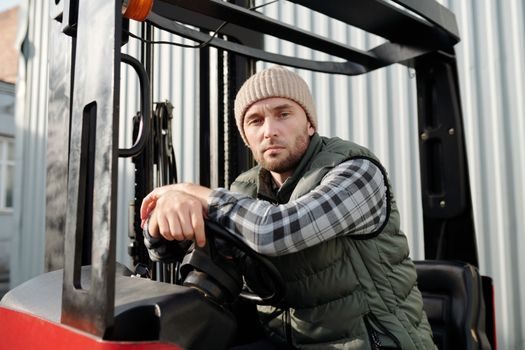
OSHA requires telehandler operators to understand the stability triangle and to keep the boom in the "carry" position — forks less than 4 ft (≈1.2 m) off the ground — before any travel or direction change [S5]. The stability triangle is defined by the front wheels and the centre of each rear tire; combined load weight, load centre, and reach must keep the combined centre of gravity inside that triangle, or the machine tips longitudinally.
Modern rough terrain telehandlers address this with two engineering controls: hydraulically tilting main frames that compensate for side-slope, and outriggers that widen the stability base on uneven ground [S5]. The operator rule remains unchanged: forks down, boom retracted, slow travel. A "Stability Triangle Determines if Telehandlers Tip" safety regime is what separates a productive RTF fleet from a write-off. Buyers should spec at minimum a load moment indicator (LMI) and a tilt sensor; neither is optional on lifts above 5,000 lb where centre-of-gravity errors scale with reach.
Comparison: Compact vs Mid-Range vs Heavy-Class RTFs
The table below lines the three classes against four decision criteria a procurement engineer will actually score on: [S1]
Compact (4,000–6,500 lb, e.g. Harlo H4 / Hummerbee RTF / Hangcha XF 1.5–1.8 t): best for orchards, apiaries, landscaping; ground clearance high, footprint low; lift height 3,000–6,000 mm; emissions tier EU Stage V / EPA Tier 4 final available on hydrostatic variants [S1][S3][S8].
Mid-range (5,000–10,000 kg, e.g. Hangcha XF 2.5–10.0 t, Harlo 10-FIVE): built for construction sites, lumber yards, agriculture; 4WD standard, larger tires, diesel dominant; lift height up to 7,000 mm; LMI typically standard [S1][S8].
Heavy (8,500–12,500 lb, e.g. Harlo 12-FIVE, JAC military RTF): masonry, steel, port logistics; reinforced masts, optional enclosed cab, high-speed axles; 80 km/h road speed on JAC military variant at 45% gradability [S1][S9].
Site Matching: Construction, Agriculture, and Tree Care
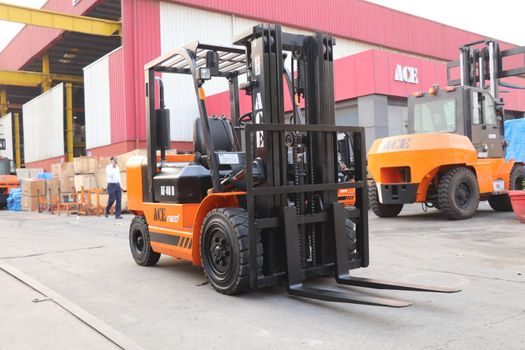
For a construction site with mixed slab and mud, a 4WD diesel RTF in the 5,000–8,500 lb band with at least 300 mm ground clearance and a tilt-correcting main frame is the engineering baseline. Harlo's mid-range HP6500 and HP8500 fit that envelope with hydrostatic-drive readiness for attachment use [S1].
For orchards and apiaries, the Hummerbee compact articulated platform delivers the lowest ground-pressure footprint and the tightest turning radius — both critical when working between tree rows or hive pallets [S3]. Eougem/Mammut positions its rough terrain forklift and wheeled terrain forklift as having "strong production and processing capabilities" giving "amazing service life" in agricultural and livestock applications, signalling that agricultural duty cycles favour purpose-built machines over construction RTFs repurposed onto soft ground [S2].
For tree care, the ArborPro Loader Package adds arborist-specific hydraulics and attachment mounts to a compact articulated base, while telehandler-style RTFs above 5,000 lb are typically over-spec for the lift heights and load weights tree-care work demands [S3].
Emission Tier, Tire Selection and Maintenance Levers
EU Stage V and EPA Tier 4 final diesel engines now dominate new rough terrain forklift shipments into regulated markets; Eougem's product line explicitly separates "European emission standard hydrostatic loaders and EPA standard all-terrain forklifts" as regional SKUs [S2]. Hangcha's XH high-voltage Li-ion series at 1,500–3,500 kg capacity exists specifically because regulated indoor and mixed-use sites increasingly prohibit diesel particulate matter [S8].
Tire selection is the second hidden lever: pneumatic heavy-duty tires for debris-strewn construction, foam-filled or solid for puncture-prone sites (recycling, scrap), and turf / low-profile for orchards and landscaping. Buyers frequently under-spec tires and then lose a week of productivity to flats.
When total cost of ownership models are run, diesel RTFs remain cheaper per operating hour above ~1,200 hours/year, while Li-ion RTFs win below that threshold or where indoor air quality rules out combustion engines. For fleet planners comparing telehandler-style units side by side, the Telehandler Price and Cost Guide 2026 breaks down the MSRP, attachment and financing levers that materially shift RTF vs telehandler ROI in the same duty cycle. For buyers also weighing automated guided vehicles for yard logistics, the AGV Price and Cost Guide 2026 maps the TCO comparison. Those cross-references matter because a 12,500 lb RTF paired with a yard AGV can replace a second conventional forklift on a busy site.
Selection Decision Framework
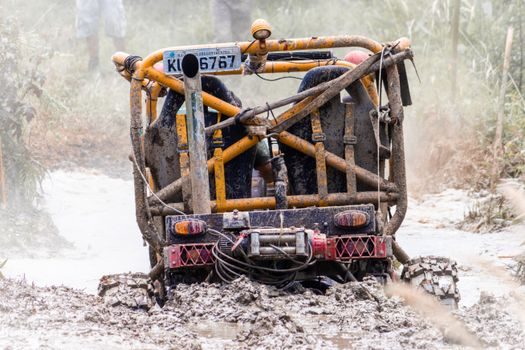
Use this four-step filter before shortlisting models: (1) confirm the heaviest typical load at its worst-case load centre, then add a 25% safety margin — that sets the rated capacity floor. (2) Confirm maximum lift height required at full capacity, not just nominal mast height — Hangcha's 7,000 mm XF rating is at full load, while some competitors quote height at reduced load [S8]. (3) Confirm ground condition: slab-and-mud mixed, soft agricultural soil, or debris-strewn demolition — that sets tire type and 4WD requirement. (4) Confirm emissions and noise constraints — EU Stage V, EPA Tier 4 final, or zero-emission Li-ion — that often narrows the candidate list to two or three OEM families. The encyclopedia reference for rough terrain forklifts collects these selection axes in a single spec map.
A correctly sized rough terrain forklift is a 10+ year asset; an incorrectly sized one is a five-year write-off. For readers new to the broader forklift taxonomy — including warehouse counterbalance and reach trucks — the forklift overview covers the platform categories an RTF is benchmarked against.
For component-level specifications, see linear guide.