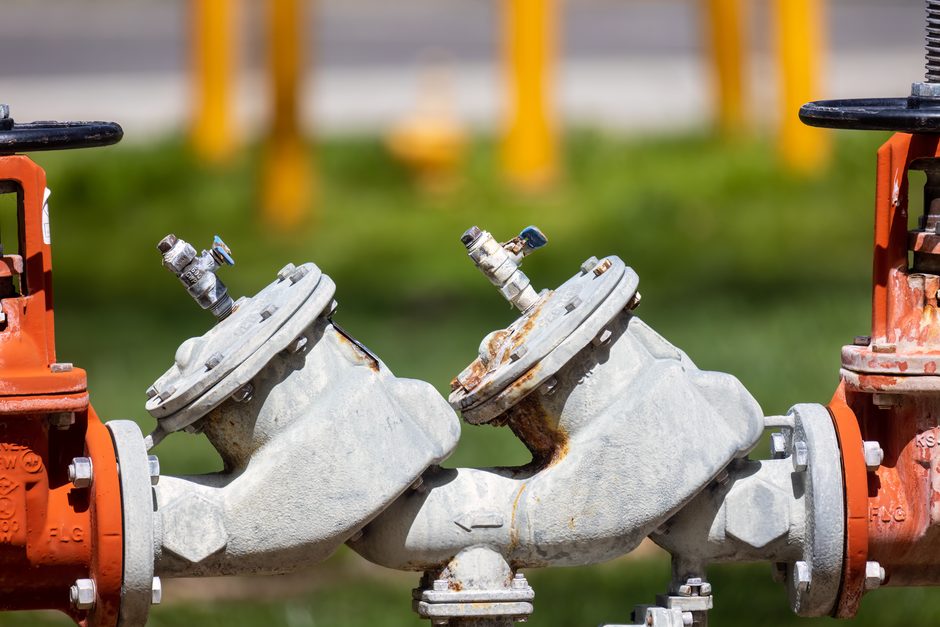
Spring-loaded safety relief valves sized per API 520 / API 521 and supplied with ASME Section XIII (Section VIII) UV certification are the baseline for overpressure protection on fired heaters, separators, compressor scrubbers and atmospheric / low-pressure storage tanks in 2026 [S4].
The 2026 supply market is broad: Made-in-China indexes 9,674 suppliers of safety / pressure-relief / control valves as of 2026-05-17, with brass and carbon-steel body options at the low end and stainless / alloy variants at the high end [S1]. UK channel pricing for compliant units starts from roughly £5.50 delivery on sub-£150 orders at Safety Valves Online [S2]. For Indian engineering buyers, go4worldbusiness lists stainless-steel SRVs with wooden-box export packing and a 230 V AC accessory rail, working-temperature line -50 to 150 °C (S3).
SRV vs PSV vs PRD — What You Are Actually Buying
API-style nomenclature splits the category: a Safety Relief Valve (SRV) is a spring-loaded valve rated for liquid, gas or two-phase service per API 520; a Pressure Safety Valve (PSV) is the API 526 term for a high-capacity direct-spring valve on compressible service; a Pressure Relief Valve (PRV) is the generic ASME term covering thermal-expansion and liquid-only relief [S4]. Baker Hughes frames the spring-loaded SRV as the default for oil-and-gas fired vessels, while rupture-disk + SRV combinations are specified where reactive polymers or sub-zero services make a soft seat unreliable.
For non-API / non-ASME services, the working-temperature window narrows fast: a 230 V AC accessory-equipped stainless SRV listed on go4worldbusiness is rated -50 to 150 °C and is sold as an 'ask-for-price' item with wooden-box export packing — a useful data point that the 150 °C ceiling is a vendor-claimed, not a code-derived, limit [S3]. Specify to ASME Section XIII / ISO 4126 wherever local jurisdiction or insurer requires it.
Set Pressure, Orifice and Capacity — The Three Hard Numbers
A 10 % accumulation is the standard fire-case envelope for single SRVs on process vessels; 25 % accumulation is used only on multiple-valve installations where simultaneous opening is engineered.
For compressible service, capacity is rated in lb/hr or Nm³/h and follows the API 520 area-reduction factor for subcritical / critical flow; for liquid service, the rated coefficient K_d defaults to 0.65 for a typical SRV (0.5 if a rupture disk is mounted upstream). Mis-using the wrong factor is the single most common spec error — it silently under-sizes a valve by 20-30 %.
Body Material, Trim and Seat — Matching the Service
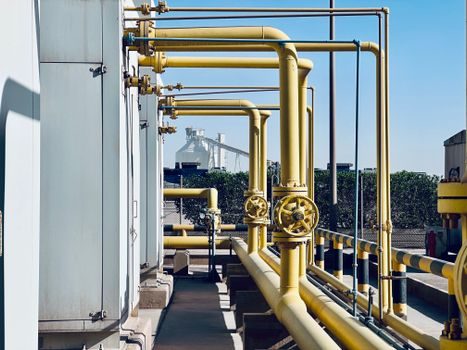
Body material is the first cost gate: cast carbon steel (WCB / A216 WCC) covers most hydrocarbon and steam duty up to ~425 °C; cast stainless (CF8M / A351 316) is the workhorse for water, NGL and mildly corrosive chemicals; alloy bodies (LCB for low-temp, C5 / C12 for hot H₂S, Monel / Hastelloy for acid / chloride) are specified only where corrosion or NACE MR0175 sour-service rules require them. Trim then layers on top: 13Cr / 17-4PH / Stellite 6 seats and discs are the common upgrades above 250 °C and on wet H₂S service. [S1]
Soft seats (PTFE, PEEK, Viton) lift reseal performance on air and water service but are typically restricted to set pressures below ~4.0 MPa and temperatures below ~200 °C; above those limits, a metal-to-metal seat is mandatory, and leak rates jump to the API 527 / API 598 tolerance bands (visible bubble rate at set pressure, not zero leakage). For process gases, a bellows-balanced spring is added when back-pressure in the outlet manifold exceeds 5-10 % of set pressure, otherwise the variable back-pressure modulates the opening point and breaks the set-pressure guarantee.
Certifications, Codes and What to Demand on the Datasheet
For a code-stamped SRV, ask for the UV stamp (ASME Section XIII / Section VIII Div.1), the API 526 / API 527 / API 520 / API 521 line, and any of the regional overlays: CE PED (2014/68/EU) for the EU, ATEX 2014/34/EU for Group II zones, EAC TR CU 032 for Russia / EAEU, and Saudi SASO / Indian PESO for oil & gas projects. Sour service adds NACE MR0175 / ISO 15156 (materials) and NACE MR0103 (low-H₂S). Fire-case and low-pressure storage tanks also call for API 2000 sizing of the venting path. [S2]
Sourcing channels carry the cert stack themselves: UK channel Safety Valves Online lists stocked units with EU / UKCA delivery from £5.50 carriage on sub-£150 orders [S2]; the Made-in-China index page groups 9,674 valve suppliers by body / material / pressure-class tags as of 2026-05-17 [S1]. On go4worldbusiness, the stainless-steel SRV listing states 'wooden box' export packing and a 230 V AC accessory rail, and quotes working temperature -50 to 150 °C against an 'ask-for-price' model [S3].
Cost Levers and Sourcing Routes in 2026
Unit cost in 2026 splits on three axes: body material (brass / WCB / CF8M / alloy in roughly 1× / 2-3× / 4-6× / 8-15× price steps at the same orifice), cert stack (PED + ATEX + NACE adds ~20-30 % over a CE-only build), and orifice area (each API 526 step up roughly doubles capacity and 1.5-2× the price for the same body). Brass safety valves sit at the bottom rung for air / water / low-pressure steam in residential and OEM skid duty [S1].
Lead time depends almost entirely on cert and material: a stocked brass or WCB SRV with a CE stamp ships in 1-2 weeks; a UV-stamped CF8M unit with NACE and ATEX is a 6-10 week build; alloy bodies (Hastelloy, Monel) on top of that code stack can stretch past 16 weeks. The two sourcing routes to weigh are direct from Asian OEM factories (lower FOB price, longer communication loop, more aggressive MOQ) against regional distributors (higher unit price, in-stock cert, faster warranty turnaround). The pressure-reducing valve decision tree in Pressure Reducing Valve 2026 Price & Cost Guide follows the same body / set-pressure / cert logic and is useful as a cross-reference for an SRV built into a downstream regulation skid.
Limitations, Failure Modes and What SRVs Do Not Do
Three service envelopes kill an SRV if misapplied: (1) two-phase flow / flashing liquids, where the simple incompressible coefficient K_d overstates capacity by 20-50 % and a tuned two-phase / multiphase model is required; (2) viscous service above ~1000 cSt, where the spring force / lift curve has to be derated and the orifice re-checked against API 521 §4.4; (3) high back-pressure or reactive polymer service, where a rupture disk upstream or a bellows-balanced spring becomes mandatory. [S3]
SRVs are also not flow-control devices — chatter and seat damage appear within hours if a valve is operated below 25 % of its rated capacity. The published 0.65 K_d assumes fully-open flow; at partial lift, the discharge coefficient is closer to 0.1-0.3 and reseat pressure drifts. For tank blanketing, vacuum, or continuous-flow trim, route the spec to a pressure reducing valve or a separate vacuum breaker, not to an SRV.
Selection Checklist and Trackable 2026 Signals

Use this condensed 2026 selection checklist: (1) determine MAWP, accumulation and required capacity from API 521 / API 2000; (2) pick set pressure at MAWP × 1.10 (10 % accumulation); (3) pick API 526 orifice from the capacity table; (4) pick body material against the corrosion / temperature / NACE envelope; (5) pick seat / trim against temperature and leakage target; (6) lock the cert stack (UV, PED, ATEX, NACE) against the project jurisdiction. [S4]
Two signals worth tracking over the rest of 2026: (a) whether EU Notified Bodies are tightening PED 2014/68/EU audit cadence on Group 1 SRVs above DN 100, which would extend lead time on stocked lines; (b) whether Asian OEM suppliers raise the default offer from CE-only to CE + EAC + SASO bundles, given the EAEU and Gulf Capex cycle that is currently pulling stocked capacity out of the EU channel. Both can be checked against the supplier indexes on Made-in-China (9,674 listed suppliers, 2026-05-17 snapshot) [S1] and against stocked UK availability at [S2] over the next two quarters.
For component-level specifications, see safety relief valve, linear guide, and crossed roller guide.