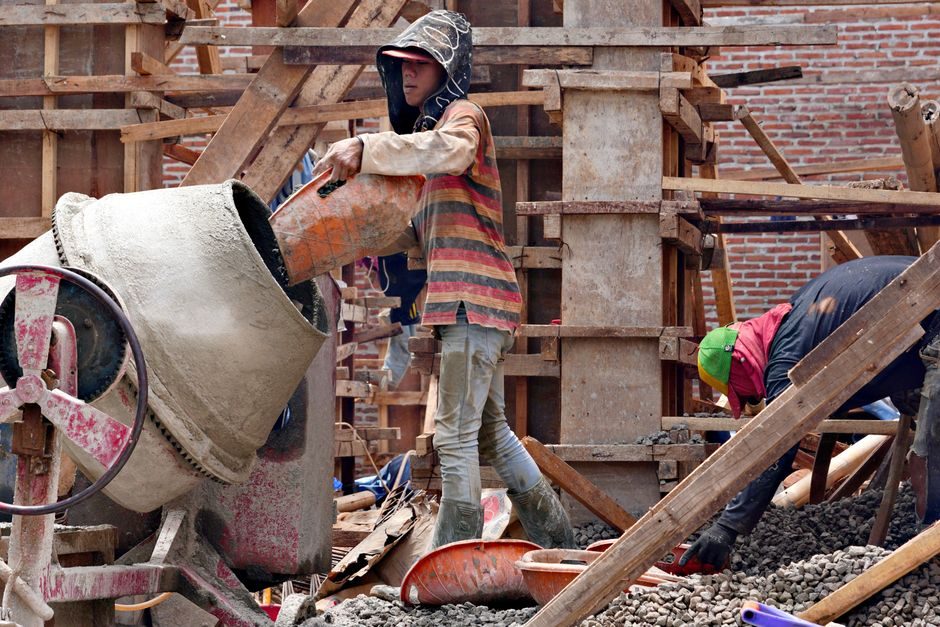
For green-sand and chemical-bonded foundry lines, the sand mixer is the single process node that fixes mould quality: a continuous foundry running 20 t/h of prepared sand needs a wheel-and-roller muller rated 1,000–1,500 kg/cycle and 1.5–2.5 m/s peripheral wheel tip speed, paired with a 75–160 kW drive that delivers roughly 10–15 kW per ton of mixed sand per hour.
Selection is therefore an engineering exercise, not a catalogue choice. The same model will over-mull a 200 kg/batch job-cast line and under-mull a high-pressure flask line at 30 cycles/h, because mulling is energy-per-ton, not energy-per-cycle, and the binder residence-time window is typically 90–180 s before tensile strength rolls off.
Capacity, Cycle Time and the kW-per-Ton-of-Sand Rule
Batch capacity is set by the highest hourly tonnage the moulding line will demand, divided by realistic cycle time. A 30 cycles/h floor for high-pressure green sand or 20 cycles/h for furan shell needs the muller discharge cycle kept at 110–160 s including charging, dry mulling, binder add, wet mulling and discharge, with sand-cooler downstream sized to the same peak (see sand cooler for the matching thermal envelope). The harder rule is energy density: continuous mullers in iron foundries are normally specified at 10–15 kW per ton of compacted sand per hour, with short-cycle high-intensity units trending toward 20 kW/t because they must complete activation in a single pass. [S1]
Continuous rotary mullers and high-speed rotor units are the two main geometries buyers compare. The continuous rotary muller (counter-rotating star-and-roller with cross agitator) gives the most uniform 90–180 s mulling window for bentonite-bonded green sand and is the default for tonnage lines above 15 t/h; high-speed rotor mixers (horizontal shaft, tip speeds above 20 m/s) are preferred for chemically bonded systems where activation energy needs to be injected in under 60 s. Where the duty is resin-sand, the resin sand line article on SourceBySpec walks through the matching binder-sand ratio and the resulting agitator sizing.
Wheel Loading, Tip Speed and the Lining Trade-off
Muller wheels (or rollers) are the components that actually knead the sand. The selection-critical figure is wheel loading, expressed in kg of wheel mass per kW of motor input, which sets the compaction energy delivered to the sand bed. A high-pressure moulding line usually needs 800–1,200 kg/kW; job-shop green-sand work is comfortable at 1,500–2,000 kg/kW. Wheel tip speed governs the shear rate at the sand–wheel interface, and 1.5–2.5 m/s is the band for bentonite activation; pushing past 3.0 m/s wastes power as heat and shortens lining life without delivering proportional tensile-strength gain. [S2]
Lining material is the second trade-off. Ni-Hard cast iron (ASME-grade equivalent, ~550 HBW) is the foundry default for abrasive green-sand duty, with a typical service life of 18–36 months in two-shift iron work. Stainless-steel liners (commonly 304/316) are specified when sodium silicate or phenolic-urethane binders attack the ferrous lining; polyurethane panels are used in resin-sand units where binder pickup on metal is a recurring clean-down problem. A detailed primer on power mixer geometry and agitator layout gives the supporting impeller-class reference for high-speed rotor units running alongside mullers.
Binder Path: Furan, Phenolic-Urethane, Green Bentonite and Silicate
Binder chemistry dictates both muller geometry and PLC recipe structure. Furan acid-cured systems use a high-speed rotor with a 10–25 s binder add window, sand temperature held at 25–35 °C, and a stainless or polyurethane liner because furfuryl alcohol attacks unprotected iron. Phenolic-urethane (Pep-set-class) systems split the resin and the isocyanate into two metered additions inside a continuous muller, with a strict sequence: dry mix 10–15 s, part-1 add 5–10 s, part-2 add 5–10 s, discharge 10–15 s, total cycle under 60 s on high-speed units. Green bentonite is the most forgiving: 90–180 s wet mulling with 2–5 % water and 8–12 % Western bentonite (or 4–7 % Southern bentonite), tempered to 3–5 % moisture for squeeze. [S3]
Sodium silicate CO2-cured work runs on a different agitator class — typically a sand mixer configured as a paddle-and-turbine unit rather than a true muller, because the silicate activation is exothermic and any over-mulling drives gel prematurely. Standards governing emissions and dust at the mulling station include OSHA 29 CFR 1910.94 (ventilation) for North-American sites, and the EU Industrial Emissions Directive 2010/75/EU for plants under the IED permit regime, both of which feed back into hood design and the dust-removal ducting spec.
PLC, Recipe Handling and the Conveyor Handoff
Modern foundry PLCs (Siemens S7-1500, Allen-Bradley ControlLogix, Beckhoff CX-series) all carry a recipe-handling layer that must hold at least 200 sand recipes with binder-percentage, water percentage, cycle time, mulling power target and discharge temperature. A non-negotiable spec line is recipe changeover under 30 s, with audit logging per the foundry’s IATF 16949 / ISO 9001 quality system. For high-mix job shops this is the deciding feature, not the kW rating. [S1]
Downstream handoff defines whether the muller is fed by a skip hoist, a belt feeder, or an aerated conveyor. Skip hoists are typical on 500–1,500 kg/cycle units; aerated槽 conveyors are standard on continuous lines. Belt feeders and aerated槽s are spec’ed against bulk density 1.4–1.6 g/cm³ for green sand, and 1.5–1.7 g/cm³ for chemically bonded systems, with the belt width sized to the muller’s top opening (typically 0.8–1.2 m for a 1 t/cycle muller). A concrete mixer truck article on the same site covers the related drum-and-paddle geometry and is sometimes mis-cited in mix-time discussions; the underlying agitation physics differ (gravity-tumble vs. forced-shear), so spec overlap is limited.
Decision Matrix: Geometry vs. Duty
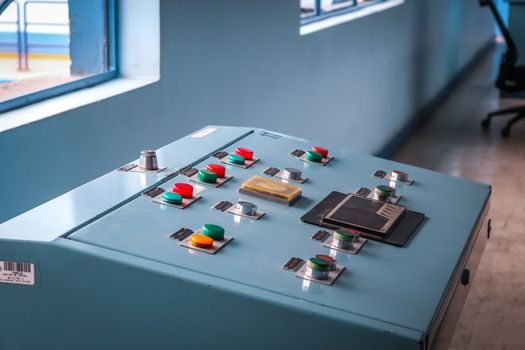
Three configurations cover roughly 90 % of greenfield and retrofit selection work. (1) Continuous rotary muller, 1–3 t/cycle class, 75–160 kW, Ni-Hard liner, PLC recipe 200+ — the default for iron-foundry green-sand lines above 15 t/h. (2) High-speed rotor mixer, 100–500 kg/cycle, 30–75 kW, stainless or polyurethane liner, twin-pump resin metering — the standard for chemically bonded shell and core-room lines, including core making machine feed at 5–10 t/h. (3) Batch muller, 50–200 kg/cycle, 7.5–22 kW, Ni-Hard liner, manual or semi-PLC control — the job-shop and aluminium-foundry option for intermittent work below 5 t/h. [S2]
The same three options lined up against four decision criteria: throughput per kW installed, binder-system compatibility, capex band (USD 40–90k for batch, USD 120–260k for continuous, USD 80–180k for rotor class, 2025–2026 industrial-vendor pricing), and floor footprint. The continuous muller wins on tonnage per kW and green-sand versatility; the rotor unit wins on chemically bonded flexibility and footprint; the batch muller wins on capex and on plants where shift pattern is under 8 h/day. Plants that run both green sand and a cold-box core room typically need both a continuous muller and a rotor unit — a one-mixer-fits-all spec is a known false economy.
Where the Mixer is NOT the Bottleneck — and Common Failure Modes
Three failure modes recur in the field. First, under-sized dust collection at the muller vent: a 1 t/cycle continuous muller exhausts 2,000–4,000 m³/h of dust-laden air, and undersizing the baghouse by 20 % typically triggers visible stack opacity violations and accelerated PLC filter loading. Second, binder metering pump drift: a worn phenolic-urethane part-1 pump that delivers +5 % resin will drive tensile strength off-spec and the muller is wrongly blamed. Third, incorrect wheel-to-bowl clearance: a 5–10 mm clearance drift on a high-pressure line costs 0.3–0.5 % compactability and is invisible on the energy meter but visible on the mould. [S3]
The mixer is also not the bottleneck when upstream return-sand temperature exceeds 80 °C, when aeration is uneven across the floor, or when the sand blasting machine downstream is fed a non-tempered mix. Each of these will cap throughput before the muller’s nameplate rating ever matters. For related spec work on upstream bulk-handling gear, the article on truck-mounted concrete pump sizing gives a comparable output-vs-pressure reference for a different process class, and the automatic level sizing and selection guide covers metrology at the mould station, which is where muller spec ultimately gets validated.
Trackable 2026 sourcing signals: lead time on continuous rotary muller deliveries from Chinese and European OEMs sits at 16–24 weeks as of mid-2026, against 10–14 weeks for high-speed rotor units; Ni-Hard liner re-sourcing is the rate-limiting sub-assembly, with foundry-grade replacement wheels running USD 3,500–7,500 per set. The next realistic plant-side signal is the foundry’s binder-system audit under IATF 16949 — that audit is the point at which any kW-per-ton or recipe-handling gap surfaces in writing.