
The global satellite antenna market is projected to reach USD 7.5 billion by 2026, growing from a 2021 base, on surging demand for active electronically scanned arrays, multi-orbit ground systems and in-flight connectivity, per the MarketsandMarkets forecast to 2026 [S2].
Satellite remote sensing services are forecast to reach USD 7.5 billion in 2026, compounding at an 11.5% CAGR across the 2021-2026 window — the highest of the segments reviewed, reflecting commercial and defense Earth-observation demand [S7].
On the downstream side, satellite internet, military satellite, and television broadcasting reports published in early 2026 segment the value chain by product, band, end-user, payload and broadcaster type, giving B2B buyers a structured comparison set for 2026 sourcing decisions [S3][S5][S6].
Phased Arrays and Multi-Orbit Antennas Drive the Equipment Segment
Active phased-array antenna shipments are the principal growth lever inside the USD 7.5 billion 2026 satellite antenna market, replacing mechanically steered parabolic reflectors on land-mobile, airborne and maritime terminals [S2]. MIMO and SOTM/SOTP configurations dominate new terminal designs because beam steering without moving parts survives ship motion, vehicle vibration and high-altitude platform dynamics [S2].
Frequency segmentation matters: L-band, C-band, X-band and K-band all appear in the 2026 product mix, with K-band phased arrays tracking the densest LEO-constellation deployments [S2][S3]. Platform split covers land fixed, land mobile, airborne, maritime and space — the same five buckets buyers use when they pull a pressure sensor datasheet for a multi-environment test campaign. Airborne and maritime segments carry the strictest MIL-STD-810 environmental gating, while space-qualified hardware adds radiation-hardened component rules on top.
Component-level pricing in 2026 reflects the supply imbalance between GaN beamforming ICs and legacy GaAs LNBs; engineering teams should validate the TR module count, EIRP and G/T figures in vendor datasheets before locking the BOM, because published numbers from a single supplier often omit array-level losses at scan angles above 60 degrees.
Satellite Internet: Two-Way LEO and Band-Stacked End-User Demand
The satellite internet report published January 2026 breaks the 2026 market by product (Two-Way Satellite-Only, One-Way Receive, One-Way Broadcast), by band (C, X, L, K plus other bands), and by end user (Commercial, Residential, Military, Industrial, Other) — a structure that maps directly onto a B2B RFP for branch-office backhaul or remote-site SCADA connectivity [S3].
Two-Way Satellite-Only is the dominant product line for 2026, led by LEO Ku/Ka-band consumer terminals; One-Way Broadcast still ships into terrestrial head-ends for IPTV and VOD distribution where uplink cost is amortized over many viewers [S3]. For industrial buyers specifying remote telemetry over satellite backhaul, the same transport flow meter data streams ride on the Two-Way product, and bandwidth-vs-latency trade-offs depend on whether the constellation is LEO (sub-100 ms) or GEO (~600 ms) [S3].
Band selection in 2026 is not interchangeable: C-band and L-band are rain-fade tolerant and preferred for tropical maritime and oilfield deployments, K-band and Ka-band are bandwidth-dense but link-budget sensitive above 10 GHz — buyers should confirm site rain-rate statistics against the satellite operator's availability SLA before pinning the band choice on a spec sheet.
Military Satellites: SmallSat Surge and ISR Payload Mix

The military satellites market report for 2026 splits the segment by satellite type (Small Satellite, Medium-to-Heavy Satellite), payload type (Communications, Navigation, Imaging, Other), and application (ISR, Communications, Navigation, Early Warning, Space Situational Awareness) [S5].
SmallSat platforms are the fastest-growing bracket inside military procurement for 2026, driven by disaggregated architectures where dozens of imaging or SIGINT satellites replace a handful of multi-billion-dollar legacy birds [S5]. Imaging payloads dominate the smallsat payload mix, while MEO navigation payloads remain a heavy-satellite franchise — a structural split buyers should expect for at least the 2026-2030 procurement window [S5].
For 2026 program offices, the critical spec gates are radiation tolerance (TID and SEE), anti-jamming waveform support, and crypto-modernization interfaces; terminals on the ground ride the same industrial valve actuator families that are now being spec'd with embedded MIL-STD-1553 or Ethernet-TSN gateways, illustrating the crossover between commercial industrial buses and defense data links.
Remote Sensing: 11.5% CAGR Sets the Pace for EO Services
Satellite remote sensing services will reach USD 7.5 billion by 2026, advancing at an 11.5% CAGR across 2021-2026, per the IndustryARC forecast issued 2026-06-16 [S7]. That is the highest sustained growth rate in the cluster of reports reviewed, driven by commercial SAR constellations, hyperspectral providers, and analytics-as-a-service offerings sold into agriculture, mining, forestry, insurance and defense intelligence pipelines [S7].
End-use verticals that pull the 2026 EO demand curve include precision agriculture (NDVI and soil-moisture products), oil & gas (methane plume detection from SAR and hyperspectral stacks), and financial commodities trading (commodity-nowcast imagery) [S7]. The same sensor data feeds industrial pressure transmitter calibration campaigns in remote pipeline right-of-way, where satellite-derived ground-truth models replace manual site visits.
Limitation buyers must price in: revisit time, cloud-cover statistics, and minimum-order-area economics all gate EO service SLAs. A 30 cm resolution tasking order on a single satellite typically books 14-90 days out and carries minimum area charges — procurement teams should build that lead time into the 2026 RFQ timeline rather than treating EO as on-demand.
Television Broadcasting: Subscription vs Ad-Supported Split
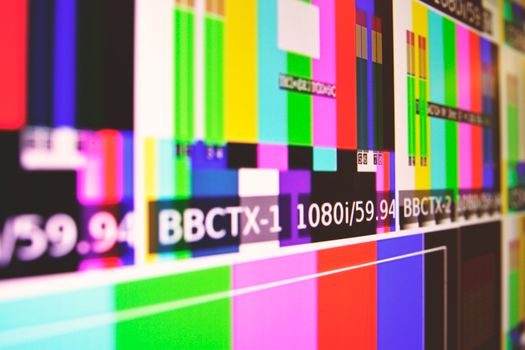
The television broadcasting market report for 2026 segments revenue by broadcaster type (Public, Commercial) and by revenue source (Subscription-Based, Advertisement-Based), projecting continued migration of satellite-distributed linear channels toward hybrid OTT delivery [S6].
The May-June 2026 issue of the Satellite Executive Briefing frames the structural shift explicitly: "The End of Monetization Silos: Why the Future of Broadcasting Lies in Unified Streaming Economies" — meaning satellite DTH operators are folding their linear feeds into unified streaming stacks rather than running parallel broadcast and OTT billing paths [S1]. For B2B media-tech buyers, that 2026 transition changes the head-end encoder spec: HEVC, low-latency CMAF, and DVB-I signaling are now baseline, and the uplink RF chain feeds the same PLC-controlled head-end automation that runs terrestrial playout.
Quoted as a trackable signal: the Satellite Executive Briefing's Orbital Data Centers feature — "Orbital Data Centers are Increasingly Being Launched into Space but must Meet Stringent Requirements" — flags 2026 as the year thermal, radiation and vibration qualification gates for space-rated data-center payloads get codified into commercial procurement [S1].
Selection Criteria: Matching the 2026 Satellite Segment to a B2B Buy
Side-by-side, the four 2026 segments reviewed sort cleanly by buyer intent. Satellite antennas (USD 7.5B by 2026) are a hardware buy for terminal OEMs and integrators; satellite internet is a service buy for branch connectivity and remote telemetry; military satellites is a program-level buy for ISR/Comms payloads; remote sensing services (USD 7.5B in 2026, 11.5% CAGR) is a data buy for analytics teams [S2][S3][S5][S7].
Decision criteria: lead time (terminal hardware 6-12 months, EO data tasking 14-90 days, satellite internet service 1-4 weeks, military payload slots multi-year), capex vs opex (antennas capex, services opex), and spec criticality (radiation-hardness for military, link-availability SLA for internet, revisit time for EO, gain/EIRP for antenna) [S2][S3][S5][S7]. A buyer writing a 2026 RFQ should pin those four axes up front, the same way an integrator would pin servo motor torque, bus protocol and IP rating before releasing a motion-control spec.
Sourcing Standards and Trackable 2026 Signals

Satellite hardware sourcing in 2026 runs through four standards gates buyers should pre-load into the RFQ: ITU Radio Regulations (frequency coordination and orbital slot filing), CCSDS protocols for space-link telemetry, MIL-STD-810 for environmental qualification, and ECSS or NASA-STD-8720 for radiation and reliability assurance on space-qualified components [S2][S5].
The May-June 2026 issue of the Satellite Executive Briefing is the cleanest single source for the past month's coverage on orbital data centers, unified streaming economies and the 2026 commercial launch cadence, and it ships as the key reference for the back half of the year [S1]. The next trackable node: the Q3 2026 update from MarketsandMarkets on the satellite antenna market and the 2026 edition of the remote sensing services report both fall inside the next 90 days, and will reset the 11.5% CAGR figure and the USD 7.5 billion anchor cited above [S2][S7].
For related coverage, see Drone Industry 2026: Delivery Demand, HAPS Maturity, and the Spec Gates Buyers Must Clear.