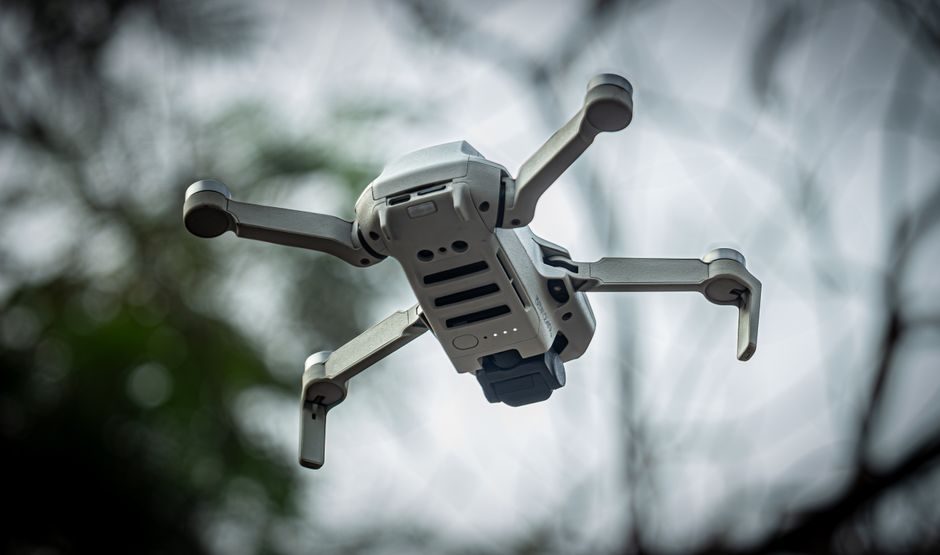
The global delivery drones market is estimated at USD 1,013.7 million in 2026 and is forecast to reach USD 12,335.3 million by 2033, a 42.9% compound annual growth rate (CAGR) over 2026-2033, with multi-rotor wings holding 48.7% of the 2026 share on the strength of urban-delivery agility and lower unit cost [S4].
On the ground, the 2026 news flow is dominated by three concurrent tracks: last-mile delivery economics pushing multi-rotor airframes, higher-altitude platform systems (HAPS) moving into early operational reality, and country-level regulatory build-out — including Malawi joining the Flying Labs network, Algeria commissioning its first drone training school, and Togo expanding its drone industry [S1][S6].
Delivery drones: USD 1.01 Bn in 2026, 42.9% CAGR to 2033
Multi-rotor wings lead the delivery-drone segment with 48.7% of 2026 share, ahead of fixed-wing and hybrid VTOL options, on the strength of hover stability, vertical takeoff in confined urban pads, and lower per-unit acquisition cost [S4]. The same forecast puts the segment on a 42.9% CAGR through 2033, an order of magnitude that puts delivery drones among the faster-scaling industrial automation categories in the flow-meter / instrument-adjacent investment universe.
That growth is anchored in real operational data, not slideware: Zipline published 2026 impact results covering its medical and last-mile delivery network, and reports of an Australian drone-show failure raised safety questions that operators are now routing back into maintenance and BVLOS procedure design [S1]. For procurement, the practical 2026 spec gate is no longer "can it fly" but "what payload, what range, what BVLOS authorization, and what redundancy class."
HAPS: from concept to early operational reality in 2026
Higher-Altitude Platform Systems (HAPS) crossed a 2026 threshold, moving out of conceptual discussion and into early operational reality, with the technical, regulatory, and institutional questions now the focus of a DroneTalks / CANSO webinar held 2026-05-11 [S6]. The same HAPS trajectory is forcing regulators to treat stratosphere-tier airspace as a separable control volume from conventional ATC.
For instrument buyers this matters because HAPS payloads share a hardware base with industrial pressure transmitter and pressure-sensor designs — differential pressure for altitude, temperature compensated for solar soak, and low-power telemetry for multi-day station-keeping. Standard fit-out increasingly mirrors Class A IEC 60079-style environmental expectations even on non-hazardous HAPS platforms because of the maintenance access penalty once airborne [S6].
Regulation and training build-out: the country-level 2026 signals
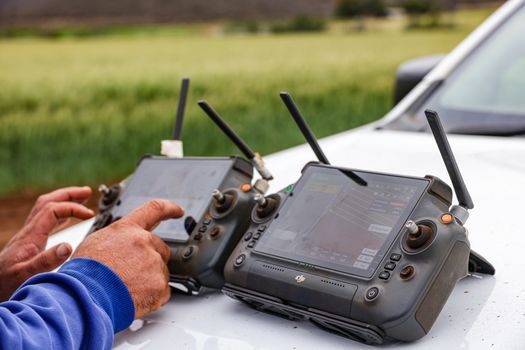
Three 2026 datapoints frame the regulatory ramp: Malawi signed up for the Flying Labs network; Algeria commissioned its first ever drone training school; and Togo is publicly planning to expand its national drone industry [S1]. Beijing's drone ban aftermath continues to feed enforcement data into 2026 operator briefings, and a drone intercepted over a South Korea training base — reportedly brought down by Mexican military — underlines that airspace incursions remain a live safety and policy issue [S1].
For an industrial buyer the takeaway is concrete: procurement specifications for 2026 fleet purchases should pin down the operator certification regime (FAA Part 107, EASA Open / Specific, CAAC), the BVLOS authorization pathway, and the local training-school availability, because all three are gating delivery timelines for new airframes [S1].
Use cases: medical delivery, inspection, energy, and shows
Zipline's 2026 impact results put medical-supply delivery on the lead-adopter track, where the value proposition is range and cold-chain reliability, not just cost-per-kilometre [S1]. The 2019 Offshore Technology Conference briefing from a Houston-based drone business-development lead already framed energy-sector inspection as a high-potential vertical; 2026 operator data confirms that oil-and-gas pipeline right-of-way, flare-stack, and offshore-platform inspection are now baseline commercial use cases, not pilots.
Counter-point: the Australian drone-show failure is the cleanest 2026 reminder that swarm and show operations carry a different failure-mode profile than point-to-point delivery — namely, geometric collision risk, GPS-denied recovery, and crowd-density consequence codes. Operators are routing these into pre-show airworthiness gates distinct from delivery fleets [S1].
Comparison: multi-rotor vs fixed-wing vs hybrid VTOL for 2026 delivery
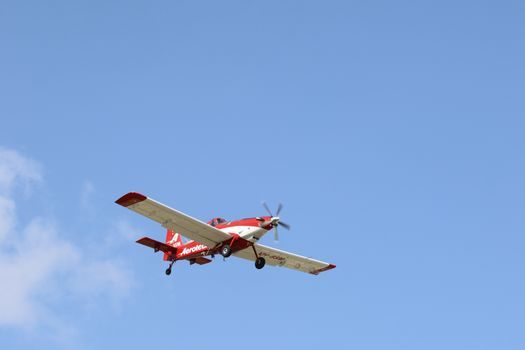
The 2026 buyer decision reduces to four criteria: payload mass, range, hover capability, and unit cost. Multi-rotor wins on hover and unit cost (48.7% 2026 share) but loses on range and payload efficiency. Fixed-wing wins on range and payload-to-energy ratio but needs runway or catapult launch, ruling out dense urban pads. Hybrid VTOL sits in the middle, trading mechanical complexity for range-plus-hover, and is the default pick for suburban medical delivery where pad space exists but urban density is lower [S4].
For a 2026 procurement review, the question is not "which platform is best" but "which criterion set defines the route": dense urban + sub-5 kg payload + same-day medical = multi-rotor; rural medical + 50+ km range = fixed-wing or hybrid; suburban hospital-network hub-and-spoke = hybrid VTOL. The same logic applies to industrial inspection airframes, which is why many operators now run a two-airframe fleet rather than a single type [S4].
Adjacent industrial stack: where drones intersect with plant automation
Drones are now a routine payload for plant digitalization: aerial LiDAR and thermal scans feed into the same control loops that already read PLC tags and industrial-valve positions, and drone-collected flare and stack data is increasingly used to back-calibrate fixed stack gas monitors. On the propulsion side, drone flight controllers are descendants of the same motion-control firmware families that drive industrial servo-motor systems, which is why 2026 drone-cybersecurity guidance borrows heavily from IEC 62443-style zone-and-conduit thinking rather than treating airframes as standalone IT assets. [S1]
For buyers cross-spec'ing industrial gear in 2026, the practical move is to fold drone-fleet procurement into the same vendor-risk review as safety PLCs and motion controllers: same update cadence, same SBOM expectations, same incident-response SLA. The chemical-industry 2026 trend stack from McKinsey and Cefic — carbon reduction, social and economic sustainability, innovation — is the same driver pulling drone-based flare and emission inspection into routine plant operations [S2].
Limitations and failure modes the 2026 spec must address
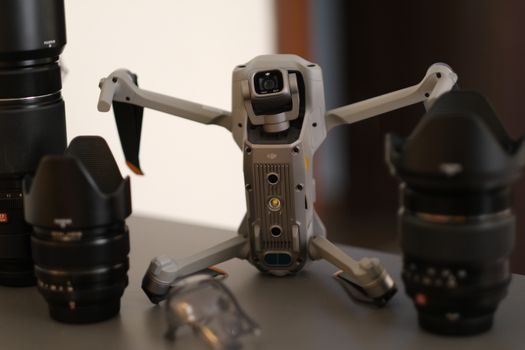
Four failure modes are showing up repeatedly in 2026 incident write-ups: GPS-denied recovery (urban canyon, jamming, spoofing), battery thermal runaway on high-C multi-rotor packs, swarm geometric collision in show operations, and BVLOS link loss in marginal cell-coverage corridors [S1]. Each one maps to a procurement line item: anti-spoof GNSS receiver, cell-aware route planning, thermal-runaway containment in the battery enclosure, and a defined BVLOS link-loss return-to-home envelope.
Counterfeit and grey-market airframes are a second-tier 2026 risk: the same logistics trend stack that pushes drone delivery also pulls low-cost airframes through the same channels as other industrial electronics, with the same traceability problems. DHL's 2026 logistics-trend piece flags AI-driven routing and sustainability reporting as the two cross-industry watch-items that will tighten drone-fleet audit expectations in parallel with general cargo.
Standards, sourcing, and a 2026 procurement checklist
Three standards families govern 2026 commercial drone deployment: ICAO Annex-based national aviation rules (FAA Part 107, EASA Open/Specific, CAAC), IEC 62133 / UN 38.3 for the lithium-airborne battery pack, and IEC 62443-style network security expectations for the ground-control and telemetry link. For medical and pharmaceutical delivery, the additional overlay is GDP (Good Distribution Practice) cold-chain traceability, which is why Zipline's published 2026 impact data carries weight — it is auditable, not narrative [S1][S4].
Vendor sourcing in 2026 still concentrates on a small set of OEMs with mature supply chains (the Drone Industry Insights company-ranking index is the working reference) [S3]. The 2026 MarketsandMarkets research-insight page shows that the broader industrial-analytics vendor base — Siemens Healthineers, Philips, Novonesis, UPL — is the same set of names now publishing drone-fleet-adjacent digital-X-ray and biofertilizer data, indicating the drone and industrial-sensor procurement pipelines are converging at the same trade shows and the same system-integrator shortlists [S5].
Trackable 2026 watch-items: next HAPS / CANSO airspace-integration publication following the 2026-05-11 webinar [S6]; Zipline follow-on impact data on multi-country medical-delivery operating cost; and any 2026 EASA / FAA BVLOS rule amendment that re-prices the multi-rotor urban-delivery business case.