
SCADA software selection in 2026 is dominated by four spec levers — runtime platform, licensing model, historian scaling, and IEC 62443 cyber posture — with list prices from US$0 (Rapid SCADA open-source) to multi-thousand-dollar per-tag enterprise suites [S3][S6].
Process plants, utilities, and discrete manufacturers now evaluate SCADA less on HMI screen count and more on edge-to-enterprise data flow, redundancy topology, and OT/IT convergence, which is why the same AVEVA/HMI/SCADA stack is being delivered as both a hosted trial and a self-hosted product tier [S4][S5].
What a SCADA package actually contains in 2026
A modern SCADA suite bundles an I/O server, tag database, HMI graphics, alarming, trending/historian, scripting engine, and a redundancy manager. SourceForge's 2026 directory groups offerings by runtime — embedded OS, WINE, Linux, Windows — confirming that the operating-system target is now a primary filter for buyers, not a footnote [S1][S2].
The open-source Rapid SCADA repository on GitHub illustrates the canonical six-component layout: ScadaAdmin (configuration), ScadaComm (communication drivers), ScadaData (tag database), ScadaScheme (graphic templates), ScadaServer (real-time engine), and ScadaWeb (web HMI) — a structure mirrored, in commercial form, in suites from AVEVA, Ignition, and WinCC [S6].
Decision criteria: platform, licensing, historian, security
Four criteria separate shortlist candidates: (1) host platform — Windows-only versus Linux/embedded/WINE-capable, with the latter opening the door to ARM-based industrial PCs and Dockerized gateways [S1][S2][S6]; (2) licensing model — perpetual per-tag, per-I/O point, concurrent-user, or subscription, with perpetual per-tag common in mid-market and subscription tied to vendor cloud services [S3]; (3) historian scaling — flat-file (SQLite/PostgreSQL) versus high-performance time-series (PI, Wonderware Historian, AVEVA) where insertion rates of 100,000+ tags/sec are the differentiator; (4) cybersecurity — IEC 62443 SL2/SL3 certification, signed firmware, role-based access, and Active Directory integration [S4][S5].
Buyers that already run an HMI Touch Panel 2026 Buying Guide hardware standard at IP65/IP67 should match that environment to a SCADA runtime that supports the same OS, otherwise OT teams end up running two patching regimes on the plant floor.
Comparing the main options against decision criteria

Lining the four common archetypes against the criteria above gives a defensible shortlist: Rapid SCADA / open-source stacks deliver zero licence cost and full Linux/embedded support, but require in-house driver development, carry no commercial IEC 62443 certificate, and are limited to flat-file historians [S6]. Mid-market Windows suites (Inductive Automation Ignition, WinCC, Citect) typically price US$1,500–4,500 per I/O point or per concurrent client with SQL-backed historians, support Active Directory, and ship with IEC 62443 SL2 documentation [S3]. Enterprise platforms (AVEVA System Platform, Rockwell FactoryTalk, Schneider AVEVA/Wonderware) price per tag with enterprise historian modules and offer IEC 62443 SL3 certification, redundant hot-standby servers, and tight MES/ERP connectors, which is why Q-mation packages them alongside MES, EAM, and engineering suites [S4][S5].
When an HMI is part of a wider motion or filling line, pairing the SCADA decision with a motion-control review such as the Stepper Drive vs VFD: Motion-Control Decision Map for 2026 Specs helps avoid buying two vendor stacks that cannot share tag names or alarms.
Who SCADA is — and is not — for in 2026
SCADA is for plants with 500+ I/O points, regulated alarm management, and a documented safety/cyber posture — water utilities, oil & gas terminals, food and beverage lines, and discrete batch operations. AVEVA's own positioning is "control over geographically distributed assets", confirming that wide-area or multi-site telemetry is still the canonical use case [S4].
SCADA is NOT the right answer for sub-100-point machine controls, where a soft-PLC plus an HMI Touch Panel 2026 Price & Cost Guide panel delivers a lower TCO, nor for pure cloud telemetry where an MQTT broker plus a time-series database replaces the supervisory layer.
Real buying patterns: open-source vs enterprise in 2026
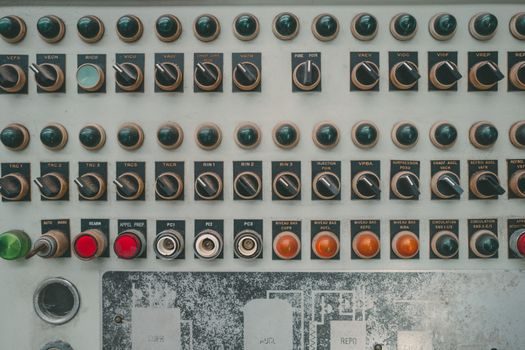
SourceForge's May 2026 SCADA comparison page is dominated by open-source entries — OpenSCADA, Rapid SCADA, ScadaBR — listed alongside commercial trials, which means SMB buyers are actively evaluating zero-licence stacks for non-regulated lines [S3]. SourceForge also exposes a WINE-compatibility filter, evidence that customers want to run Windows-only SCADA on Linux hosts to escape Windows licence fees on industrial PCs [S2].
Enterprise buyers continue to consolidate: Q-mation markets AVEVA as the spine connecting HMI, MES, EAM/CMMS, and engineering design under one licence, with "Edge to Enterprise" data flow as the headline value proposition [S5]. For production lines that share a plant with material-handling kit, an Arc Welding Machine 2026 Price & Cost Guide style audit of process equipment can be run in parallel to decide which assets the SCADA historian should ingest at full resolution.
Limitations, failure modes, and standards to demand
Common failure modes in 2026 deployments are historian overflow (no rollover policy), un-signed firmware updates, and dual-nic bridges that bypass DMZ segmentation. Counter-measures are codified in IEC 62443-3-3 (system security requirements) and IEC 62443-4-1 (secure development lifecycle), which enterprise buyers should require at SL2 minimum and SL3 for critical-infrastructure sites. SourceForge's open-source entries do not advertise IEC 62443 certification, which is the structural reason regulated plants still pay for enterprise suites [S3].
For lines where SCADA supervises weighing and dosing, the related Filling Scale 2026 Buying Guide covers head type, resolution, and material-of-construction decisions that often feed SCADA tags for OEE, and the cost counterpart Filling Scale 2026 Price & Cost Guide lists the head/range/IP/cert levers that determine whether a scale can sit on the same network tier as the SCADA server.
Sourcing, standards, and a verifiable next signal

Public, free sources in 2026 for shortlisting remain the SourceForge SCADA directory (updated May 2026) and the AVEVA/Q-mation product pages, both of which publish platform and component lists openly [S3][S4][S5]. For reference architecture, the Rapid SCADA GitHub mono-repo is the most current open-source blueprint of the six-component SCADA layout [S6]. The trackable next signals to watch are (a) SourceForge's monthly update of the SCADA comparison rankings, and (b) vendor-by-vendor IEC 62443 certificate numbers in their public trust centres, which are the cleanest indicator of which suppliers are keeping cyber documentation current through 2026.
For component-level specifications, see scada software, linear guide, and crossed roller guide.