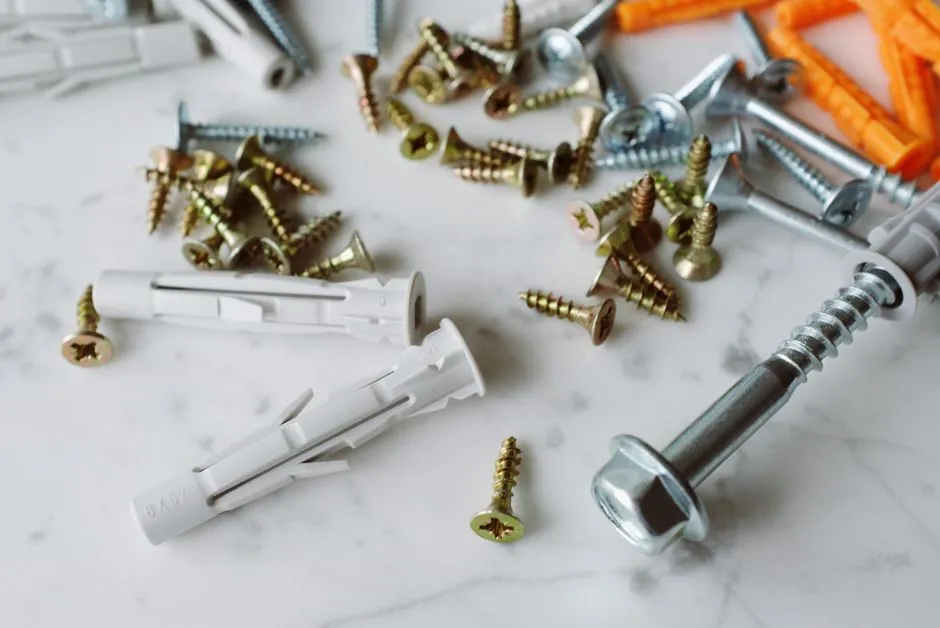
A36 carbon steel at roughly 100 BHN remains the baseline construction for most screw conveyors and screw feeders, with thicker A36 sections (3/8" and up) used where service is mildly to moderately abrasive [S4].
Where abrasion dominates, AR400 plate (around 400 BHN) is rated at 4x the wear life of A36 carbon steel and 2x the wear life of AR200, with AR200, AR400, AR500, and AR600 forming the standard abrasion-resistant plate grade series [S4][S5]. Where corrosion, sanitary washdown, or chemical exposure dominates, stainless steel (minimum 10% chromium for the self-repairing chromium-oxide layer) is the spec-of-record despite higher cost [S3].
Decision criteria: abrasion, corrosion, temperature, cost
Three material properties govern the choice for a screw conveyor flight, pipe, or trough: abrasive wear resistance, corrosion resistance to the conveyed bulk and environment, and unit cost per kilogram. A36 carbon steel is widely available, the cheapest of the three, and rates a baseline wear factor of 1.0 in manufacturer comparisons; heavy A36 (3/8" plate and thicker) raises that factor to about 1.5 simply by adding material thickness [S4]. AR200 plate (around 200 BHN) roughly doubles wear life over A36 at a modest cost premium, while AR400 plate quadruples it, with the trade-off being harder forming, harder welding, longer fabrication lead times, and a higher buy price [S4].
Corrosion resistance inverts the ranking. Carbon steel (including carbon steel grades above the 0.25% C threshold) oxidizes readily when exposed to moisture, with rust forming as iron-oxide scale that progressively thins wall sections [S1][S3]. Stainless steel resists this through a chromium-oxide film that re-forms if the surface is scratched, and is preferred for moisture, chemical, and elevated-temperature service [S3]. On cost, stainless components are documented at a 120-150% premium over equivalent carbon steel components in agricultural-equipment comparisons, a ratio that also tracks for screw conveyor fabrication [S8].
Material-by-material comparison
A36 carbon steel: hardness ~100 BHN, wear factor 1.0, lowest cost, immediate shipment from most distributors, readily welded and formed, no corrosion resistance, suited to grain, feed, fertilizer, and other mildly abrasive dry bulks below roughly 200 deg C service [S4][S5].
AR200: hardness ~200 BHN, wear factor ~2, mid-cost (often a small premium over made-to-order heavy A36), made-to-order in a couple of weeks, similar fabricability to A36 [S4].
AR400: hardness ~400 BHN, wear factor ~4, highest plate cost among common choices, harder to form and weld, longer lead times, dominant choice for sand, mineral ores, potash, glass cullet, and metal-recycling streams [S4][S5][S7].
AR500: similar to AR400, slightly harder, more expensive, harder to source; specified only where AR400 wear life is still inadequate [S4].
Stainless steel: hardness typically higher than mild carbon steel due to chromium, wear resistance below heat-treated carbon steel but corrosion resistance far superior, 120-150% cost premium over carbon steel, used for chemical, food, pharmaceutical, and washdown service [S3][S8].
Carbon steel content is defined as 0.25-2.0% C; mild carbon steel sits at the low end and is the most weldable and formable, but also the most rust-prone when exposed to heavy moisture [S1][S3].
Use-case mapping: which material goes where
For grain, feed, wood pellets, soybean meal, and similar low-abrasion organics, standard A36 carbon steel flights and troughs are the industry default, with heavier A36 plate (3/8"+) used when the same bulk is conveyed at higher tonnage [S4].
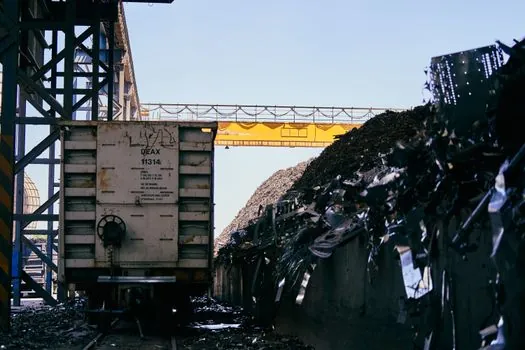
For sand, fertilizer granules, potash, mineral ore, and foundry sand, AR400 flights, pipes, and trough liners deliver roughly 4x the service life of A36; KWS Manufacturing has documented AR400 specification for heavy-duty metal-recycling screw conveyors handling carbon steel, stainless steel, copper, aluminum, and brass scrap [S7]. Trough liners in AR plate offer a 2-4x wear factor and the option to replace the liner without removing the screw, which is often the lowest total-cost path for retrofit plants [S4].
For wet, corrosive, or food-grade service (biosolids, lime slurries, salt, caustic chemicals, washdown environments), 304 or 316 stainless steel flights and tubing are specified despite the 120-150% material premium, because carbon steel in these services routinely fails by wall thinning within a single maintenance interval [S3][S8]. For related stainless-grade purchasing context, the stainless-steel SKU reference set gives three procurement calibration points.
Hybrid constructions and when not to upgrade
AR steel is not a corrosion material, it is an abrasion material. Specifying AR400 in a wet, acidic, or sanitary service buys 4x wear life and zero corrosion protection, and the plate will still rust [S4][S5]. Conversely, specifying stainless steel in a dry, highly abrasive mineral service buys corrosion resistance the application does not need and gives up wear life compared with AR400, because chromium-hardened stainless is typically not as hard as heat-treated carbon or AR plate [S3].
Common hybrid builds pair an AR400 flight and AR400 trough liner with an A36 carbon steel pipe and supports, since wear is concentrated at the trough bottom and the flight edge, not in the pipe wall or external structure [S4]. Hard-surfacing weld overlays (chromium-carbide or similar) push the wear factor to roughly 6, above AR400, but add the most expensive fabrication step and are usually reserved for the highest-tonnage or most abrasive streams [S4].
Stainless steel also has a documented brittleness penalty: it does not flex under impact and is prone to cracking under sudden pressure, which is why heavily loaded screw conveyors in mining and recycling stay with carbon or AR steel rather than upgrading to stainless [S3].
Standards, sourcing, and procurement signals
AR plate grades AR200, AR400, AR500, and AR600 are a manufacturer-defined series keyed to Brinell hardness, with carbon and manganese as the principal hardening agents; the number is the nominal BHN [S5]. A36 is an ASTM structural carbon steel defined by minimum yield strength rather than hardness, which is why two A36 batches from different mills can show different through-th hardness despite identical spec [S5]. Stainless steel is defined by a minimum 10% chromium content for the corrosion-resistant grade family, with 304 and 316 being the workhorse stainless pipe and sheet grades used in conveyor fabrication [S3].
For a screw conveyor parts buyer, the verifiable 2026 signal is cost and lead-time: stainless still runs 120-150% over carbon steel, AR400 plate is the highest-priced standard abrasion grade but is in stock at most service centers, and weld-overlay hard surfacing remains the most expensive per-flight option at a wear factor of about 6 [S4][S8]. Trackable next nodes are the AR500 supply tightness (noted as harder to source than AR400), made-to-order AR200 lead times around two weeks, and trough-liner retrofit demand from aggregate and recycling operators [S4]. For an adjacent material-selection reference covering channels and abrasion-resistant shapes, see the UPE vs UPN channels decision reference.