
A screw conveyor uses a rotating helical auger inside a trough to push material along a fixed axis, while a belt conveyor transports load on a continuous belt supported by idlers — the two architectures suit fundamentally different duty cycles, and confusing them on a green-field spec routinely costs 20–40% in energy or 2–5× the maintenance hours [S2][S7].
Screw conveyors are the go-to for short runs (typically under ~30 m), inclined or vertical lifts up to roughly 90°, and dusty, hot, or odorous bulk solids where full enclosure is mandatory; belt conveyors dominate horizontal and gently inclined runs from a few metres to multi-kilometre overland lines carrying thousands of tonnes per hour [S2][S7]. For readers mapping the belt conveyor family and the flat belt variants commonly used on them, the comparison below is built on hard design criteria rather than marketing copy.
Operating Envelope and Material Suitability
Screw conveyors handle free-flowing to semi-free-flowing bulk solids — grains, cement, fly ash, wood chips, ice — and tolerate temperatures that would damage rubber belts, since the trough can be jacketed or fabricated from stainless or abrasion-resistant steel; the catalogue data from an Indian conveyor directory explicitly highlights "dusty and hot materials, and also materials with an obnoxious odour" as the duty class where screw conveyors are specified over belt conveyors because they can be made fully dust-tight by jacketing the trough [S2].
Belt conveyors carry a wider material range (unit loads, packaged goods, aggregates, ores, chemicals) along horizontal or gently inclined paths and are described as "the most commonly used conveying equipment in any plant" precisely because the same frame can be re-belted for very different duties [S2]. The MLT Minet MS fastener for flat belt splicing — supplied in strip lengths up to 3 m, installable with a 18 V minimum powered screwdriver, in galvanised or antimagnetic stainless steel — illustrates how belt conveyor maintenance is engineered around fast field splicing rather than full-component swap [S1].
Where the choice is genuinely forced by material: choose a screw conveyor when the bulk solid is abrasive, hot (>80 °C, beyond common rubber cover ratings), toxic, or odour-bearing and you need intermediate discharge points along the run; choose a belt conveyor when the material is non-abrasive, ambient temperature, and the geometry demands long distance or low power per tonne at high tonnage [S2][S7].
Capacity, Power, and Distance Limits
Belt conveyors are the most economical method for transporting bulk materials over both short and long distances, with throughputs scaling into the thousands of t/h on overland systems; screw conveyors, while one of the most cost-effective options for short transfers, see power draw rise sharply with length, diameter, and shaft speed because every kilogram of product is dragged along the full trough length by the flight face [S7]. A practical design ceiling is that a single screw conveyor rarely exceeds ~30 m in a single flight, while belt conveyors are routinely engineered from 10 m up to several kilometres between transfer points.
On capital cost per metre, small-belt conveyor OEM listings in 2026 (model BF-02 class, 10–20 kW motor, ~2,000 PCS/year production lines in Shanghai) show competitive factory pricing in the low thousands of USD per linear metre; custom stainless / PU / PVC food-grade belt lines list in the US$ 100–2,000 per set band on Henan-cited trade listings [S3][S6]. Screw conveyor costs are highly diameter- and material-dependent: a heavy-duty 300 mm abrasion-resistant steel unit in 304/316 stainless can run 3–8× the equivalent belt conveyor price per metre, partially offset by lower structural steel since the trough is self-supporting [S4][S7].
For energy: a 2026 OEM datasheet positions belt conveying as the lower-energy option for high-tonnage horizontal runs; screw conveying, in contrast, sees specific energy consumption (kWh per tonne-metre) climb rapidly above ~20 m because of flight friction and bearing losses, and the cost-per-tonne advantage of screws only kicks in on short, enclosed, multi-outlet duties where belt enclosures would be prohibitively expensive [S7].
Inclination, Dust Containment, and Layout Flexibility
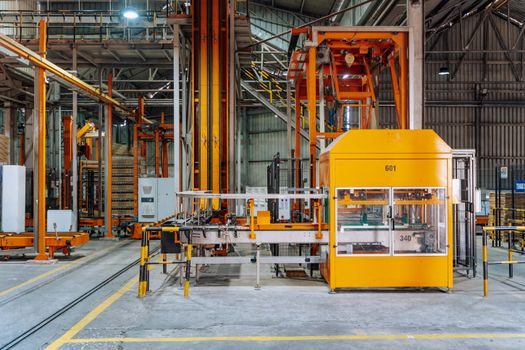
Belt conveyors tolerate inclinations up to roughly 18–20° for standard rubber-cover belts on bulk solids, and up to ~30° with chevron or cleated profiles; above that, material rollback defeats throughput unless you switch to a steep-angle or pocket belt, which is a separate cost tier. Screw conveyors, by contrast, can run at 45° and beyond — vertical screw lifts are a stock product in many manufacturer catalogues — because the flight traps material between helix and trough wall [S2][S7].
Dust containment is structurally easier on a screw conveyor: a U-trough with end flanges and a single shaft seal gives essentially a sealed pressure boundary, and intermediate discharge gates can be added at any axial station without cutting the casing. On a belt conveyor, full enclosure requires skirting, hoods, dust curtains at transfer points, and often water-suppression or extraction — a meaningful CapEx adder on cement, lime, or fertiliser duty. The MLT Minet MS fastener's "turn fastener upside down for a more leakproof and longlife" option also shows that even at the splice level, belt-side dust sealing is treated as a service decision rather than a structural one [S1][S2].
Layout flexibility reverses for long or multi-directional runs: a belt conveyor can curve horizontally on idlers, transfer between multiple belts, and reverse direction with a single drive change; a screw conveyor is a straight-line device, and a change in direction means a new screw, a new coupling, and an intermediate bearing — a maintenance penalty that compounds with length. The decision pattern in process plants is consistent: enclosed multi-outlet duty → screw; long, level, high-tonnage trunk → belt [S2][S4][S7].
Wear, Maintenance, and Splicing
The dominant wear parts differ structurally: a screw conveyor's consumables are the flight edges, the trough liner, and the intermediate hanger bearings (which also leak and contaminate product if poorly maintained); a belt conveyor's consumables are the belt cover, the idler rolls, and the splice. The MLT Minet MS specification sheet quantifies the belt-splice side: screw-in installation, no pre-drilling, installable on rubber belt with covers skived off, with the fastener itself clamping the belt, and packaging in strip up to 3 m long — a 18 V cordless screwdriver is the only tooling required, which is why belt splicing is treated as a 15–30 minute field repair rather than a workshop job [S1].
On the screw side, a typical maintenance event replaces a flight section or hanger bearing every 6–24 months on abrasive duty, with the trough liner going 2–4× longer; on the belt side, an industrial rubber cover typically achieves 3–5 years on abrasive aggregate duty, with idler rolls replaced on condition. For plants with no in-house mechanical fitters, the belt-splice tooling story (single 18 V driver, no hydraulic press) is often the deciding factor [S1][S4].
For readers cross-mapping conveyor maintenance with adjacent process equipment, the belt tensioner and timing-belt reference pages cover the take-up and drive-side hardware that absorbs the splice maintenance load.
Comparison Matrix: Screw vs Belt Across 4 Decision Criteria

On a normalised four-criterion comparison drawing only on catalogue and directory data: (1) Enclosure / dust-tightness — screw conveyor wins by design, jacketed trough is essentially a sealed pressure vessel [S2]; belt conveyor needs additional hooding and skirting. (2) Long-distance / high-tonnage — belt conveyor wins, with multi-km overland systems as standard offer [S2][S7]. (3) Inclination above 25° — screw conveyor wins, vertical lifts are a stock option [S2][S7]. (4) Field splice speed / tooling cost — belt conveyor wins with the screw-in MS fastener class installable by 18 V driver in strip lengths up to 3 m, no pre-drilling, in galvanised or antimagnetic stainless [S1]. The matrix is the spec, not the marketing — pick the architecture that wins on the two criteria that actually dominate your duty.
Material, Standards, and Sourcing Constraints
Material selection on belt conveyors is dominated by belt-cover compound: 2026 Chinese-trade listings show NBR oil-resistant belts and acid/alkali-resistant endless black rubber belts at MOQ 10 m and FOB-edge unit prices from US$ 5.00 per metre upward, with diamond-member / audited-supplier status as the typical due-diligence gate [S5]. PVC and PU food-grade belts appear in customised line builds in the US$ 100–2,000 per set band, typically on aluminium extrusion frames for chemical and packaging lines [S6]. For screw conveyors, the binding material spec is the trough-and-flight metallurgy — carbon steel with replaceable AR liners for abrasive duty, 304/316 stainless for food and pharma, and exotic alloys for high-temperature or corrosive service [S4].
Standards commonly invoked on the belt side include ISO 5048 for conveyor-belt installation and ISO 9856 for belt testing, and on the screw side CEMA 300/350 in North America and ISO 7119 for screw conveyors — these are the references a buyer should expect to see on a nameplate or data sheet, not optional marketing copy. Splicing fasteners in galvanised steel suit general industrial and outdoor service; antimagnetic stainless is the rule for any duty near food, pharma, or magnetic-sensitive processes [S1][S2]. Plants specifying multiple conveyors are now aggregating procurement onto single audited-supplier frameworks — the 2026 China-sourcing pages show diamond-member / audited-supplier badges as the de-facto vendor gate for both rubber-belt and screw-flight categories [S5][S6].
When NOT to Use Either: Failure Modes and Limits
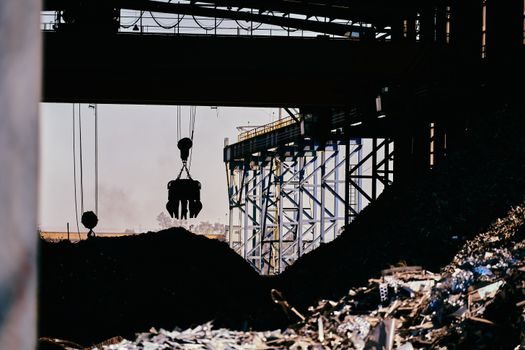
Do not specify a screw conveyor for: highly viscous or stringy material (flight wrapping), fragile products that cannot tolerate crushing between flight and trough, or distances beyond ~30 m in a single run where power and bearing load become uneconomic; the failure mode is hanger-bearing seizure, flight deflection, and trough wear in the lower third of the casing [S2][S7].
Do not specify a plain belt conveyor for: material above ~80 °C without high-temperature belt compound, sharp-edged lump product that cuts the cover, steep inclines over ~20° on standard belts, or any duty where total dust containment is required without a full enclosure retrofit [S2][S7]. A recurring failure mode on the belt side is splice pull-out — the screw-in MS class explicitly markets its "clamped by the fastener itself" geometry and 18 V minimum driver to keep splice integrity high under cyclic load [S1].
For process engineers mapping the wider spec landscape, related decision guides cover ball-screw installation bearing-block alignment and the expansion-anchor drill-size map for conveyor-frame foundation bolts — both show up on the same green-field conveyor spec package.
Track three signals on the next 90 days: (1) audited-supplier / diamond-member badge counts for rubber-belt and screw-flight categories on the major China trade portals — the rate at which non-audited listings are filtered out is the real price-quality shift; (2) whether 18 V cordless-driver-installable belt fasteners (MS-class and equivalents) displace hydraulic-plate splices as the default on-site method for belts under 1,200 mm; (3) CEMA / ISO 7119 revisions or clarifications on screw-conveyor hanger-bearing spacing, which is the single largest hidden driver of long-run screw-conveyor cost.