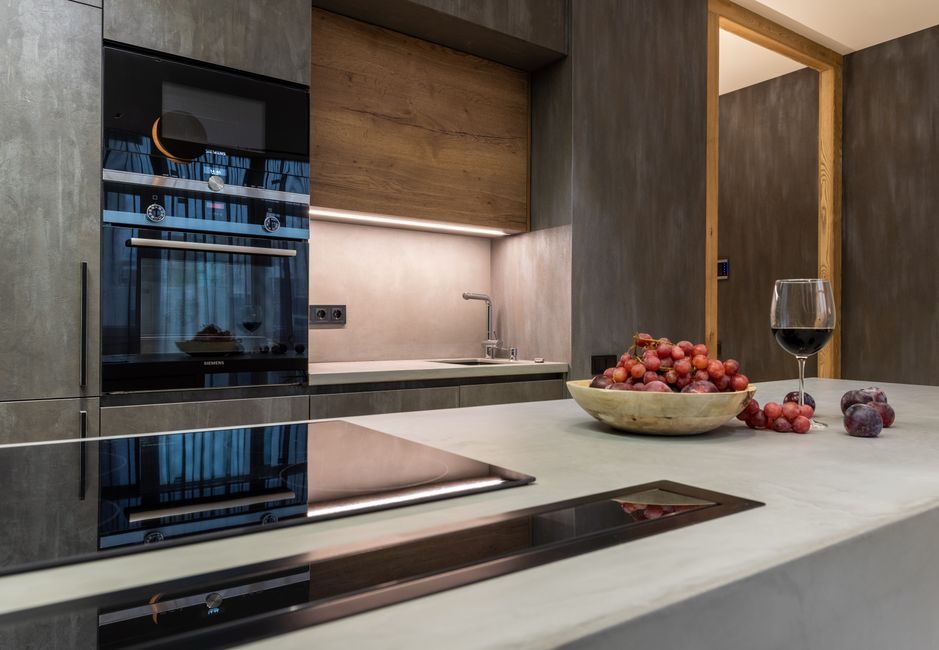
Industrial ovens in 2026 split into five principal families — batch, conveyor, tunnel, vacuum, and infrared/UV curing — and selection is driven by maximum temperature, ±°C uniformity class, atmosphere, and production cadence rather than by manufacturer [S2][S3].
Leading Asian and US builders now publish data sheets specifying uniformity classes from ±1 °C to ±5 °C across operating windows of 40 °C up to 600 °C, with electric, gas, and infrared heat sources coexisting on the same product line [S2][S3][S4].
Batch Ovens: The Default for Low-to-Mid Volume Thermal Processing
Batch ovens — the most-specified industrial oven type — operate as a stationary chamber where a discrete load is heated to a set profile, then unloaded, with documented Indian-market entry pricing around Rs 85,000 for an industrial batch oven and Rs 1,00,000 for a hot-air batch variant as of 2026-07-30 [S3].
Standard electric batch ovens on the Indian and Chinese market run to roughly 200–300 °C for general drying and curing, while forced-convection builds with ±1 °C uniformity are specified for pharmaceutical, electronics, and laboratory work [S3]. Gas-fired batch ovens (Rs 1,50,000 entry in the same catalog) cover higher-temperature paint-bake and heat-treatment work where electric load becomes impractical [S3].
Where floor space is constrained and the workload is a single part family — e.g. motor stators, EV rotor assemblies, or small composite coupons — the batch oven is the lowest-capex path. Where cadence exceeds one cycle per shift, the conveyor or tunnel family replaces it.
Conveyor and Tunnel Ovens: Continuous Throughput for Finishing and Heat Treat
Conveyor ovens (mesh belt, roller, or chain) and tunnel furnaces are specified when throughput must be continuous rather than per-batch, and Indian builders such as GBM Industries list "30 years of belt conveyor oven" production alongside powder-coating pre-treatment and liquid-painting lines as of 2026-07-30 [S10].
Forced-convection conveyor ovens typically run 150–250 °C with belt speeds of 0.5–6 m/min, while higher-temperature mesh-belt and pusher furnaces used for sintering, brazing, and metallurgical heat treatment push to 600–1150 °C with atmosphere control [S2][S7].
Tunnel ovens — multi-zone chambers with independently controlled heating sections — are the dominant choice for new-energy motor production, where ±2 °C uniformity up to 600 °C is required for stator and rotor curing per builder-published process windows [S2]. Compliance claims against IATF 16949 and IEC/UN38.3 are now appearing directly on conveyor/tunnel product data sheets for EV and battery-cure applications [S2].
Selection between belt and roller conveyor depends on part fragility: wire-mesh belt suits stampings and small parts at the cost of belt life; roller conveyor suits heavier fixtures and motor housings; chain conveyor suits powder-coat and paint lines where parts hang from an overhead conveyor [S3][S10].
Vacuum Ovens: Oxygen-Free Processing for Sensitive Materials

C SAIL lists vacuum ovens among its main product categories, alongside industrial dry ovens, tunnel ovens, environmental test chambers, and industrial storage cabinets [S5].
Chinese OEM C SAIL lists vacuum ovens as a primary product line alongside tunnel ovens and environmental test chambers, with the company in operation since 2005 and supplying named OEMs including Huawei, Gree, and Panasonic as of 2023-02-21 [S5].
Vacuum levels in production vacuum ovens typically run 10⁻² to 10⁻³ mbar, with hot-zone construction in stainless steel 304/316 to withstand outgassing byproducts. Where the requirement is drying rather than oxygen exclusion, a nitrogen-purged batch oven is often the lower-cost alternative.
Infrared and UV Curing Ovens: Surface-Finish Lines
Infrared (IR) and UV ovens concentrate energy at the part surface rather than the air mass, giving cure times of seconds to a few minutes on coating lines — C SAIL lists "UV Curing System" alongside dry ovens and tunnel ovens as a primary category [S5].
IR ovens are used for water-based and solvent paint drying, with emitter wavelengths matched to the coating chemistry (typically 0.9–1.4 µm near-IR for water evaporation, 2.4–3.0 µm medium-IR for powder-coat cure). UV ovens are specified for inks, clear-coats, and electronics encapsulants where photo-initiated cure is faster and lower-energy than thermal cure.
For powder-coat lines, IR is typically paired with a convection cure zone to drive off moisture and bring the substrate to cure temperature, then finish with IR or a combined IR/convection cure zone — a hybrid configuration now standard on turnkey paint-plant builds from Indian system integrators such as TECH Expert Engineering (Pune, est. 1998) and GBM Industries [S6][S10].
Heat Source Comparison: Electric, Gas, and Infrared
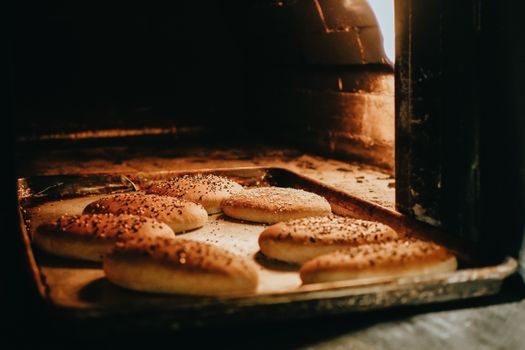
Across the five oven families, heat-source choice is a decision separate from oven type. Electric heating dominates 40–500 °C, gas dominates above 350 °C where electrical infrastructure cost is prohibitive, and infrared is a surface-cure supplement rather than a stand-alone heat source [S2][S3][S5].
Within the conveyor/tunnel family, gas-fired mesh-belt and pusher furnaces cover 600–1150 °C for sintering, brazing, and high-temp heat treat; electric equivalents cover 40–600 °C for curing and drying with tighter ±°C uniformity [S2][S7].
A practical selection rule: electric for ≤500 °C and where ±1–2 °C uniformity is required; gas for >500 °C continuous duty; IR/UV for surface cure only. Mixing heat sources in a single oven (electric-IR hybrid) is now standard on paint lines [S2][S10].
Selection Criteria: Temperature, Uniformity, Atmosphere, Throughput
The four binding selection criteria are maximum operating temperature, ±°C uniformity class, atmosphere (air, inert, vacuum), and throughput cadence (batch vs continuous). Builder data sheets in 2026 quote uniformity bands of ±1 °C for high-end battery/PV cure, ±2 °C for automotive, and ±5 °C for general industrial drying [S2][S3].
For paint and powder-coat lines, three additional criteria apply: airflow (CFM or m³/h), exhaust volume, and cure-zone length — NSW India (in business for over six decades as of 2026-07-19) and GBM Industries publish these parameters with their conveyor and liquid/powder coating plant offerings [S4][S10].
For metallurgical heat treatment, atmosphere control and quench integration become primary: bell furnaces, gas nitriding furnaces, and water-quench furnaces from builders such as Maharith Thermal are specified as integrated systems rather than standalone ovens [S7].
Standards, Compliance, and Failure Modes
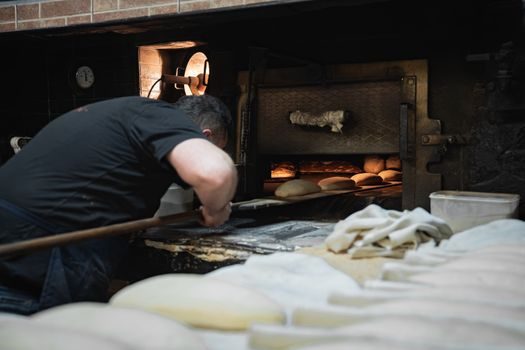
Industrial ovens are governed less by a single product standard than by application standards — IATF 16949 for automotive cure, UN38.3 for battery production, AMS 2750 for heat-treatment pyrometry, and NFPA 86 for oven safety on Class A fires [S2][S8].
For hazardous-area ovens — solvent-bearing paint lines and any oven processing flammable vapors above the LEL — ATEX / IECEx zone classification and explosion-vent panels are required by NFPA 86, with builder data sheets now commonly calling out compliance for European and Gulf-region sales [S2].
Spec-Driven Sourcing Across US, China, and India
US builders (Benko Products, 30+ years, drum/tote heating and industrial ovens) lead in material-handling ovens and hazardous-location storage; Chinese builders (NAIMEITE, est. 2001, 50,000+ m², 500+ staff) lead in EV motor and battery-cure conveyor/tunnel builds at ±1–2 °C uniformity [S2][S8].
Indian builders (NSW India 6+ decades, GBM Industries 30 years, Kencor Systems, TECH Expert Engineering 1998, Maharith Thermal) collectively cover batch, conveyor, tunnel, bell, gas-nitriding, and water-quench at price points 30–60% below equivalent US/EU builds for the same temperature class [S3][S4][S6][S7][S10].
For new sourcing, the cross-border sourcing map mirrors that of industrial hinges — three regional supplier tiers with overlapping product scope but different cost/lead-time profiles. Related conveyor and material-handling decisions, such as belt selection on a paint-line oven, follow the same spec-first logic described in Electronics-handling belt conveyor selection: spec map for PCB and subassembly lines and Apparel Distribution Belt Conveyor: Roller, Belt, and Layout Spec Map.
Track the next two signals: (1) the spread of ±1 °C-class conveyor/tunnel ovens from Chinese OEMs into European EV battery-cure lines through 2026, and (2) tighter NFPA 86 enforcement on solvent-borne powder-coat lines in the US Midwest through year-end, both of which will shift the buying map within the next two quarters.
Component reference pages worth checking: industrial adhesive, industrial borescope, and industrial buzzer.