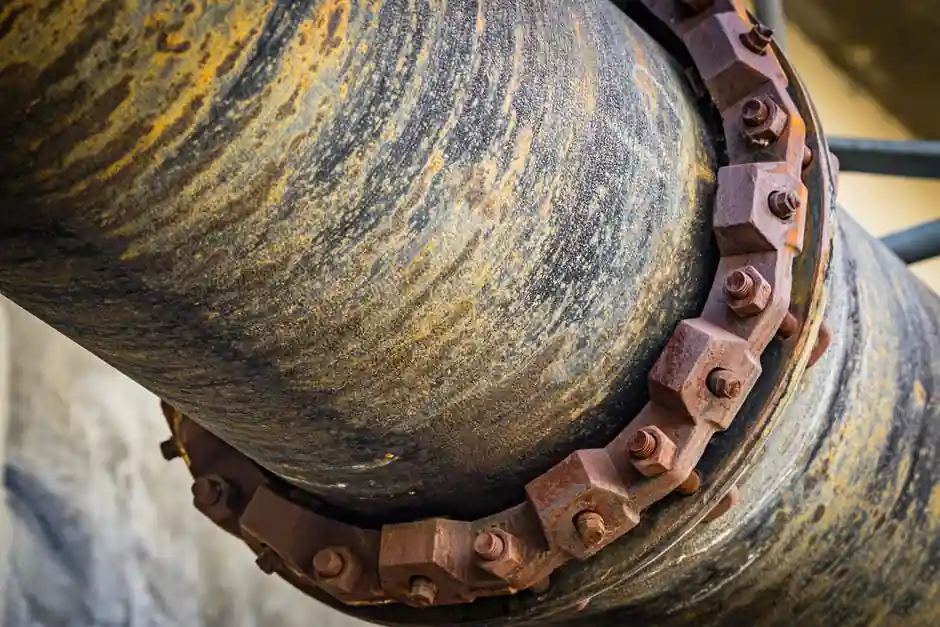
Seamless steel pipe is manufactured by piercing a solid billet to form a hollow tube, with no longitudinal weld seam, which is the structural feature that drives its higher pressure rating and uniform wall performance [S3][S6].
Compared with welded pipe, seamless product typically commands a price premium, has a narrower size availability window, and shows clear advantages in pressure, corrosion initiation risk, and dimensional uniformity, with the trade-off pattern consistent across carbon, alloy, and stainless grades [S2][S6].
Core advantages: pressure rating, uniformity, and leak resistance
Seamless construction eliminates the longitudinal weld bead, the conventional initiation site for fatigue cracks, corrosion cells, and leak paths, which is why high-pressure service such as oil and gas transmission, hydraulic cylinders, and boiler tubes defaults to seamless product [S3][S8]. The hot-rolling, cold-rolling, and cold-drawing route used for carbon steel seamless pipe produces consistent wall thickness and roundness, supporting tight dimensional tolerances on OD and concentricity [S1][S5].
For SCH 40 seamless carbon steel pipe specifically, the schedule wall thickness paired with the seamless microstructure delivers the high pressure tolerance and uniform strength that process engineers expect in steam, refinery, and mechanical service [S9]. Carbon steel grades also offer good thermal conductivity, which is useful in heat exchangers, boilers, and other heat-transfer equipment where a higher conductivity can improve energy efficiency [S1][S5]. Stainless seamless variants add corrosion resistance on top of the same mechanical baseline, suiting chemical processing, food, and marine service [S3][S7].
Main disadvantages: cost, size range, and corrosion on carbon grades
The billet-piercing and hot/cold reduction route is more capital-intensive than forming and welding a plate or coil, so seamless pipe typically carries a higher unit cost than welded alternatives of the same nominal size and schedule [S2][S3]. The same process also caps the practical OD range and length per piece, leaving very large diameters or very thin walls to the welded segment [S2].
On carbon steel seamless product the dominant lifetime risk is corrosion: the material oxidises readily in humid, wet, or chemically aggressive service, and mitigation relies on painting, galvanizing, internal linings, or regular inspection, all of which add to lifecycle cost [S1][S5]. Low-temperature toughness also drops on plain carbon grades, so cryogenic and sub-zero service usually calls for killed, normalised, or alloyed steel rather than commodity carbon seamless pipe [S1][S5].
Seamless vs welded vs black steel: a criteria comparison
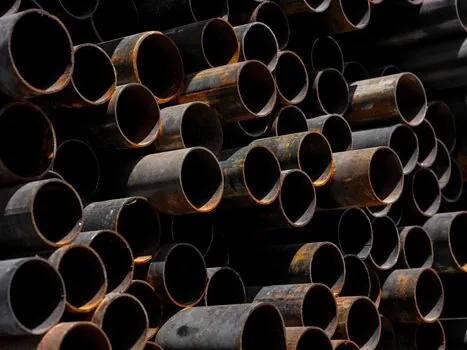
The selection cut between seamless, welded, and black steel pipe comes down to four criteria: pressure rating, corrosion resistance, dimensional range, and unit cost. Seamless pipe leads on pressure, weld-zone corrosion risk, and dimensional consistency; welded pipe leads on size range and cost; black steel pipe, a subset of carbon steel pipe, leads on raw-material cost but trails on corrosion resistance [S2][S4][S6].
Black steel pipe, defined by its dark Fe3O4 oxide surface and absence of galvanising, is commonly produced to ASTM A53, ASTM A106, and ANSI B36.10M, and is widely used for gas lines, steam, and structural systems where mechanical strength is prioritised over corrosion protection [S4]. Where humid, wet, or chemical exposure is expected, galvanised or stainless options displace black steel because the zinc or alloy layer isolates the substrate from the environment and stabilises long-term performance [S4]. For a deeper look at how these trade-offs play out in field installation, see Seamless Steel Pipe Installation: Field-Proven Steps and Specs.
Stainless seamless: extra corrosion, extra machining cost
Stainless seamless pipe adds the corrosion resistance of the austenitic or duplex grade to the seamless mechanical baseline, which is why chemical, food, pharmaceutical, and marine projects specify it even at a higher unit price [S3][S7]. The same stainless matrix, however, raises hardness and work-hardening rate, so cutting, threading, and field machining require specialised tooling and slower speeds, which lifts fabrication cost on site [S7].
For high-purity or sanitary service, the absence of a weld seam also removes a potential crevice and contamination trap, an advantage that does not show on a spec sheet but matters in hygienic process lines [S3]. Buyers comparing carbon seamless to stainless seamless should weight corrosion exposure first, then lifecycle maintenance cost, and only then unit price.
Application fit: where each grade earns its slot
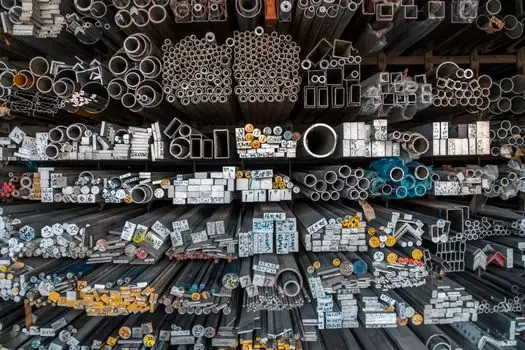
High-pressure, high-temperature hydrocarbon service, refinery piping, boiler tubes, superheaters, and hydraulic cylinders are the canonical seamless applications where the weld-free microstructure justifies the premium [S1][S3][S8]. Construction and structural framing, low-pressure water mains, and general mechanical tubing are usually served more economically by welded or black steel pipe, with the cost gap widening as diameter and length increase [S2][S4].
Stainless seamless is reserved for chemical, petrochemical, food-grade, pharmaceutical, and marine lines where corrosion or hygiene drives the choice, while carbon seamless sits in the middle as the workhorse for power, process, and oilfield service [S3][S7]. For buyers sourcing for residential or light commercial builds where the pressure rating is modest, PPR Pipe Selection for Residential Builds: Sizes, PN Ratings, and Spec Criteria covers the polymer alternative that often displaces steel in that segment. Related industrial context on adjacent steel applications is covered in the Stainless-Steel Signal Brief digest.
Selection criteria and sourcing signals to track
Specifying seamless pipe starts with four decisions: material grade (carbon, alloy, stainless), standard and schedule (ASTM A53, ASTM A106, ANSI B36.10M, SCH 40), size range within the mill's piercing and reduction capability, and corrosion-mitigation plan if the grade is carbon [S1][S4][S9]. Order documents should call out the standard, the schedule or wall thickness, the test method (hydrostatic, eddy current, ultrasonic), and the required MTC/EN 10204 3.1 certification so that the seamless claim is verifiable on receipt.
Trackable signals for buyers include mill price movements on carbon vs stainless billet, billet-piercing mill capacity announcements, and changes to ASTM A53/A106 or ANSI B36.10M revision status, each of which directly shifts the cost-versus-performance balance above. More on the broader steel-pipe category and its variants is in the steel pipe encyclopedia entry, with process-side detail on the seamless sub-class at seamless steel pipe.
For component-level specifications, see construction machinery and equipment.