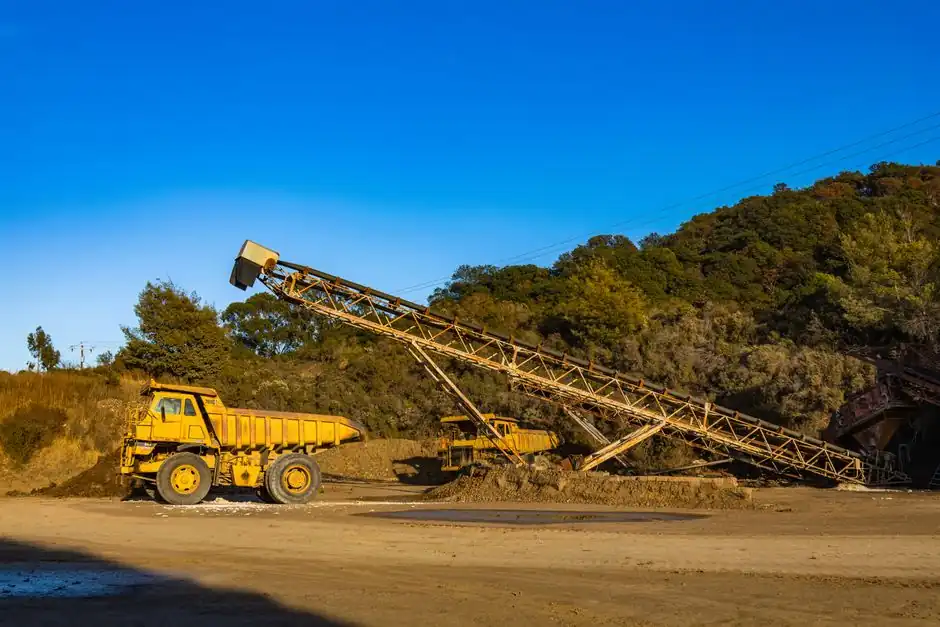
Quarry operators selecting a cold milling machine for rock and aggregate applications should focus on three primary specifications: milling width (0.35 m for compact units up to 2.6 m for large track-mounted models), drum tooling pattern (16 mm to 6.35 mm cutter spacing), and the LEVEL PRO ACTIVE or LEVEL PRO PLUS leveling system for depth accuracy [S1][S4].
The global cold milling machine market was valued at $4.8 billion in 2025, with the large-machine segment holding 42.3% of revenue share, and Asia Pacific accounting for 38.2% of regional demand [S5]. Rock milling, a quarrying-specific application, requires specially configured cold milling machines distinct from standard asphalt rehabilitation units [S1].
Quarrying vs. Asphalt Rehabilitation: What Changes
Rock milling applications in quarries demand cutting tools rated for abrasive aggregate, with configurations differing from asphalt-oriented fine milling drums and ECO Cutters used in road rehabilitation [S1]. A machine designed for 50 mm asphalt cuts in the 1980s has been replaced by units capable of cuts up to 30.5 metres per minute (100 fpm), though rock applications typically operate at lower traverse speeds to manage tool wear [S3].
Quarry-spec machines differ from standard cold planers in three areas: higher mass per unit drum width for stable cuts in competent rock, reinforced dust suppression systems, and cutter drum metallurgy rated for silica-bearing aggregate. The transition from hot milling (Wirtgen, early 1970s) to cold milling in 1978, when carbide mining tools were adapted to road milling, established the tooling foundation now used in quarry applications [S3].
Drum Width, Cutter Spacing, and Productivity
Milling width is the single largest determinant of machine class and productivity. Wirtgen's modern small milling machines offer wheeled chassis with rear-mounted drums for confined-space work, while compact milling machines combine small-machine agility with large-machine performance using either wheels or crawler units [S1]. The 1980 Wirtgen 2600 C introduced track-mounted large cold milling with widths up to 2.6 m, a benchmark that remains in use for full-lane quarry access road rehabilitation [S3].
Cutter spacing now commonly shifts between 16 mm (5/8-inch) for standard milling and 6.35 mm (1/4-inch) for fine milling, with the same machine accepting both patterns via quick-change drum systems; this flexibility lets a quarry contractor use one platform for both production-scale removal and finish-texture passes [S3]. Cutter widths can also be reduced within the same unit to execute narrower cuts without acquiring a second machine, a key cost lever for quarry operators running mixed job profiles [S3].
Engine Power, Traction, and Weight Distribution
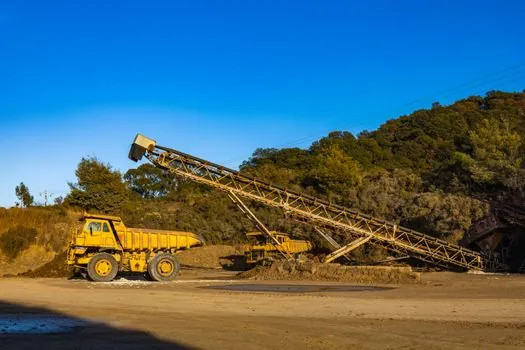
Large cold milling machines, equipped with four hydraulically steerable and height-adjustable crawler units and a center-mounted milling drum, are the standard for large-area quarry repair and bench rehabilitation [S1]. Engine power in the large class supports MILL ASSIST automated load management, which dynamically balances diesel consumption against milling performance, a direct response to the fuel-cost pressures cited in 2025 market data [S1][S5].
Compact milling machines, the fastest-growing quarry-relevant segment, deliver high milling performance in confined work zones typical of aggregate processing yards and tunnel-adjacent quarry faces [S1]. For deeper understanding of how a cutting machine integrates with material-handling flows, the difference between a cold planer and a general asphalt milling machine is well documented: cold planers use GPS/laser-guided grade control for millimeter accuracy, while general milling machines are often manually operated and limited to surface or spot repairs [S2].
Leveling and Automation: From Hydraulic Sensors to GPS
Modern cold milling machines read dual grade, grade-and-slope, stringline sensing, averaging, laser-reference, and GPS coordinates, a step-change from the hydraulic sensor systems of the 1980s [S3]. Wirtgen's LEVEL PRO PLUS on small and compact machines, and LEVEL PRO ACTIVE on large machines, continuously measure and adjust grade, pitch, and height to maintain precise milling depth [S1][S4].
One ground operator can now control grade from either side of the machine, compared to the two-ground-man requirement of earlier hydraulic-sensor units, reducing site labor cost per square meter of milled surface [S3]. GPS-guided depth control and telematics-enabled fleet management are explicitly listed in 2025 market analysis as technology drivers expanding the addressable market across both road and quarry applications [S5].
Market Size, Rental Trends, and Procurement Signals

The 2025 cold milling machine market was valued at $4.8 billion, with a projected CAGR of 6.0% to $8.1 billion by 2034; annual unit sales were forecast to exceed 12,500 machines globally by 2026 [S5]. The large-machine segment held 42.3% of 2025 product-type revenue, and Asia Pacific led regional share at 38.2%, driven by road infrastructure spending and aging-pavement rehabilitation mandates [S5].
Rental fleet operators are expanding cold milling inventories as contractors shift toward capex-light operating models, a trend that lowers the entry barrier for quarry operators who need periodic milling capacity rather than continuous ownership [S5]. Used-equipment channels such as Cat Used list asphalt cold planers from major OEMs alongside new units, providing a secondary market for cost-sensitive quarry applications [S6]. For quarry-adjacent concrete placement work, see Concrete Pump Truck Selection for Quarrying for boom-reach and wear-plate specifications.
Selection Criteria: Matching Machine Class to Quarry Task
Quarry operators should match machine class to the dominant cut profile: small wheeled milling machines for utility trench and patch work in tight yard areas, compact milling machines for production-scale removal in confined faces, and large track-mounted units for haul road rehabilitation and bench-face profiling up to 2.6 m width [S1].
For milling tool comparison across equipment families, the broader core machine category frames how rotor geometry, drive configuration, and feed rate interact in aggregate processing. The coding machine reference clarifies nomenclature boundaries in adjacent equipment classes. Quarry buyers should verify cutter drum metallurgy, dust suppression rating, and engine emissions class (the 2025 market report flags tightening European and North American emissions regulations as a driver of electric and hybrid powertrain adoption) before committing to a fleet [S5].
Limitations and Failure Modes in Quarry Service
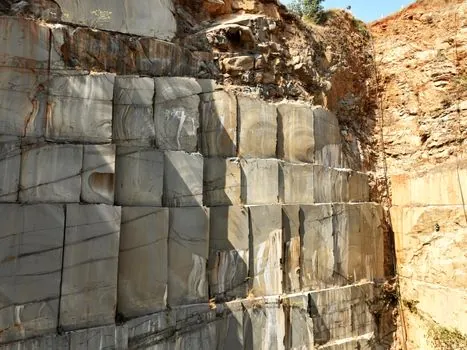
Cold milling machines in quarry service face accelerated tool wear when cutting abrasive silica-bearing rock, requiring more frequent drum inspection cycles than asphalt-only operations [S3]. Downtime on legacy machines historically consumed one hour of maintenance per one to two hours of milling, a ratio that modern units have reduced, but rock service still demands scheduled cutter replacement windows that asphalt contractors avoid [S3].
Machine class is not interchangeable: a compact milling machine cannot sustain the daily production tonnage of a large track-mounted unit on a primary haul road, and conversely a large unit is operationally and economically unsuitable for narrow trench work in a confined processing yard [S1]. For soil and sub-base compaction work that often follows milling on quarry haul roads, see Dynamic Compactor selection for port and terminal ground improvement for impact-energy and pad-foot selection criteria.
The 2025 market data set the addressable global fleet above 12,500 units annually by 2026, with Wirtgen Group leading competitive positioning through the broadest product portfolio and global service network [S5]. Trackable signals for the next procurement cycle: the 2026 annual unit-sales threshold and the share of electric or hybrid powertrain units in OEM product roadmaps, both explicit data points in the 2025–2034 forecast [S5].