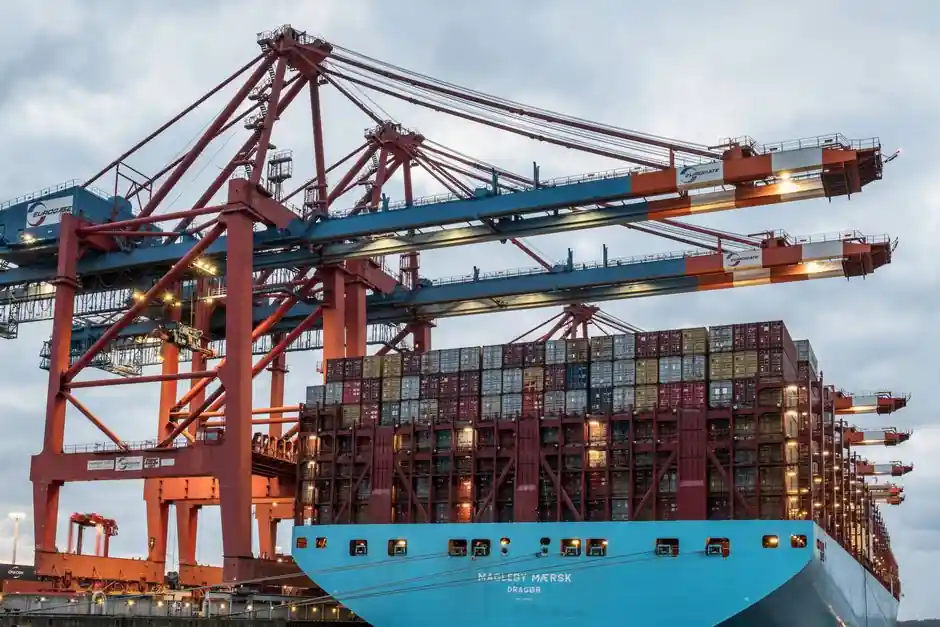
Dynamic Compactors for port and terminal work lift 15-30 tonne weights to drop heights of 20-30 m, transmitting high-energy impact waves that densify loose reclaimed fills, dredged sand, and rubble-laden subgrades to depths of 9-12 m [S3][S4][S5].
Selection pivots on four hard variables: tamper mass, drop height, vibration footprint, and proximity to live wharves, oil lines, or operating cranes. On greenfield reclamations with no neighbours, high-energy Deep Dynamic Compaction (DDC) is the lowest-cost densification method available; near active infrastructure, Rapid Impact Compaction (RIC) at 1.2-1.5 m drop heights becomes the practical choice [S3][S4].
Method envelope: DDC, RIC, and CDC compared
Deep Dynamic Compaction (DDC) uses free-fall tampers of 12-30 tonnes dropped from 20-30 m, producing improvement depths of 9-12 m in granular fills and treatment of non-engineered rubble up to 12 m deep [S4][S5]. The Kleinfelder pilot at the Port of Long Beach used a 30-ton tamper with an 80-foot (24.4 m) drop, tamping points on a 9 ft (2.74 m) grid with 6-10 drops per location [S4].
Rapid Impact Compaction, branded by Cofra as Cofra Dynamic Compaction (CDC), drops 9-16 tonne weights from only 1.2-1.5 m, applying 20-60 blows per point in roughly 2 minutes per location, and densifies loose granular material to 7-9 m with cone resistance improvements up to qc=30 MPa in the top 5 m [S3]. The foot remains in contact with the surface during each drop, which lets RIC/CDC compact at or below the water table without the craters and flying debris of DDC [S3].
Selection criteria for port subgrade conditions
Match tamper mass and drop height to the target depth and the in-situ material. DDC handles heterogeneous rubble fills where vibro stone columns and driven H-piles cannot penetrate; at the Port of Long Beach maintenance-facility site, rubble extended to roughly 40 ft (12 m), which eliminated those two alternatives [S4].
Match cycle time and point spacing to the production rate your port programme needs. CDC's 2-minute point cycle and grid pattern suit port aprons and runway shoulders where hundreds of points must be completed alongside operating cranes; DDC's slower per-point cycle and wider 2.5-4 m spacing suit large reclamation cells [S3].
Match vibration output to nearby structures and buried utilities. DDC generates high peak particle velocity that the Port of Long Beach required to be monitored continuously against adjacent wharves and underground oil lines, which is why the team ran a pilot with vibration monitoring before full production [S4]. CDC's lower drop height keeps vibration energy closer to the surface and is the default where adjacent assets cannot tolerate high strain pulses [S3].
Equipment envelope: cranes, hoists, and crawler platforms
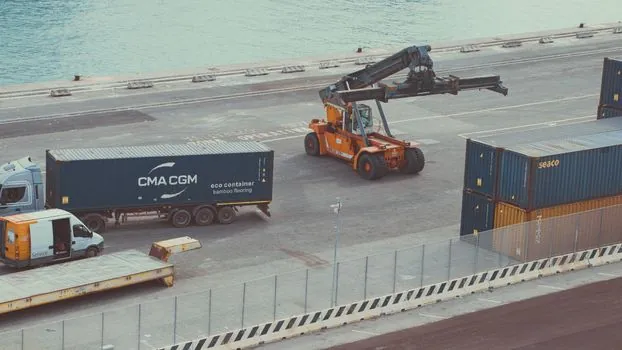
The heavy-lift crane is the dynamic compactor. The Lampson LDC-350 Dynamic Compactor is built on a rigid upper unit mounted to a mobile Crawler Transporter, with no rotating bearing, and a heavy-duty boom stabilised by fore-stay and back-stay pendants to suppress boom whip [S2].
Key operating parameters on the LDC-350 are single-part line pull up to 100,000 lb (45.4 t), single-part line speeds up to 85 ft/min (0.43 m/s), drop heights exceeding 110 ft (33.5 m), and drop weights above 60,000 lb (27.2 t) [S2]. For port projects that need to relocate between apron sectors without disassembling, the LDC-350's pin connections and crawler undercarriage are designed for short moves and rapid re-rigging between drop grids [S2].
Selection for a port campaign is therefore an integrated decision on tamper, hoist, and carrier, not a tamper-only spec. A 30-ton tamper at 24-33 m drop height demands a hoist rated for the cyclic service factor, a boom rigid enough to prevent sway into adjacent live cranes, and a crawler platform whose ground bearing pressure suits the just-completed reclamation fill [S2][S4].
Site constraints and failure modes in port environments
Three failure modes dominate port dynamic compaction work and each steers the spec. First, liquefaction of saturated reclamation sand under seismic loading is the primary reason CDC is applied to new reclamations, with the goal of raising cone resistance to mitigate cyclic softening [S3]. Second, buried rubble, debris, and old rock slope protection make driven solutions impractical; DDC's high-energy impact bypasses the refusal problem that rules out H-piles and vibro stone columns [S4].
Third, peak particle velocity and fly-rock radius can damage adjacent wharves, container stacks, and underground oil lines. The Port of Long Beach pilot test for the 17-acre maintenance facility covered 50 ft by 50 ft (15.2 x 15.2 m), used 6-10 drops per point, and tied the full-production decision to continuous vibration monitoring at the nearby structures [S4].
Production layout and monitoring requirements
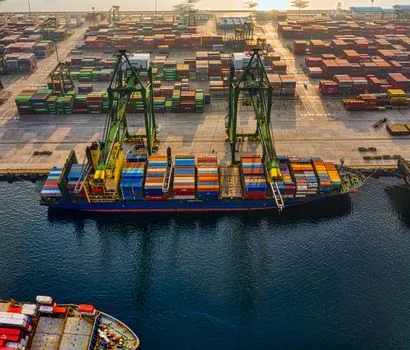
Grid geometry is the primary production-rate lever. CDC typically applies 20-60 blows per point on a tight grid suitable for port aprons and runway shoulders, with a per-point time of roughly 2 minutes [S3]. DDC uses wider 2.5-4 m grids because each drop's energy cone reaches further, but requires more passes (multiple tamping phases) when improvement depth exceeds 8 m or when fill includes compressible layers [S4].
Quality control on port work rests on cone penetration testing before and after compaction, with CDC routinely achieving qc=30 MPa in the top 5 m of densified granular fill [S3]. For DDC near sensitive assets, continuous seismograph monitoring at the nearest structure is standard practice, and a pilot test on a representative 50 ft by 50 ft cell is the typical gate between method selection and full production [S4].
Where a port also runs heavy material-handling fleets, the same ground-bearing and cycle-time logic appears in adjacent equipment decisions such as Bulldozer selection for port and terminal operations and Motor grader selection for port and terminal operations, since the densified subgrade under the compactor becomes the working platform for every machine that follows. Lighter reclamation cuts often pair dynamic compaction with trench support using a Diaphragm Wall Grab for port and terminal operations where sheet-pile or diaphragm walls follow the ground-improvement phase.
When dynamic compaction is not the right answer
DDC is wrong where the tamper cannot be dropped safely, typically within 30-50 m of operating cranes, live container stacks, or buried pressurised lines, and where monitoring shows peak particle velocity above the structure-specific threshold [S4]. RIC/CDC is wrong where the target depth exceeds 9 m or where the subsoil contains dense layers that block the vibration cone before the design depth is reached [S3].
Neither method suits cohesive clays, where vibration does not reorganise the particle structure and the densification mechanism that makes both DDC and CDC effective in granular fills simply does not engage; in those soils, stone columns, CMC rigid inclusions, or deep soil mixing carry the load [S3][S5].
Procurement and sourcing signals
For rental or sale of heavy-lift dynamic compaction rigs, the Lampson LDC-350 specification sheet lists single-part line pull up to 100,000 lb, drop height above 110 ft, and drop weight above 60,000 lb on a crawler transporter with no rotating bearing [S2]. For contracting capacity, Cofra offers CDC operations with 9-16 tonne hammers and continuous on-board monitoring, and lists port aprons, runway shoulders, and reclamations as core application markets [S3].
Background engineering context for dynamic compaction as a ground-improvement class, including treatment of industrial sites, port platforms, and uncontrolled fills, is summarised in the dynamic compactor reference, with adjacent heavy-lift context in the construction machinery and equipment family page. Two trackable signals to watch on port projects through 2026: CDC's expanding use on reclamations where the water table is within 1-2 m of surface, and DDC's continued specification for brownfield port expansion over deep rubble fills where alternative ground-improvement methods cannot penetrate.
Detailed specification references: terminal block.