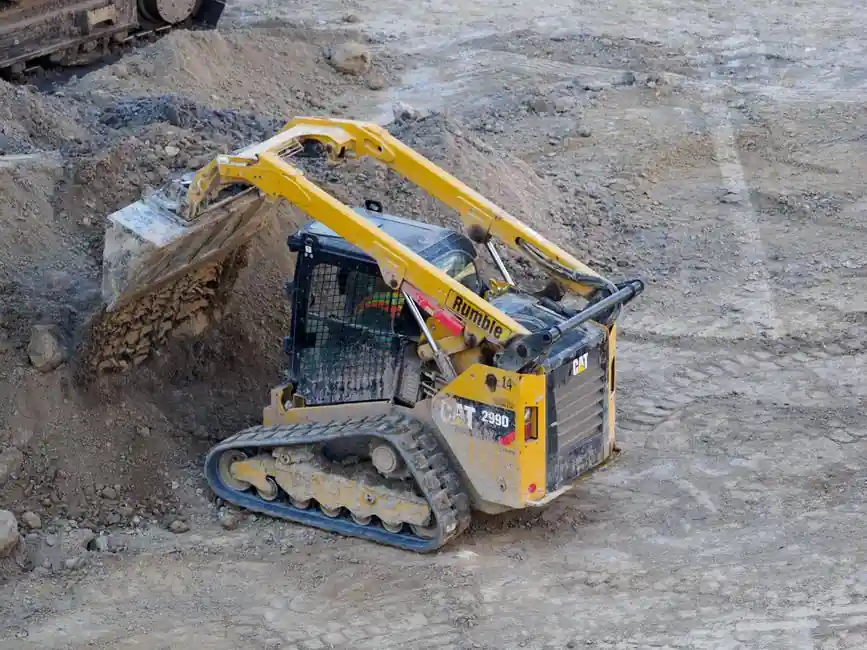
A skid-steer loader is a compact, rigid-frame machine that turns by driving left and right wheel pairs at different speeds, giving it a true zero-radius pivot inside its own length [S4]. Modern fleets segment into small, medium, and large frames defined by rated operating capacity (ROC) and engine horsepower rather than overall weight alone [S1].
At the light end, the original 1958 Melroe M-200 ran a 12.9 hp (9.6 kW) engine with a 750 lb (340 kg) lift rating; at the heavy end, current production wheeled skid steers from major OEMs reach 9,573 lb operating weight and 3,700 lb ROC [S2][S4]. This 5x swing in rated lift within a single machine class is the reason fleet planners match frame size to job, not to budget alone.
Frame Sizes: Small, Medium, and Large Defined by ROC and Horsepower
OEMs bucket skid steers by ROC and engine power, with one current manufacturer offering eight wheeled models spanning 5,849 to 9,573 lb operating weight and 1,550 to 3,700 lb ROC, where larger frames carry correspondingly higher horsepower [S2]. Small frames are sized for interior demolition, landscaping, and other confined or precision tasks where lighter transport weight and a tighter envelope matter more than peak lift [S1][S2].
Medium frames are the versatile middle: still trailer-able, but with enough hydraulic flow and ROC to run heavier attachments such as breakers and cold planers without bogging the engine. Large frames, above roughly 3,000 lb ROC, are specified when the duty cycle involves high-flow hydraulics, pallet forks at full reach, or continuous grading in production mode [S2]. Matching the wrong frame to the work is the single most common fleet error, since undersizing starves the hydraulics and oversizing wastes fuel and haul weight on every trailer move [S1].
Undercarriage Choice: Wheeled Skid Steers vs Compact Track Loaders
Wheeled skid steers run four heavy-duty tires, give faster travel speeds, lower acquisition cost, and easier tire service; they perform best on concrete, asphalt, compacted dry soil, indoor slabs, and paved snow lots [S5]. The trade-off is reduced traction in mud, sand, or deep snow, plus higher ground pressure that cuts into soft terrain [S5].
Tracked skid steers, also called compact track loaders, replace the tires with rubber tracks that spread load across a larger contact patch, lower ground pressure, and hold grip on mud, sand, wet soil, and uneven ground [S5][S7]. The tracked undercarriage is more expensive to buy and the track groups cost more to repair, and travel speed on pavement is lower, but flotation and slope stability on soft ground typically justify the delta on landscaping, agricultural, and grading work [S5][S8]. Operators moving between mixed surfaces frequently standardize on tracks to avoid swapping machines mid-week [S5].
Lift Path Geometry: Radial vs Vertical
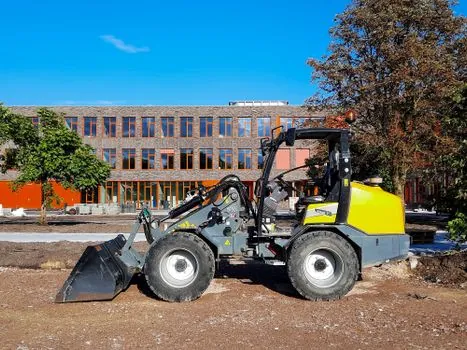
Two lift-arm geometries dominate the market, and the choice is driven by where the work happens in the lift arc. Radial-lift machines trace a curved path that delivers maximum forward reach at mid-height, making them the default for digging, grading, and ground-engaging work where the operator needs to pull material toward the machine [S4].
Vertical-lift machines keep the bucket or forks tracking straight up at full reach, which is the geometry to specify when the work is pallet handling, truck loading at bed height, or any task where load height, not reach, is the constraint. For a fuller comparison of how lift path interacts with attachment choice across a fleet, the backhoe loader spec map lays out a similar task-vs-geometry logic that translates directly to SSL attachment pairing. Both geometries exist in wheeled and tracked chassis, so undercarriage and lift path are independent selections, not a package deal [S5].
Attachment-Driven Applications Across Construction, Agriculture, and Municipal Work
A skid steer fitted with a hydraulic breaker handles concrete breaking and hard-standing removal, while a grapple is the standard tool for demolition cleanup and scrap handling [S3]. Buckets, augers, trenchers, brooms, blades, mulchers, and hammers round out the working set, and the quick-attach interface standardized across the industry is what turns the SSL from a loader into a tool carrier [S4].
Application segments split cleanly by duty cycle. In construction the SSL covers interior and exterior demolition, road building, road maintenance, digging, and material transport into trucks or trailers [S2][S3][S4]. In municipal work the same platform handles road maintenance and snow removal with blade or broom attachments [S6]. On the farm, skid steers move feed, clean out barns, push silage, and power post-hole augers, a list that has barely changed since the 1957 Keller prototype was built to clean a turkey barn [S4][S6]. Landscaping crews lean on tracked units for grading, sod prep, and tree work where flotation and a low ground pressure rating protect finished surfaces [S5][S9]. The working envelope of the skid steer loader is therefore defined less by the chassis and more by the attachment on the front of the lift arms.
Comparison: Wheeled vs Tracked Skid Steers on Four Decision Criteria
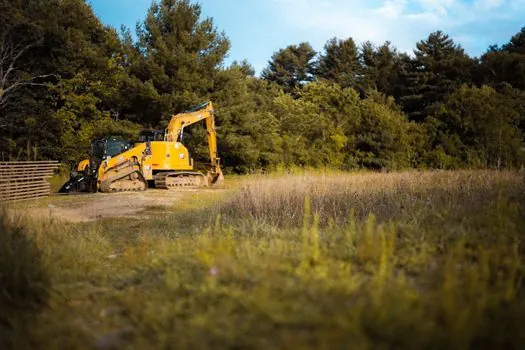
The two undercarriage types trade off on four axes that matter at fleet-purchase time. On acquisition cost and tire or track service simplicity, wheeled machines win; on soft-ground traction, flotation, and slope stability, tracked compact track loaders win [S5].
For duty-cycle matching, concrete, asphalt, indoor slabs, paved snow lots, and frequent repositioning favor wheels; mud, sand, wet soil, uneven terrain, and landscaping or grading on finished surfaces favor tracks [S5]. Travel speed on pavement favors wheels, while sustained traction under load on soft ground favors tracks [S5]. This four-axis split is the practical spec table a buyer should walk through before choosing between a wheeled SSL and a tracked CTL, and the same logic is mirrored in adjacent compact lines such as the wheel loader family where undercarriage and tire selection drive most operating-cost outcomes [S5][S8].
Origin, Operating Principle, and Standards Context
The skid steer was invented in 1957 by brothers Cyril and Louis Keller in Rothsay, Minnesota, originally to mechanize turkey-barn cleaning, then commercialized by Melroe, whose M-400 of 1960 became the first true four-wheel skid steer with a 15.5 hp engine and 1,100 lb ROC [S4]. Differential steering, the left/right wheel pairs running at different speeds and the machine pivoting on its own length, remains the defining operating principle and is the reason the SSL out-maneuvers swing machines in tight work zones [S2][S4].
For fleet planners, the practical specification envelope is the construction machinery and equipment class as a whole, with the SSL sitting at the compact end alongside the backhoe loader and the wheel loader family, all three sharing hydraulic quick-attach conventions and ISO-style coupler geometry on the attachment side. Buyers should confirm the machine meets the safety standards in force in their jurisdiction, including ROPS/FOPS cab requirements for any operator station and the relevant emissions tier for the engine, before committing to a specific model [S1][S4].
Track the next two signals: the roll-out of higher-flow hydraulic kits on mid-frame models, which keeps expanding the SSL's role as a track-mounted tool carrier, and the tightening of diesel particulate limits in urban and underground job sites, which is already pushing specifiers toward Tier 4 Final / Stage V engines on any unit that will see enclosed or indoor work. These two threads will reshape both the small-frame and large-frame ROC bands within the next product cycle.