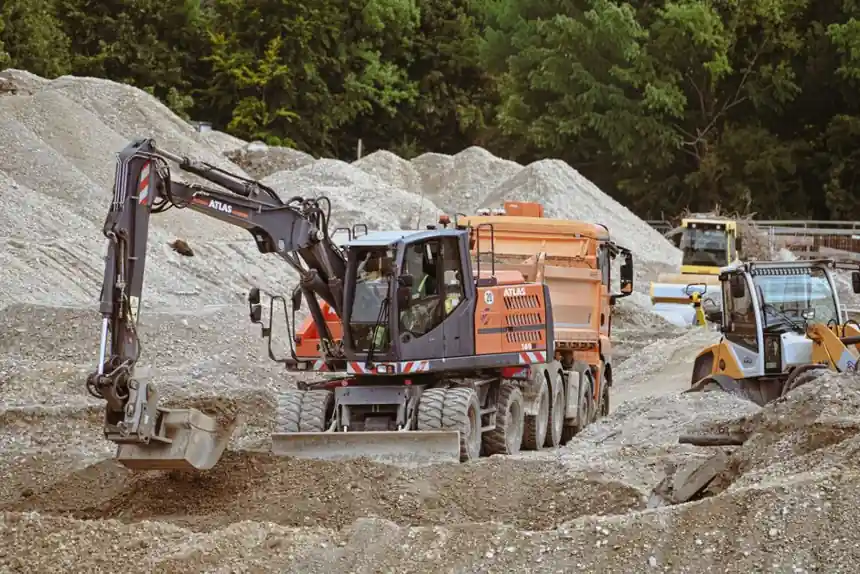
Track loaders and wheel loaders move the same core materials (dirt, sand, gravel, rubble, logs, snow, waste) but their undercarriage decides where the job works, what the cycle cost is, and how fast the asset depreciates [S2].
Wheel loaders (four rubber tires, articulated frame) dominate paved and hard-packed yards; tracked loaders (continuous rubber or steel tracks, skid-steer-class chassis) dominate mud, sand, slopes, and finished-grade sites where tire ruts are unacceptable [S3][S4]. The wrong undercarriage on the wrong ground is the single fastest way to burn budget on a loader fleet.
Undercarriage and Ground Pressure: Why the Choice Is Mostly Terrain
Track loaders spread machine weight across a far larger contact patch than tires, so ground pressure drops into the 3-5 psi class typical of compact track loaders, while a comparably sized wheel loader sits in the 25-40 psi class through its tires [S3]. That delta is the entire reason a CTL walks across a wet clay pad that bogs a wheel loader to the axles [S1][S2].
Wheel loaders trade that floatation for rolling efficiency: lower rolling resistance on asphalt and crushed stone means higher travel speed, often 20-35 km/h on roading, and measurably lower fuel burn per meter moved on hard ground [S2][S4]. Operators moving aggregate between stockpiles and trucks all day on a concrete pad will run a wheel loader, period.
Selection Criteria: Four Numbers That Decide
Match the machine to the site using four criteria in this order: ground condition, daily travel distance, attachment mix, and total undercarriage cost. Track loaders win soft, uneven, muddy, or steep terrain and sites with finished surfaces; wheel loaders win paved, hard-packed, long-distance, high-speed roading [S2][S3][S4].
For attachments, wheel loaders handle forks, grapples, buckets, mulchers, and rippers comfortably because the tire footprint gives a stable lift base at speed; track loaders handle trenchers, dozer blades, and grading implements better because the track base resists the side load those tools generate [S2]. On mixed sites that need both, contractors often run a skid steer class machine and a wheel loader side by side rather than compromise.
Decision Matrix: Track vs Wheel Against Concrete Criteria
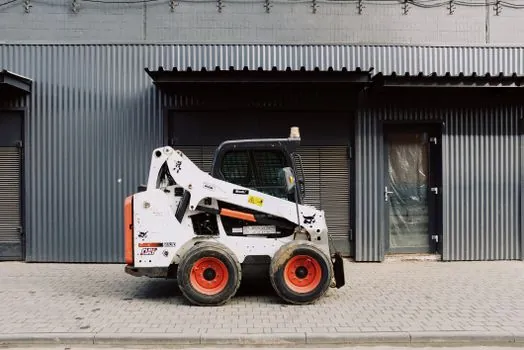
Use this matrix when the site is mixed or the buyer is undecided. Each row is a decision criterion; each column is the winner with the reason grounded in the research. [S4]
Ground condition: track loaders win on soft, muddy, sandy, or steep terrain because the track spreads weight and grips without spinning; wheel loaders win on paved, concrete, crushed-stone, and frozen hardpack because tires roll rather than scrub [S2][S3][S4].
Travel speed and roading: wheel loaders win, with on-site roading speeds typically in the 20-35 km/h band versus roughly 6-12 km/h for tracked machines, plus the option to drive a wheel loader to a nearby job under its own power on public roads where permitted [S1][S2].
Maintenance and tire/track cost: wheel loaders win on day-to-day cost, because rubber tires are cheaper and faster to replace than a full track set, which wears from the moment it moves and can consume a budgeted track life in well under 2,000 hours on abrasive sites [S1][S2]. Track loaders win on flat-tire immunity, which is the reason demolition and scrap yards standardise on them [S1].
Ground disturbance: track loaders win on finished or landscaped surfaces because lower psi means no visible rutting, while wheel loaders gouge asphalt and tear up turf under load [S3][S4]. The trade is pure cost: tracks cost more per hour to run on hard surfaces because of accelerated wear, so a wheel loader parked on a concrete plant yard is the cheaper answer [S1].
Use Cases by Industry: Where Each Machine Actually Earns
Landfills, steel mills, water-and-sewer utilities, and demolition sites standardise on track loaders because flotation, no-flat-tire reliability, and skid-steer-class agility in tight quarters matter more than roading speed [S1]. A track loader can also push a dozer blade effectively for cell building, which a wheel loader cannot do without tearing its tires.
Quarries, asphalt plants, ready-mix yards, ports, and large warehouse logistics operations standardise on wheel loaders because cycle time, fuel per ton, and roading between stockpile and truck dominate the cost model [S3][S4]. For comparison context on earthmoving-and-compaction trade-offs across machines, see the spec match on wheel loader vs road roller.
Agriculture splits the difference: dry-field grain handling goes to wheel loaders for roading between bins, while livestock operations, manure handling, and winter feeding on soft ground go to track loaders for flotation and lower surface damage to pastures [S2][S3]. Landscapers on finished lawns and irrigation crews on finished grades almost always spec track machines to avoid ripping the surface they just built [S3].
Who Each Machine Is For, and Who It Is Not For
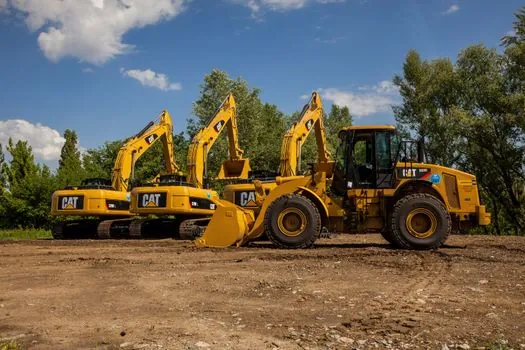
Track loaders are for contractors working soft, muddy, steep, or finished-grade sites; for demolition and scrap handlers who cannot afford a flat-tire downtime event; for landscapers and turf contractors who need low ground pressure; and for utility crews that need skid-steer agility with a bigger bucket [S1][S2][S3].
Track loaders are not for buyers who need to road the machine daily at speed, who work almost exclusively on concrete or asphalt, or who cannot absorb the higher per-hour undercarriage cost on abrasive ground [S1][S2].
Wheel loaders are for aggregate yards, quarries, asphalt plants, ports, road maintenance depots, snow removal on paved streets, and any operation that roads the machine between distant piles on hard ground [S2][S4].
Wheel loaders are not for soft-soil sites, demolition where tire damage is routine, steep slopes above roughly 20 degrees, or finished surfaces where rutting and turf damage are unacceptable [S1][S3].
Limits, Failure Modes, and Cost Traps to Plan For
Track loader failure mode is undercarriage wear: tracks, idlers, rollers, and sprockets degrade continuously from first movement, and replacement intervals on abrasive rock can compress below 1,500 hours, which makes per-hour cost the trap that catches first-time buyers [S1]. Plan a track-replacement reserve in the owning-and-operating budget before purchase.
Wheel loader failure mode is tire damage and rim downtime on demolition or scrap sites, plus the inability to recover once stuck in mud without a tow, which is the exact scenario contractors cite when justifying a track machine [S1][S2]. Match the machine to the worst site it will see, not the average one.
For buyers comparing chassis class before deciding undercarriage, the skid steer loader reference is useful, because most modern compact track loaders are functionally a tracked skid steer with a larger operator station and higher ROC, and many of the trade-offs below 100 hp come from that lineage [S1].
Buying Logic and Standards to Anchor the Decision
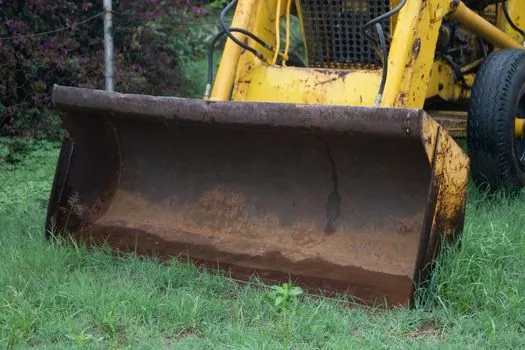
A practical rule: if more than 40 percent of operating hours are on soft, uneven, muddy, or finished surfaces, the track loader earns back its higher undercarriage cost; if more than 70 percent of hours are on paved, crushed-stone, or hard-packed ground, the wheel loader wins on total cost per ton moved [S2][S4].
No single ISO or SAE standard pins a specific psi or speed threshold for choosing track versus wheel undercarriage; the decision is governed by site-specific ground bearing capacity, slope, and cycle-distance economics, with OEM roading-speed and ground-pressure data on the model spec sheet as the binding inputs [S2][S3][S4]. For buyers also weighing backhoe-class machines for utility trenching, the backhoe loader reference frames where a loader-only machine leaves a coverage gap.
Track signal to watch: OEM published ground-pressure ratings for compact track loaders have continued to drop with wider track options and suspended undercarriages, narrowing the per-hour operating-cost gap on finished-grade sites; wheel-side signal to watch: tire compound options for quarry and scrap service keep extending tire life on the wheel-loader side. Both are spec-sheet verifiable on 2026 model-year configuration pages.