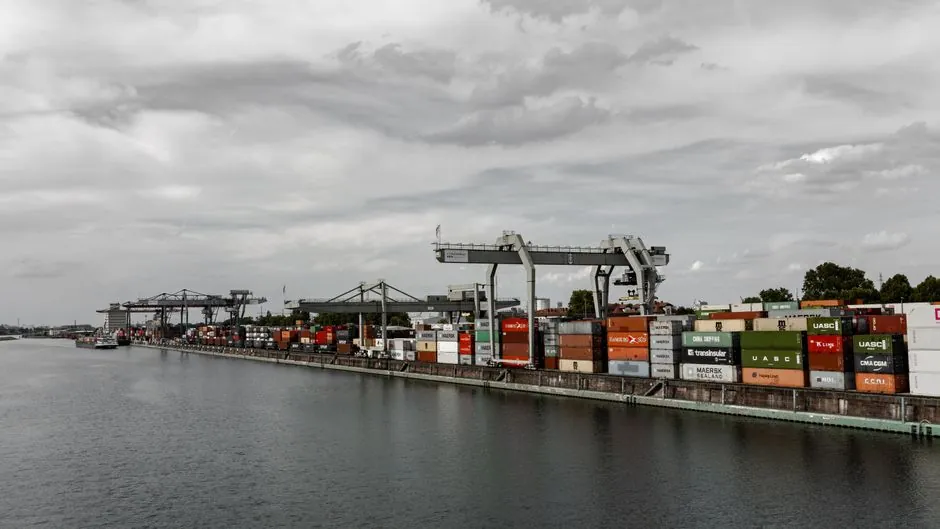
Modern port and terminal pile driving relies on a matched set: a derrick barge or jack-up platform, a hydraulic impact or vibratory hammer sized to pile diameter and required bearing capacity, and a power pack or crane-suspended leader system. The active Port of Alaska Terminal 1 project illustrates the scale: crews aboard the derrick barge WOTAN are driving 6 ft. diameter steel pipe piles to 150 ft. depth to support a new wharf scheduled for 2029 completion [S2].
Selection is driven by four technical axes: hammer energy class per pile diameter, marine-grade corrosion protection, soil resistance profile, and underwater noise compliance. Dieseko USA's North American rental fleet, including the GIANT 2000 upending vibratory hammer, is one example of equipment purpose-built for saltwater exposure, with marine-rated hydraulic seals and hardened-steel components [S1]. Selecting the wrong combination leads to refusal at design depth, excessive blow counts, or permitted-work stoppages.
Hammer Type and Energy Class by Pile Size
Hydraulic impact hammers remain the default for end-bearing pipe piles in the 1–8 ft. diameter range because they develop the high per-blow energy needed to penetrate dense glacial till and dense sand layers typical of port foundations [S2]. For 6 ft. diameter open-ended pipe piles to 150 ft. depth, hammer selection is governed by the rated energy per blow versus the pile's cross-sectional area, typically expressed in kJ per meter of pile circumference.
Vibratory hammers are used where soil resistance is lower and where the goal is extraction or rapid sheet/anchor pile installation, producing 15–20 dB lower peak underwater sound pressure than impact hammers of comparable driving capacity [S1]. For port terminals with strict marine-mammal mitigation windows, vibratory driving can eliminate bubble-curtain requirements and reduce seasonal work restrictions. Variable Moment (VM) vibratory systems add a second control axis: amplitude is adjustable in flight, allowing the same hammer to start in soft overburden and finish in denser substrate without stopping the cycle [S1].
Marine-Grade Build and Corrosion Protection
Offshore-rated piling equipment uses hardened-steel housings, marine-spec hydraulic seals, and sacrificial anode or coated surfaces because salt-spray, submersion cycling, and galvanic coupling between dissimilar metals destroy standard land-based hammers in months rather than years [S1]. For port terminals with continuous saltwater splash zones, the build specification is non-negotiable.
Mounting clamps, leader systems, and hydraulic power packs must also be matched to the hammer: undersized clamps slip on large-diameter pipe piles, and power packs rated below the hammer's peak hydraulic demand cause frequency droop and slow driving. Rental fleets that bundle the hammer, power pack, and clamp as a single offshore package reduce mobilization risk for terminal contractors [S1].
Barge, Crane, and Platform Constraints
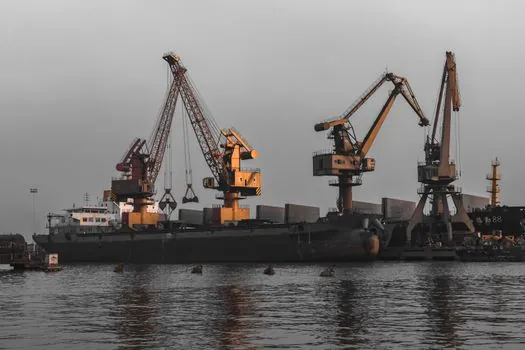
Derrick barges such as the WOTAN used at the Port of Alaska project are spudded or anchored platforms carrying a crawler crane, template, and the hammer lead; stability under wave load and tide range drives hammer-pick selection as much as pile size [S2]. For deeper water or heavier piles, jack-up rigs provide a fixed working deck, but add repositioning time on the order of hours per move.
For quay walls, breasting dolphins, and mooring bits, contractors often pre-drive template piles from a four-point anchor barge before setting the production pile. Site geometry (berth length, apron width, overhead-crane clearance) typically forces a smaller hammer on a longer leader rather than a larger free-hanging hammer, which then sets the maximum pile diameter per pass.
Soil Profile and Driveability Analysis
Port terminals are commonly founded on reclaimed fill over alluvial or marine clay, so a wave-equation or CAPWAP driveability study should run before the hammer is committed. Cohesive layers below the mudline require impact driving for the final set, while granular layers respond well to vibratory methods, which is why most programs sequence vibratory installation of the casing, then impact-drive an open-ended pipe to bearing. [S1]
Set criteria are typically expressed as blows per inch at a stated hammer stroke or fuel rate, with a refusal limit (e.g., 10 blows per inch) as the contract stop condition. Refusal at less than design depth is the most common cause of hammer change-out on terminal projects, and is mitigated by up-sizing energy class or switching from a single-acting to a double-acting hydraulic impact hammer.
Underwater Noise, Permits, and Monitoring
NOAA Fisheries and Marine Mammal Protection Act thresholds govern peak and cumulative sound exposure for most U.S. coastal and offshore pile driving; impact-hammer operations frequently require bubble curtains, hydro-sound dampers, or seasonal restrictions to remain compliant [S1]. Vibratory driving produces 15–20 dB lower peak sound pressure and shifts energy to a continuous frequency band, which often removes the bubble-curtain requirement entirely.
For protected-species windows (e.g., bowhead whale migration in the Chukchi/Bering corridors relevant to Alaska projects) the only practical path is vibratory installation with soft-start procedures and continuous hydroacoustic monitoring. Contractors should expect real-time shutdown authority delegated to the protected-species observer, which means hammer controls must support instant throttle cut from a remote station.
Decision Comparison: Impact vs. Vibratory vs. Hybrid Drive
For end-bearing pipe piles in dense soil on a port wharf, hydraulic impact hammers remain the only realistic option because no vibratory system delivers the per-blow energy needed for final set in glacial till or dense sand. For sheet piles, anchor walls, and temporary casings, vibratory hammers cut cycle time by roughly 50–70% versus impact on comparable sections, at the cost of higher crane demand and stricter marine-mammal permitting in some jurisdictions [S1].
Hybrid programs (vibratory to seat, impact to set) are now the default for large-diameter open-ended pipe piles at modern container terminals, balancing productivity with the noise compliance that single-method impact driving cannot meet. The hybrid approach is exactly what the Port of Alaska Terminal 1 scope implies: a derrick barge driving 6 ft. diameter, 150 ft. piles where the upper marine clay accepts vibratory driving and the lower bearing stratum requires impact [S2].
Supporting Equipment and Downtime Risk
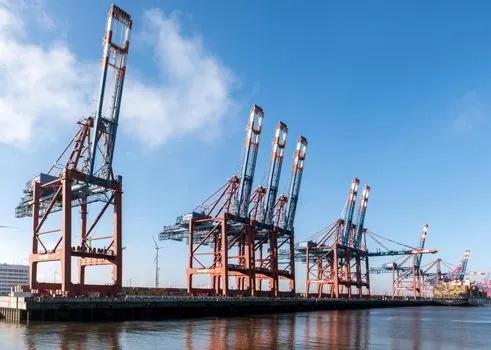
Even with the right hammer, terminal uptime depends on the under-tyred handling fleet: reach stackers, straddle carriers, and terminal tractors cycle continuously over mixed concrete, asphalt, and reinforced surfaces, and tire failures from under-spec wheels are a documented cause of stoppage in port yards [S3]. Specifying solid or heavy-duty pneumatic tires matched to the per-axle load of the handler keeps the supply chain behind the pile driver running.
Spare hammers, duplicate power packs, and on-board hydraulic-oil filtration are the three highest-ROI items for a marine pile-driving spread, because tide, weather, and breakdown windows compound rapidly on a derrick barge. Contractor risk is dominated by weather days, not raw drive rate, so equipment reliability under salt-air conditions matters more than peak cycle time.
Track the next pile-driving milestone at the Port of Alaska Terminal 1 (planned 2029 completion) for confirmation of final pile count and hammer-day productivity [S2]. Watch for any 2026 Q4 revision to NOAA Fisheries underwater-noise thresholds, which would shift vibratory vs. impact selection on U.S. West Coast and Alaskan port work.
Detailed specification references: pile driver, terminal block, and lamps and light fittings.
Background reading: Floor Grinder Spec Map for Demolition: Head, Mass, and Diamond Selection.