
A self-loading concrete mixer truck is a single chassis that loads aggregates with its own hydraulic bucket, weighs them, mixes, transports, and pours concrete on-site, replacing a batching plant, loader, and haul truck in one machine [S1][S3].
A transit mixer truck is a truck-mounted rotating drum that hauls ready-mix concrete from a central batching plant to the pour, keeping the mix workable through continuous drum rotation at roughly 2 to 6 RPM [S5]. The two machines solve different logistics problems and overlap only on the final "truck with drum" silhouette.
Operating Envelope and On-Site Mobility
Self-loading mixers carry four-wheel-drive and a low center of gravity, which lets a fully loaded unit climb slopes of up to 30 degrees on rough, muddy, or rocky terrain [S3]. A 270-degree multi-angle discharge chute on the mixing drum lets the same unit pour into forms that a chute-limited transit truck cannot reach, including basements, narrow urban plots, and remote pads with no loader support [S1].
Transit mixers are built on highway truck chassis with the drum kept rotating to prevent the mix from setting during the haul, and they are sized to 9 to 11 cubic yard units by typical US road weight laws, per the National Ready Mix Concrete Association [S5]. On tight or unpaved sites they lose their advantage because the chassis has standard road geometry and no built-in loading arm.
Capacity, Batch Size, and Throughput
Transit mixers win on per-trip volume: 9 to 11 cubic yards is the US norm, and the rotating drum is designed to keep that full load homogeneous for the 90-minute "shelf life" between batching and pouring [S5]. For a highway over-pour or a high-rise deck this is the metric that matters: fewer trucks, longer hauls, larger pours.
Self-loading mixers run smaller, typically in the 1 to 6 cubic yard range per the comparison of portable and self-loading models against transit mixers [S2]. The trade is that one self-loading unit can replace a loader, a weigh batcher, and a haul truck on a remote site, so the relevant throughput is "fresh concrete placed per shift without a plant nearby" rather than per-trip yards.
Decision Matrix: Self-Loading vs Transit Mixer
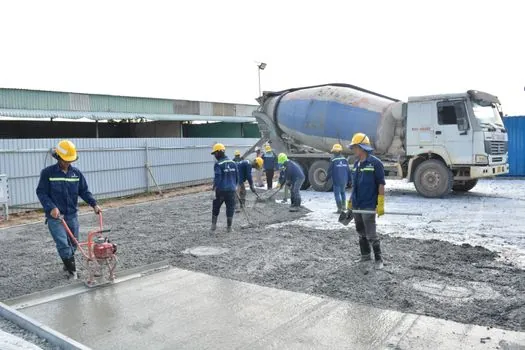
Four criteria decide the spec on almost every project: site access, batch volume, crew size, and unit cost. [S1]
Site access: self-loading for off-road, steep, or confined sites; transit mixers for paved, legal-load-road access with a plant within the 90-minute window [S3][S5]. Batch volume: transit mixers for pours above roughly 50 cubic yards in a shift; self-loading for everything below that, especially intermittent pours [S2][S5]. Crew size: self-loading is a one-operator machine, the bucket and chute are controlled from the cab, so labor drops to a driver plus a finisher; transit mixers still need a separate loader crew at the plant and a chute operator on site [S1][S4]. Unit cost: traditional drum mixers are generally more affordable than self-loading units because the simpler chassis and no built-in loading arm keep the bill of materials lower [S4].
Cost Structure and Total Job Economics
The headline price gap between a self-loading mixer truck and a traditional drum mixer is real and consistent across the comparison data: traditional mixers are generally more affordable because they lack the built-in loading and mixing self-sufficiency of self-loading trucks [S4]. That delta is justified, the same source notes, by reduced external labor for loading and unloading, fewer support vehicles, and the ability to pour without a batching plant on the project.
For a transit-mixer job, the cost line items shift to: per-cubic-yard delivered concrete, retarders if haul time or traffic pushes past the 90-minute shelf life, and scheduling risk when traffic or weather compresses the window [S5]. A useful rule of thumb: if the project has to rent a loader and stage a mini-batch plant to feed a drum truck, a self-loading unit frequently pencils out cheaper over the schedule even at a higher purchase price.
Safety, Maintenance, and Operating Limits
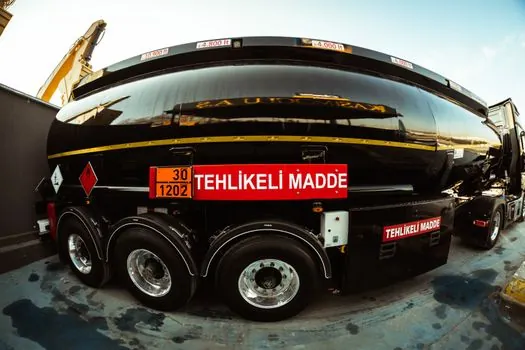
Both machines share the same top-heavy tipping risk on turns and slopes, and mixer-truck drivers are expected to take special care on those maneuvers [S5]. Self-loading units add a hydraulic loading system, on-board load cells for weighing aggregate batches, and a four-wheel-drive driveline; each of these is a maintenance item beyond what a plain drum truck carries [S1][S3].
For a broader spec comparison on material-handling components used in both machines, the bucket elevator material decision guide walks through HDPE, nylon, and polyurethane trade-offs that apply to the aggregate handling subsystems. For hydraulic and pumping decisions on similar equipment, the plunger vs piston pump decision spec covers seal placement, pressure rating, and wear life.
Standards, Sourcing, and Spec Discipline
US transit-mixer sizing follows the National Ready Mix Concrete Association's 9 to 11 cubic yard "weight laws" guidance, while drum rotation is published in the 2 to 6 RPM range for transit work and the 90-minute mixing-to-pouring window is the industry rule of thumb for ready-mix shelf life [S5]. No equivalent single standard governs self-loading mixer geometry; OEM data sheets for the 270-degree chute, four-wheel-drive, and on-board load-cell weighing are the primary spec sources [S1][S3].
For deeper reference on the rotating-drum mechanism itself, see the concrete mixer truck encyclopedia entry, which covers drum geometry, drive options, and chute arrangement. For projects where a truck-mounted concrete pump is added downstream of either mixer, the truck-mounted concrete pump page covers boom reach, hydraulic circuits, and pipeline sizing. Crews pairing either mixer with on-site power generation can reference the power mixer entry for motor and coupling decisions.
Decision Flow: Which Machine to Specify
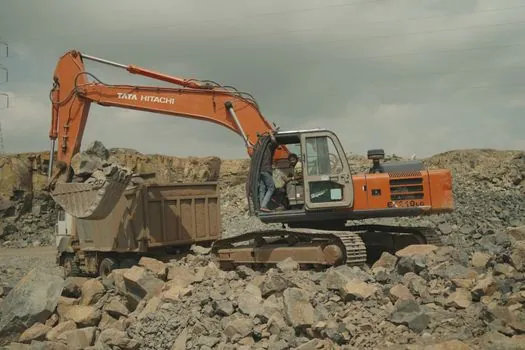
Specify a self-loading mixer when the site is more than a short hop from a batch plant, the terrain is unpaved or steep, the daily pour volume is in the 1 to 6 cubic yard per-trip range, and the project values a one-operator machine over peak per-hour throughput [S1][S2][S3]. Specify a transit mixer when the pour is in the 9 to 11 cubic yard per-trip band, the haul stays inside the 90-minute shelf life, and a central plant is already feeding the site [S5].
A common compromise on mid-size jobs is a fleet of transit mixers for the bulk pour plus one self-loading unit as a top-up and remote-corner pour machine, avoiding both the per-yard bottleneck of pure self-loading and the access limits of pure transit-mixer work [S1][S4].
Trackable signals for the next buying cycle: OEM published per-yard operating cost for self-loading units, which is currently qualitative in the public sources, and any tightening of the 90-minute ready-mix shelf-life rule by ASTM or NRMCA, neither of which has a published revision date in the materials reviewed.