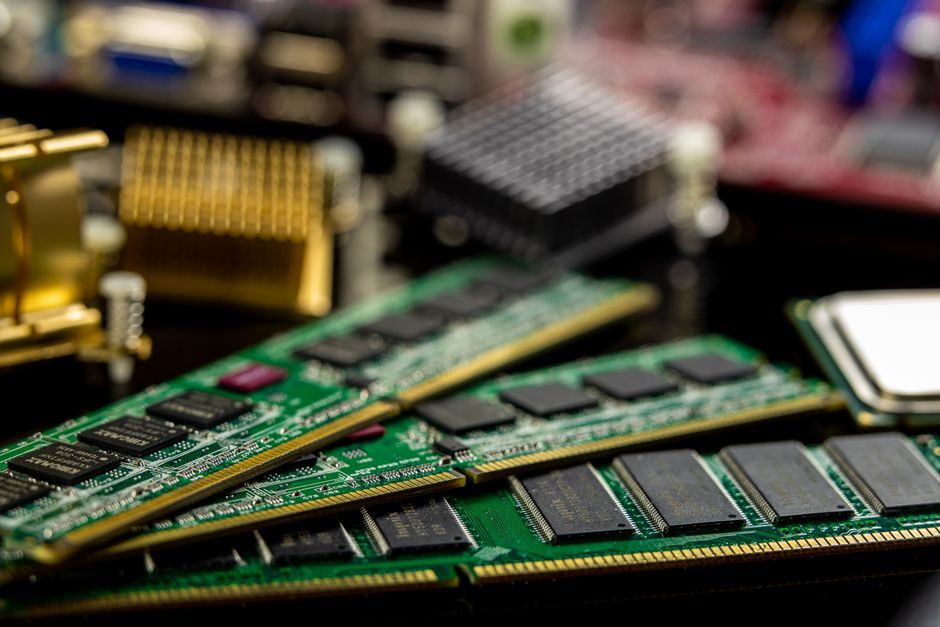
OEM and ODM in semiconductor manufacturing differ primarily on who carries the design liability: in an OEM build, the buyer (or system OEM) owns the architecture, mask set, schematic, and process recipe, while the manufacturing partner executes against that stack; in an ODM build, the factory contributes its own reference platform — chassis, firmware, control loop, sometimes a process module — and the buyer rebrands or lightly customises it [S3].
Factory listings on industrial sourcing platforms now segment suppliers explicitly by R&D capacity, with OEM, ODM, and Own Brand shown as three parallel check-boxes across CNC machining, metal fabrication, film packaging, and ceramic chemical lines, signalling that buyers are already filtering on that axis before they request a quote [S1][S4][S6][S8].
Definition, Scope, and the Spec Boundary Between OEM and ODM
OEM (Original Equipment Manufacturer) in the semiconductor context means the contract factory produces wafers, sub-assemblies, sub-modules, or capital equipment strictly to drawings, bills of materials, and process specifications authored by the buyer; the buyer's part number — not the factory's — appears on the documentation tree, and any design change flows through the buyer's ECN system [S3].
ODM (Original Design Manufacturer) means the factory contributes at least one design layer: a reference tool platform, a thermal-control architecture, a filtration skidded solution, or a packaging machine frame, which the buyer then private-labels or parameterises [S3]. On sourcing directories, suppliers that hold ODM capability typically also list OEM and Own Brand as separate toggles, which is the practical signal that the three modes coexist inside one factory rather than being firm-wide commitments [S1][S4][S6].
For semiconductor-adjacent equipment — chemical-mechanical-polishing slurry handling, fab-side filtration, precision temperature control, motion stages — the OEM/ODM split usually tracks the value of the embedded process IP: where the recipe (slurry chemistry, particle-size distribution, retention rating) is the differentiator, buyers lock OEM; where the differentiator is the machine platform, buyers evaluate ODM [S2][S7].
Selection Criteria: Five Engineering Filters That Decide the Mode
Filter 1 — IP exposure. If the process know-how (CMP slurry formula, gas-panel routing, cleanroom air-handling balance) is a competitive moat, OEM is the only defensible choice; the buyer cannot let the factory's reference design bleed into its own product line, and the contract must assign all foreground IP to the buyer [S3].
Filter 2 — Time-to-market. ODM compresses the NPI cycle because the reference design is already through DFM, EVT, and DVT; Eurotherm positions its semiconductor manufacturing solutions around EtherCAT-based temperature and power control modules that fabs can drop into existing tool platforms, which is the ODM-style integration pattern (reference module, customer-configured I/O) [S7].
Filter 3 — Tooling amortisation. OEM requires the buyer to fund or co-fund fixtures, test racks, and traceability tooling; ODM amortises that cost across the factory's installed customer base, which is why ODM unit pricing on commodity semiconductor accessories (gas filters, fluid manifolds, sensor housings) is typically lower at low volume [S3].
Filter 4 — Compliance and audit posture. ISO 9001:2015, ISO 14001:2015, and ISO 45001:2018 show up repeatedly as the management-certification floor on Chinese OEM/ODM factories serving semiconductor-adjacent buyers, including CNC milling, military hose, and ceramic chemical plants that also feed fab-side chemical handling [S4][S5][S6]. Buyers serving regulated fabs (semiconductor, pharma-grade chemicals) should require the ISO 9001:2015 evidence regardless of which mode they pick.
Filter 5 — Annual volume and revenue band. On Made-in-China.com, factory profiles segment annual revenue into <1M, 1–2.5M, 2.5–5M, 5–10M, and >10M USD bands; the OEM/ODM offering is rarely correlated with revenue alone, but small factories (<1M USD) more often position as pure OEM job-shops, while 5M+ USD factories are likelier to advertise full ODM plus Own Brand [S1][S4][S5][S6].
Options Compared: OEM, ODM, and Hybrid on Five Decision Criteria
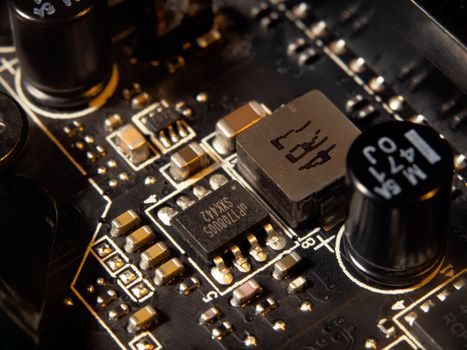
Below is the criteria-by-criteria comparison that procurement and process-engineering teams should run for any semiconductor-adjacent sourcing decision. The criteria are cost at low volume, time-to-market, design-control ceiling, audit/traceability burden, and best-fit use case. [S3]
OEM scores low on speed (buyer drives every ECN), high on design control (buyer owns the full stack), and mid on cost because tooling is funded per project; ODM scores high on speed (reference design is pre-validated), low on design control (factory IP travels with the platform), and low-to-mid on cost because tooling is amortised across customers [S3].
Hybrid builds — where the factory supplies a reference filtration, thermal, or fluid-handling module, and the buyer integrates it into a proprietary tool — sit between the two and are the most common pattern in semiconductor capital equipment, where Pall's filtration and purification products and Eurotherm's temperature and power control modules are routinely integrated as OEM-buyer-specified sub-assemblies on top of an ODM-style reference platform [S2][S7].
Best-fit mapping: OEM for proprietary process tools, custom wafer-handling robotics, and any line where the recipe is the IP; ODM for commodity semiconductor accessories (DI water filters, gas-line filters, exhaust components, basic sensor housings) where the buyer wants a proven reference design; Hybrid for capital equipment where a sub-system vendor (Pall, Eurotherm, MKS-class suppliers) supplies the OEM-grade module inside a buyer-designed tool [S2][S7].
Who OEM Is For — and Who It Is Not For
OEM is the right mode when the buyer's engineering team can write a complete, release-level specification: P&ID, PFD, control narrative, BOM, DFT, and acceptance test plan. It is the default for fabs building custom process tools, for IDMs designing proprietary metrology, and for OSATs specifying custom handler and tester interfaces where the recipe is the moat [S3].
OEM is the wrong mode when the buyer is a startup without a process-engineering bench, when the volume is below the level that justifies a full tooling amortisation, or when the component is a commodity accessory (a standard pneumatic fitting, a general-purpose filter housing, a 19-inch rack panel) that the factory already sells as a catalogue line — in those cases the buyer is paying for OEM overhead without capturing the design-control benefit [S1][S3].
For fab-side process engineers, OEM is also the right mode when the part number must trace back to a customer-owned drawing revision, because the documentation tree in OEM is single-rooted at the buyer's part number, whereas ODM documentation often carries the factory's part number with a customer cross-reference [S3].
Who ODM Is For — and the Limits
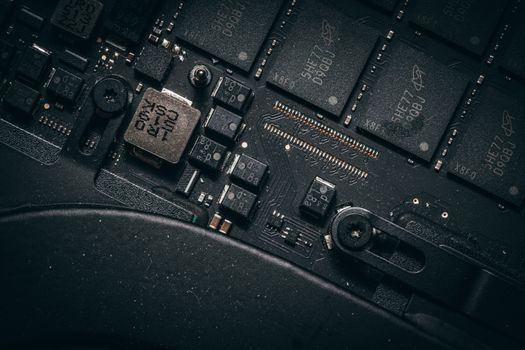
ODM is the right mode when the buyer needs a working reference design in weeks rather than quarters, when the buyer's value-add is upstream (process recipe, application software, distribution) rather than mechanical/electrical design, and when the factory already runs a mature platform line. The pattern shows up in semiconductor-adjacent chemical handling, packaging machinery, and precision temperature control, where vendors publish reference platforms that customers rebrand [S7][S8].
ODM is the wrong mode when the buyer's customer base requires a unique, defensible product identity (no two reference platforms can look identical under the same brand), when the regulatory regime requires the buyer to hold the full design history file, and when the volume justifies amortising dedicated tooling — all situations where OEM's design control earns its premium [S3].
A practical guard-rail: any ODM contract in semiconductor manufacturing must fix the IP allocation in writing, define the bill-of-material freeze point, and assign responsibility for field failures, because the design and the build are no longer held by the same legal entity [S3].
Real Use Cases in Semiconductor-Adjacent Manufacturing
Use case 1 — CMP slurry filtration. Pall supplies filtration and purification products tuned for chemical semiconductor processes including chemical mechanical polishing, with application bulletins documenting the slurry families and filtration integration points; this is a hybrid pattern where the filter module is OEM-grade to the fab's slurry spec and the surrounding skidded unit can be sourced as ODM [S2].
Use case 2 — Precision temperature and power control. Eurotherm's semiconductor manufacturing solutions package EtherCAT-based temperature control and power control as modular building blocks for OEM tool builders, claiming shorter time-to-market, higher machine utilisation, and lower OpEx as the three value levers; this is textbook ODM-vendor-to-OEM-tool-builder integration [S7].
Use case 3 — Mechanical sub-assemblies. CNC machining and 5-axis machining factories in Jiangsu and Fujian advertise OEM and ODM side-by-side on the same profile, which means a single factory can produce both a buyer's proprietary wafer-handling bracket (OEM) and a reference platform chassis (ODM) on the same equipment fleet, an option worth checking before splitting the work across two suppliers [S1][S4].
Use case 4 — Chemical and ceramic sub-components. Ceramic chemical factories holding ISO 9001:2015 advertise both OEM and ODM on the same profile, which is the relevant template for sourcing semiconductor-grade ceramic fixtures, chemical-resistant housings, and powder-handling parts where the material spec is the IP but the geometry can be reference-based [S6].
Limitations, Failure Modes, and Sourcing Standards
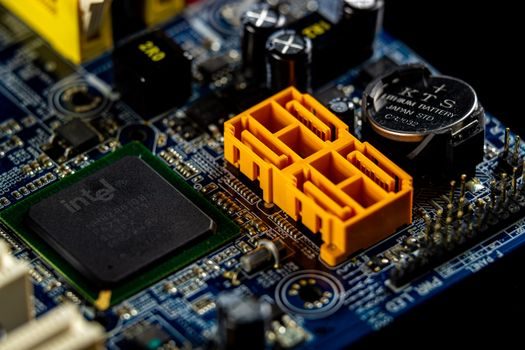
The single biggest failure mode in OEM is undocumented design drift: the buyer's revision and the factory's revision go out of sync because there is no shared PLM, and field failures trace to that gap. The single biggest failure mode in ODM is IP leakage: the factory's reference design ends up powering two competing brands because the contract did not lock the platform's exclusivity or its derivative-work rights [S3].
A second limit is the audit ceiling: ISO 9001:2015 is the management-certification floor on most Chinese OEM/ODM factories serving semiconductor-adjacent lines, but ISO 9001 is a quality-management-system standard, not a product or process standard, so it does not replace the fab's own incoming-quality protocols; for chemical and ceramic sub-components, buyers should also require material certificates and lot-level traceability on top of the ISO 9001 evidence [S4][S5][S6].
On standards, semiconductor capital-equipment buyers typically layer SEMI standards (SEMI E10, SEMI E84, SEMI F47 for equipment reliability, voltage sag immunity, and process-gas handling) on top of ISO 9001:2015; the research supplied does not cite specific SEMI revisions, so any specific clause should be verified against the buyer's own compliance matrix before being written into a contract.
Decision Matrix in Prose
If the buyer's value is in the process recipe and the documentation must trace to a single customer-owned part number, pick OEM and accept the longer NPI cycle. If the buyer's value is in distribution, application software, or upstream process know-how, and the time-to-market is binding, pick ODM and lock the IP terms in writing. If the buyer's product is a capital tool with both a proprietary process module and a commodity platform layer, pick a hybrid: OEM for the process module (Pall-class filtration, Eurotherm-class thermal control) inside an ODM-sourced chassis or skidded frame, with a single contract on each side of the split [S2][S7].
Cross-check on supplier directories: prefer factories that list OEM, ODM, and Own Brand as three separate toggles rather than a single "OEM/ODM" tag, because the toggle split is a stronger signal that the factory has separate engineering and production flows for each mode [S1][S4][S5][S6][S8]. This split also makes it easier to bind a single mode in the contract without ambiguity.
For adjacent context on how 2026 fab tooling is being specified at the Industry 4.0 layer, the Semiconductor Industry 4.0 adoption map and the machine vision sourcing signal piece line up with the OEM/ODM split because the GEM 300 and vision sub-systems are classic ODM-style reference modules that get dropped into OEM-owned tool stacks. Tool-level capacity planning under the same constraints is dissected in Semiconductor Capacity Planning: stochastic models, fab coordination, and tool-level data, which is the natural follow-on read for anyone sizing the OEM order book against fab ramp curves.
Trackable next-node signals: (1) a higher share of Chinese OEM/ODM factories adding explicit ODM, OEM, and Own Brand toggles rather than a combined "OEM/ODM" badge — already visible in the 2026 directory refreshes [S1][S4][S6]; (2) semiconductor capital-equipment vendors bundling EtherCAT-based temperature/power control modules as drop-in ODM sub-assemblies for OEM tool builders, accelerating the hybrid pattern [S7]; (3) ISO 9001:2015 remaining the universal floor but no longer being treated by buyers as sufficient evidence on its own, with material and lot-traceability certificates becoming the differentiator on ceramic and chemical sub-components [S4][S5][S6].
For the relevant spec sheets and selection criteria, see additive manufacturing material, pressure transmitter, and flow meter.