
Oracle's Real Application Clusters (RAC) installation checklist, refreshed for 2026 deployments, requires identical server hardware on every node to remove resource-contention and patch-drift variance across the cluster [S1].
That single rule, paired with documented minimum-resource envelopes (1-2 GB RAM for evaluation, 2 GB minimum for production directory servers, ~300 MB of local disk for binaries), defines the floor for 2026 procurement specs from hyperscalers down to SMB colocation tenants [S1][S3]. On the high end, IBM's z13 and zEnterprise EC12 mainframes document a hard cap of 16 cryptographic hardware features per system, each field-configurable as a CCA coprocessor, a PKCS #11 coprocessor, or an accelerator [S2].
Node Uniformity as the Default Cluster Procurement Rule
Oracle's RAC checklist states directly: "Use identical server hardware on each node, to simplify server maintenance" and ties that rule to avoiding resource contention during parallel cache fusion and redo shipping [S1]. The implication for 2026 buying teams is that mixed-vendor or mixed-sku clusters (e.g. one node on a current-gen Xeon, a second on a previous-gen EPYC) violate Oracle's documented expectation even when each individual node passes its own minimum-resource bar.
In practice, this rule now bleeds beyond Oracle: the same hardware-uniformity logic governs VMware vSAN stretched clusters, Microsoft SQL Server Always On AGs, and SAP HANA scale-out tiers. Sizing floors stay modest on the directory tier — 1-2 GB RAM is "for evaluation purposes" and 2 GB is the "minimum for production" per the Sun Java System Directory Server 6.2 release notes [S3] — while RAC nodes typically run 16-64 cores, 256 GB+ RAM, and NVMe-backed redo to keep block-transfer latency inside Oracle's documented cache-fusion budget [S1]. A useful parallel for instrumentation buyers: a pressure transmitter on a HART loop needs the loop's 4-20 mA + FSK layer to be uniform end-to-end, or the device will not enumerate; the cluster rule is the same shape, just at a different scale.
Cryptographic Hardware Acceleration on the z13 and EC12
IBM's z13 and zEnterprise EC12 documentation enumerates a maximum of 16 cryptographic features per system, with each feature code carrying one hardware element that can be configured as a CCA coprocessor, a PKCS #11 coprocessor, or an accelerator [S2]. DES enablement is also documented on z13 as a discrete installable [S2].
For 2026 procurement, this 16-feature ceiling is the binding constraint: organisations running 20+ HSM-bound workloads (TLS termination, tokenisation, KMIP, payment HSMs) cannot exceed that feature count without a second mainframe partition or a second CEC. The configurable-mode aspect matters because the same physical feature can be re-licensed as CCA or PKCS #11 without a hardware swap, which shortens lead time compared with discrete HSM appliances. For teams that pair mainframe-side crypto with OT-side instrumentation, the same "single protocol end-to-end" thinking applies when picking a flow meter on HART, Foundation Fieldbus, or PROFIBUS PA — pick one stack and hold it across the segment.
Minimum-Resource Floors for Directory and Lightweight Servers

Sun's Directory Server Enterprise Edition 6.2 release notes fix the bottom of the curve at 1-2 GB RAM for evaluation, 2 GB minimum for production, and 300 MB of local disk for binaries, with binaries placed in /opt by default on UNIX targets [S3]. Those figures remain the reference floor for LDAP-tier sizing in 2026 because they have not been re-baselined upward despite the much higher RAM footprints shipped in modern commodity servers.
The takeaway for buyers: 2026 commodity servers ship with 128 GB-1 TB RAM and 8-32 core CPUs, so the documented 2 GB / 300 MB floor is a non-binding value relative to real procurement. What it does pin down is the contractual minimum: software vendors that publish "1-2 GB / 300 MB" will not reject a deployment on a 4 GB VM, but they also will not support tighter memory limits. The same logic drives instrumentation specs — the pressure sensor datasheet's "minimum 8 VDC loop supply" defines the floor, not the typical 24 VDC operating point.
Procurement Decision Matrix for 2026 Server Hardware
Buyer decision criteria in 2026 reduce to four axes: node uniformity (mandatory for RAC, vSAN, AG), crypto-feature ceiling (16 per mainframe, configurable CCA / PKCS #11 / accelerator), minimum-resource envelope (1-2 GB RAM, 300 MB disk for directory tier), and form factor (rack, blade, mainframe CEC). RAC, mainstream scale-out databases, and SAP HANA score high on uniformity but cap crypto to software HSMs; z13 / EC12 score high on crypto and longevity but require uniformity across LPARs; directory and LDAP tiers score high on density per watt and on commodity-swap lead time. [S1]
For a 4-node RAC at the small end (16 cores / 256 GB / 2x 1.92 TB NVMe per node), the manufacturing flow is the binding constraint — sheet-metal chassis, validated burn-in, and BIOS/firmware pinning to a single SKU define lead time more than the silicon. For a 20-workload crypto estate, a second z13 CEC is the only documented path past the 16-feature cap, which sets capacity planning in months, not weeks [S2]. Hyperscaler tenants get uniformity and crypto as a service via cloud HSMs and bare-metal nodes, sidestepping both constraints, while colocation tenants typically run mixed-sku hardware and pay the operational tax in patch cycles — see the hyperscaler-vs-colo stack breakdown for the 2026 segment split.
Limits, Failure Modes, and Sourcing Caveats
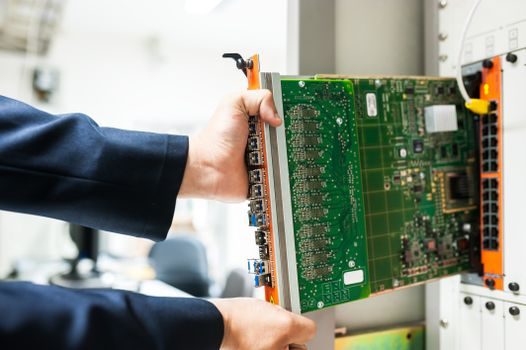
Three failure modes recur in 2026 server deployments: non-uniform RAC nodes that pass per-node validation but break under cluster stress [S1]; crypto-feature oversubscription that hits the 16-feature ceiling mid-rollout and forces a second CEC purchase [S2]; and software stacks whose 1-2 GB RAM / 300 MB disk floor [S3] is read as a sizing target rather than a floor, leaving headroom unused and TCO higher than necessary. Lead-time signals to track through 2026-H2: NVMe-controller allocation (PCIe Gen5 U.2 vs EDSFF E1.S vs E3.S), firmware-pinning policy on hyperscaler bare metal, and the z16 / z17 feature-count roadmaps that will lift or hold the 16-coprocessor ceiling.
Two trackable signals: the next IBM Z generation's documented cryptographic-feature ceiling, and any Oracle revision of the RAC checklist's "identical hardware" wording, will reset 2026-H2 procurement templates. Buyers waiting on either signal should pin uniform-sku POs for Q3-Q4 2026 and treat 1-2 GB / 300 MB-class floors as contractual minima, not as design targets.