Selection in 2026 should start from bus voltage, continuous/peak current, feedback type and STO category, with nameplate brand ranked below proven current-loop bandwidth and bus cycle time.
AutomationDirect's SureServo2 SV2A-2300 ships as a 3 kW, 230 VAC 3-phase drive with one RS-485 Modbus RTU/ASCII port [S6], a useful data point for sizing stand-alone machines; the listing category on Made-in-China.com bundles matching AC servo motors and pulse/analog bus interfaces from Chinese audited suppliers, with 1-piece MOQ pricing visible at the SKU level [S1].
What "Servo Drive" Actually Means in 2026
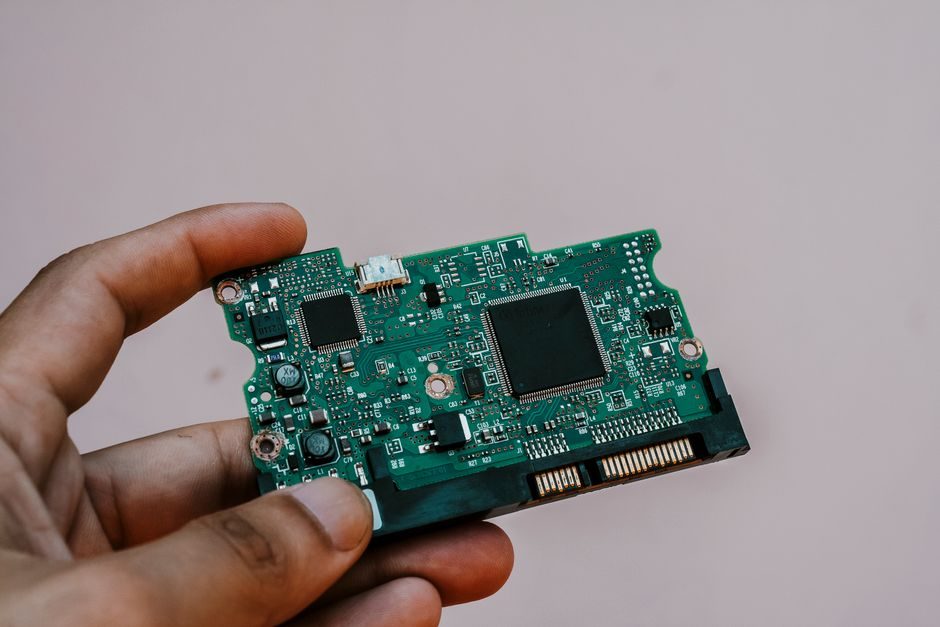
A servo drive in industrial automation is the closed-loop amplifier that drives a brushless servo motor, regulates torque via a high-bandwidth current loop, and exchanges setpoints/feedback with a controller over a fieldbus or pulse-train link [S2][S5].
TI's 2026 servo-drive control-module reference design page states the hard requirements plainly: a high-bandwidth current loop for smooth torque/speed/position control, a low-latency low-bit-error EMC-robust transceiver, and a precise analog signal chain feeding encoder feedback [S5]. Those three blocks (current loop, comms PHY, encoder interface) are the engineering definition of a modern servo drive, regardless of housing size or marketing label.
Hawe's fluid-lexicon entry makes the term explicit: a servo drive is "an automatic drive system, which contains a power amplifier and a feedback to change the output variable as a defined function of an input variable" [S2]. In a 3-phase brushless servo, the amplifier stage is an IGBT or SiC inverter, and the feedback path is the resolver or digital encoder returning position to the current/torque regulator inside the drive.
Voltage, Current, Power: The Hard Sizing Triangle
Match the drive to the motor's rated continuous current first, then verify peak current can deliver 2-3x continuous for accel/decel windows; 230 VAC 3-phase is the sweet spot for machines under 3 kW, 380/480 VAC 3-phase covers most multi-axis lines above 5 kW. [S6]
AutomationDirect's SV2A-2300 lists 3 kW output at 230 VAC 3-phase with a single RS-485 (RJ45) port carrying Modbus RTU and ASCII [S6], which is a representative low-voltage class. Chinese factory-floor pricing on Made-in-China.com for AC servo drives shows 3-axis 220V-class units advertised in the US$135-182 per-piece MOQ band, with 400V-class multi-axis amplifiers running higher once regenerative resistors and braking choppers are bundled in [S1].
Buyers frequently under-size peak current: a 750 W servo motor can draw 9-12 A peak during a 100 ms accel pulse even though its continuous rating is only 2.5 A, and a drive rated for 3 A continuous will fault on over-current during that pulse. Check the drive's "peak current for X seconds" curve against the motion profile, not just the motor nameplate.
Feedback Type: Incremental, Absolute, Biss-C, EnDat

Absolute encoders (Biss-C, EnDat 2.2, Tamagawa) eliminate the homing sequence after power-off and are now standard on mid-range drives, while incremental + hall is acceptable only on cost-driven pulse-train axes.
TI's 2026 servo-drive reference design page lists "encoder interfaces" alongside the current loop and EMC-robust transceiver as one of the three reference-design building blocks [S5], underlining that the encoder PHY is not optional hardware. Drives that accept only incremental A/B/Z + UVW hall will not talk to a 23-bit multi-turn absolute encoder; verify the drive's feedback compatibility list before pairing it with a motor.
For machine tools and semiconductor handlers where lost-position after E-stop is unacceptable, specify a drive that natively reads EnDat 2.2 or Biss-C and that holds absolute position on its own backup, not one that requires an external battery box per axis. This is a 2-3x price difference that pays back the first time the line trips and restarts in under 60 seconds instead of re-homing every axis.
Bus, Cycle Time, and the Multi-Axis Question
EtherCAT and PROFINET IRT have become the default fieldbuses for new multi-axis builds, with cycle times of 250 µs to 1 ms for 6-16 axis lines; pulse + direction and analog ±10 V remain common only on retrofit single-axis retrofits.
AutomationDirect's SV2A-2300 lists Modbus RTU and ASCII on RS-485 for low-cost stand-alone use [S6], which is the right bus for a single-axis retrofit where the controller is a low-cost PLC without an industrial Ethernet port. The Chinese export-market listings on Made-in-China.com show pulse/analog and basic Modbus drives as the bulk of 220V-class volume, with EtherCAT/PROFINET drives concentrated in the 400V multi-axis class [S1].
The decision rule: if your line has 4 or more axes that must synchronize (gantry, flying shear, electronic cam), pick an EtherCAT or PROFINET IRT drive and budget for a controller with the matching master stack; if you are driving one axis from a PLC pulse output, Modbus RTU or step/direction is fine and saves the cost of an industrial Ethernet switch per cabinet.
Safety, STO, and What You Should Not Skip
Safe Torque Off (STO) per IEC 61800-5-2 is the baseline safety function on any new 2026 servo drive build, typically delivered as a dual-channel 24 V input that removes gate-drive signals within milliseconds of a category-1 stop request. [S2]
Most mid-range drives now ship STO as standard and offer SS1, SLS, and SBC as options or firmware unlocks, but the wiring requirement (dual-channel, monitored, with a safety relay or safety PLC upstream) is on the integrator, not the drive vendor. Verify the drive's STO is certified to SIL 2 / PL d, not just "compatible with safe systems," and check the integration guide for the exact dual-channel test pulse width your safety relay expects.
Skip STO only on appliances and cabinet-door-style consumer motion products like Blum's SERVO-DRIVE for handle-less kitchen pull-outs [S4], which is a low-voltage electromechanical opening support, not an industrial servo drive, and falls outside the IEC 61800-5-2 scope entirely.
Selection Map: Low-voltage vs Mid-voltage vs Hydraulic Servo
The three common 2026 flavors split cleanly: (1) 220/230 VAC 3-phase brushless servo drives under 3 kW, typically Modbus RTU or EtherCAT, for stand-alone machines; (2) 380/480 VAC 3-phase multi-axis drives above 5 kW with EtherCAT/PROFINET and integrated regenerative braking, for cells and lines; (3) electrohydraulic servo drives using a proportional/servo valve plus a hydraulic cylinder or motor, where the drive's output stage is a current-controlled valve, not an inverter. [S2]
Hawe's fluid-lexicon entry spells out category 3 explicitly: a fluid-technology servo drive combines a servo valve with a hydraulic motor (servo motor) or hydraulic cylinder (servo cylinder) as the actuator [S2]. A plant engineer specifying a servo drive for a 200-ton injection-molding clamp should be looking at a servo-hydraulic system with a proportional valve rated for the required flow and pressure, not a 400 VAC brushless amplifier, because the actuator is hydraulic, not rotary electric.
For multi-axis electronic lines, the cross-axis mechanical constraints show up in bearings and rails before they show up in the drive: see Thrust Bearing Selection Criteria for Servo Positioning Axes for the load-side side of the same spec map, and Servo vs AC Motor for Gear-Backlash Loads for the choice between a closed-loop servo and an induction drive on geared axes.
Who Should NOT Buy the Lowest-Cost 220 V Class
Buyers specifying 220/230 VAC single-phase-input drives for continuous-duty cycles above 50% should switch to 3-phase input or a 400 V class drive; single-phase input halves available continuous power and trips on DC-bus ripple during heavy accel. [S6]
Plants with high-availability requirements (semiconductor, pharma, food) should also avoid the bottom tier of pulse-train drives with no absolute-encoder option, because every power cycle means a re-home, and re-homing a 12-axis line costs 5-15 minutes of throughput per event. Spend the money on EtherCAT or PROFINET with absolute encoders up front; the lifetime ROI on a single avoided re-home incident usually exceeds the BOM delta.
For cabinet-build and wiring costs, the drive choice cascades into cable choice: drag-chain-rated motor and feedback cables are mandatory for any axis that runs through a chain, and a drag-chain cable retrofit for packaging lines is often the second PO after the drives are selected.
Pricing Bands and Sourcing Reality in August 2026
Factory-floor Chinese export pricing for 220V-class AC servo drives sits in the US$135-182 per-piece MOQ band on Made-in-China.com, with 3-axis 400V-class AC servo amplifiers including built-in dynamic brake and regenerative resistor quoted in the US$420-plus tier [S1].
Global Market Insights published a 2020 forecast that the servo drive market would surpass USD 9 billion by 2026 and exceed 26 million units of annual installation by 2025 (2020-08), figures that show the volume band industrial buyers are operating in even though the 2026 actuals land above the early-2020 line [S7][S9]. For a 2026 buyer that translates to: competitive 220V pricing, tighter supply on 400V multi-axis EtherCAT drives from the major Japanese and German vendors, and a workable second-source path through Chinese audited suppliers for the lower-voltage class [S1].
One last trackable signal: TI continues to publish its TIDM-SERVODRIVE industrial servo drive and AC inverter reference design, with reference materials still indexed on the BDTIC distributor portal in 2026 [S8], which means the controller silicon roadmap (C2000, Sitara) is stable and multi-source, so a 2026 buy is not pinned to a single MCU family. Watch for drive firmware revision notes around STO and Biss-C support, and confirm encoder compatibility on the vendor's official compatibility list before signing the PO.
For component-level specifications, see servo drive, and linear guide.