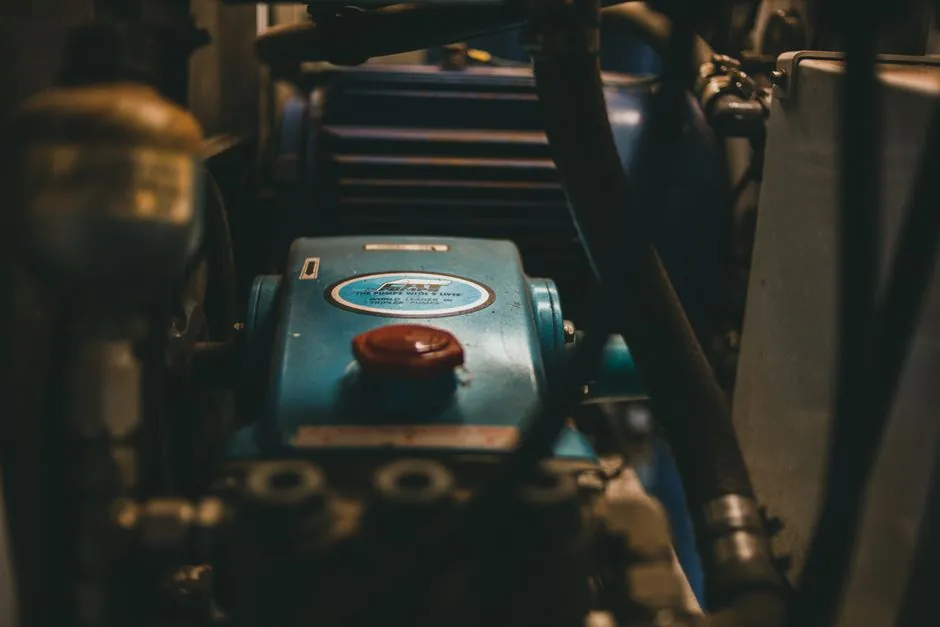
Sewage pumps are centrifugal machines purpose-built to move effluents carrying soft solids, fibrous material, and small granular debris, with the upper end of the modern product range reaching 2400 m³/hr flow, 400 kW power, and 75 m head on cast-iron or duplex-stainless frames [S3].
Selection is driven by four hard constraints: maximum solid passage size, total dynamic head, required flow, and whether the pump runs fully submerged, in a wet well, or dry-installed beside the sump. The sewage pump category now spans residential grinder units below 1.5 kW and municipal dry-pit frames above 360 kW, with most product families rated to 80 °C liquid temperature and IP68 motor sealing [S4].
How Sewage Pumps Differ from Clean-Water Centrifugal Pumps
A sewage pump is a centrifugal pump with enlarged flow passages, recessed or vortex impellers, and wear-resistant wet ends, because domestic wastewater carries soft solids through pipework typically 2 inches (≈50 mm) in diameter and the pump must pass that same size without blocking [S6]. Clean-water centrifugal pump geometries, by contrast, use tight impeller clearances optimized for clear liquid and lose efficiency rapidly with any fibrous content.
Agitator variants add a rotating cutter or agitator at the suction to re-suspend settled solids into slurry before they enter the impeller eye, which is why they are common on sumps that sit idle between duty cycles [S1]. Materials track the duty: cast iron for buried municipal service, SS304 for light greywater, SS316 or duplex stainless for corrosive industrial effluent, with shaft seal arrangements typically a double mechanical seal in silicon carbide on carbon ceramic [S4][S9].
Classification by Impeller and Solids-Handling Principle
The dominant taxonomy in 2026 vendor catalogues sorts sewage pumps by how the impeller deals with solids: non-clog open or channel impeller for standard municipal duty, vortex impeller for stringy or fibrous loads, and cutter/grinder impeller for pressurized small-bore discharge lines [S7][S8].
Non-clog open impellers are the default for municipal sewage: simple, robust, cost-effective, and capable of passing rags and soft solids without blockage, with standard suction heads of 2-3 m and special designs reaching 4-5 m [S7]. Cutter pumps use a sharpened leading edge or independent grinder to macerate fibres and grease before the fluid reaches the impeller, which lets them push wastewater through discharge lines as small as 50 mm at up to 55 m head and 120 m³/hr, on motors up to 22 kW in the KO Series pattern [S3][S7]. Vortex (or recessed) impellers pull solids past the impeller eye in a circulating flow, which makes them tolerant of wipes and rope-like material but trades 5-15 % hydraulic efficiency against a non-clog channel design.
Classification by Installation: Submersible vs Dry-Pit
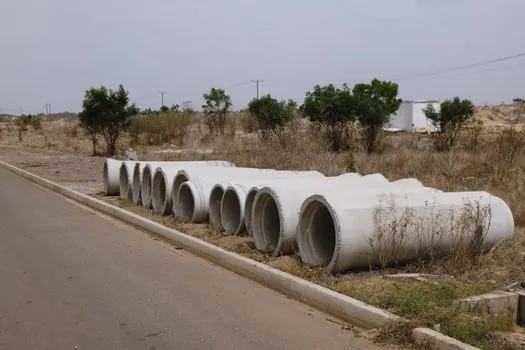
Submersible sewage pumps lower into a wet well on a guide-rail pedestal and run flooded; dry-pit pumps sit in a separate chamber beside or above the sump with the suction pipe dropping into the well, giving access for maintenance without lifting the pump [S1][S4].
Submersible units are the workhorse for residential, commercial, and small municipal stations: SEWO-series stainless models cover 0.55-1.5 kW at 33 m³/hr and 11 m head for greywater duty, while larger cast-iron frames run 50-600 mm ports at up to 2400 m³/hr and 60 m head on motors up to 400 kW [S3]. Dry-pit sewage pumps (SUDP pattern) are specified where the wet well is deep, where the pump must remain serviceable without confined-space entry, or where continuous-duty motors above 150 kW need air-cooled operation; the SUDP frame runs 50-400 mm ports, up to 1500 m³/hr, 75 m head, and 360 kW in cast iron, ductile iron, or SS316 [S3]. Both arrangements carry double mechanical seals and IP68 motor enclosures, with Class F or H insulation for the submersible side [S4].
Spec Comparison: Which Type Goes Where
For new spec sheets in 2026, the choice between the four common configurations can be reduced to four decision criteria: solids size, discharge pipe size, continuous vs intermittent duty, and required head. [S3]
Non-clog submersible suits municipal lift stations with up to 75-100 mm spherical solids on intermittent or continuous duty, typically with 80-150 mm discharge [S7][S8]. Cutter submersible fits residential and light commercial sites discharging into 50 mm pressure lines over longer horizontal runs, where maceration prevents clogging at small pipe diameters [S3][S7]. Vortex submersible is the right call for untreated wastewater with wipes, ropes, or heavy fibrous content, accepting the efficiency penalty for clog-free operation [S4]. Dry-pit centrifugal with channel impeller is specified for large municipal or industrial stations where flow exceeds 500 m³/hr, where head exceeds 30 m, and where maintenance access or HVAC-cooled motors are mandatory, with the SUDP frame covering 50-400 mm ports up to 75 m head [S3].
Selection Criteria: Head, Flow, Solids, and Materials
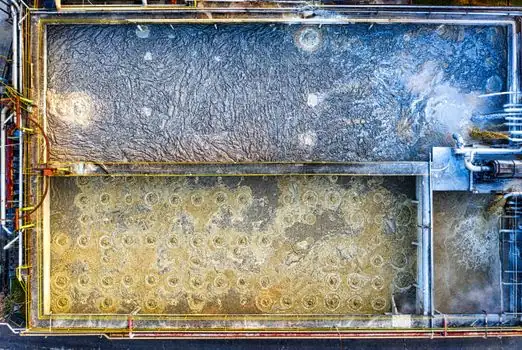
Engineers size a sewage pump on four numbers: required flow in m³/hr, total dynamic head in metres, largest spherical solid that must pass in millimetres, and the duty cycle (intermittent sumps vs 24/7 lift stations) [S8].
Material selection tracks the fluid chemistry: cast iron covers municipal sewage at 0-80 °C; SS304 handles light greywater; SS316 or duplex (DSS) covers industrial effluent with chloride, low pH, or abrasive grit, with the BO/ABOD family offered in all four material options from a single frame [S3][S4]. Voltage options on three-phase units run 415 V and 600 V AC at 50/60 Hz, with single-phase 230 V available on residential grinder pumps, and thermal protection in the motor winding is standard across the listed 0.5 HP to 250 HP range [S4]. Float switches, guide-rail auto-couplers, and control panels are typically offered as optional accessories rather than built-ins [S4].
Standards, Certifications, and Compliance Anchors
Major sewage-pump lines now ship with ISO 9001 quality-system certification, CE marking for Europe, and UL or CSA electrical certification for North America, with IP68 motor sealing the de facto submersible rating and Class F/H motor insulation the standard winding temperature class [S4].
For hazardous-area sites (sewage wet wells are Zone 1 by default under most European codes when vented), the submersible motor and junction box must additionally meet the relevant ATEX or IECEx equipment category, though the specific category number depends on the site classification rather than on the pump itself. RoHS-compliant materials are now the default on most OEM sewage-pump lines, and Canadian environmental standards are called out separately on frames sold into that market [S4]. Buyers should still confirm the certificate scope matches the rated kW and the installed zone, not just the family name on the nameplate.
Where Each Type Earns Its Place, and Where It Does Not
Submersible non-clog pumps are the default for new municipal lift stations and most commercial sites; grinder/cutter pumps dominate residential pressure-sewer systems discharging into small-diameter forced mains; vortex pumps win on fibrous or wipe-prone sites; dry-pit pumps are the right call for deep wet wells, large continuous-duty flows, and any station where pulling the pump for service must not require confined-space entry [S3][S7][S8].
A sewage pump is the wrong choice for clear potable water, for high-pressure boiler feed, or for slurries above 5-10 % solids by weight; in those cases a clean-water centrifugal pump, a diaphragm pump, or a positive-displacement slurry pump will out-perform it on both efficiency and wear life. The same applies to viscous oils, chemicals incompatible with the standard mechanical-seal elastomers, or fluids above 80 °C, which sit outside the published temperature envelope of every line in the surveyed product set [S4].
Failure Modes and Field Reliability Notes
The four most common sewage-pump failures are seal leakage from running dry, impeller blockage from wipes or rags, bearing failure from grit ingestion, and motor overheating from partial-submergence duty outside the rated cooling curve [S8].
For sumps that cycle only a few times per day, the SEWO 0.55-1.5 kW stainless frame is typically over-specified on thermal margin; for 24/7 lift stations above 100 m³/hr, the BO/ABOD or SUDP frames at 50-600 mm ports are the conservative pick [S3][S4].
Two trackable signals for spec updates into the rest of 2026: the EU's ongoing review of water reuse and pumping efficiency classes under the Ecodesign framework, which may push minimum-efficiency thresholds upward on motors above 75 kW, and the steady migration in municipal tenders from cast-iron to duplex-stainless wet ends for chloride-bearing coastal influent. For related reading on sump selection, basin sizing, and backup math, see this sump-pump TCO breakdown and this sump-pump installation guide.