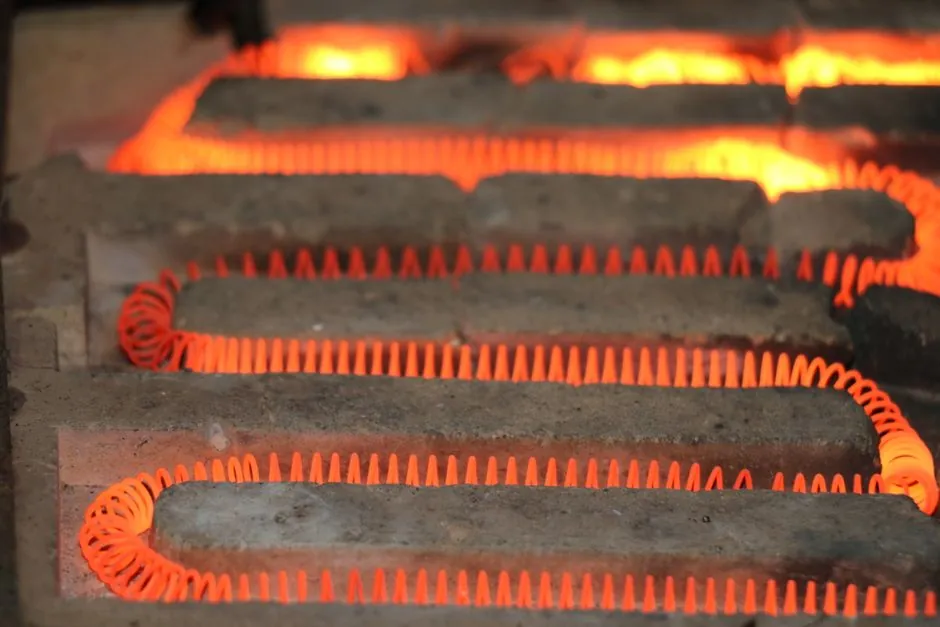
A shell core shooter sized in the 8-25 kg shot-weight band, with a 200-300 C heated box, 0.4-0.7 MPa shot pressure and 9.5-28 kW connected load on 415 V / 3-phase / 50 Hz, is the working envelope for valve-body, pump-housing and small turbo-impeller cores used across energy-equipment foundries [S1][S2][S3][S4].
Energy-equipment castings dominate this band: cast-steel valve bodies, ductile-iron pump housings, Ni-resist impeller scrolls and small turbine blades are almost always thin-walled, high-strength and under 30 kg per core, exactly the geometry the heated-box phenolic shell process was designed for [S5].
Operating Envelope: 200-300 C Cure, 0.4-0.7 MPa Shot
Phenolic resin-coated sand at 0.5-3.0 % binder load is blown into a die held at 200-300 C, where it sinters a 5-15 mm wall in a 20-60 s dwell, then ejects a hollow core with the unbound interior sand poured out for re-use [S5]. Shot pressure for shell and hot-box service is generally held in the 0.4-0.7 MPa window, set by box area and core density rather than by the resin supplier's data sheet [S9].
For energy-equipment cores the curing limit matters more than the shot limit: a heated die cannot hold 300 C uniform across a thick section without thermal gradient, which is why production shell cores top out at 100-150 kg and the energy-equipment sweet spot sits at 8-25 kg [S5]. Cold-box core shooting, which gasses the same coated sand with triethylamine (TEA) or dimethylethylamine (DMEA) at ambient temperature, handles cylinder-head and large diesel-block cores above 100 kg, but the box, scrubber and gas generator push the connected load into the 35-50 kW range versus 20-28 kW for an equivalent shell cell [S5].
Platen, Stroke and Heater kW: The Three Real Spec Gates
Across the CFM Engineers 2026 catalogue, the 8 kg class (SV1814, SR1814) runs a 450 x 320-350 mm mounting plate, a 300-400 mm opening stroke and 9.5 kW heater; the 15 kg class (SV2418, SR2418) steps to a 600 x 450 mm plate, 400-500 mm stroke and 15 kW heater; the 25 kg class (SH2424, SV3018) reaches a 600-750 mm plate, 500-600 mm stroke and 25 kW heater [S1][S3][S4].
Multi-shooting nozzle count scales with shot weight in the same window: 5-9 nozzles below 5 kg core, 17 nozzles at 10 kg and 33 nozzles at 25 kg, which is the reason a 25 kg energy-equipment pump-housing core can be filled in one cycle without density gradients that would later show up as porosity in the casting [S2][S4]. Sand hopper capacity tracks shot weight at 80-150 kg, sized so the operator is refilling at the same cadence as the cure cycle rather than mid-dwell [S1][S2][S3].
Horizontal vs Vertical Parting vs Rollover
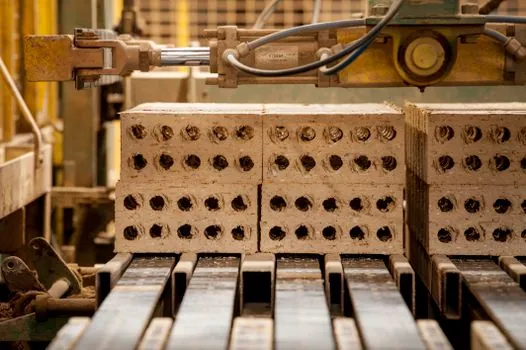
Horizontal parting lines suit cores with a flat parting plane and a single drag face, typical for valve-body side cores and pump-impeller blade cores; the SH1614 / SH1616 / SH2020 / SH2424 family covers 5-25 kg on a 400-600 mm plate with pneumatic or hydraulic clamping [S2][S4]. Vertical parting lines suit cores with deep draw or undercuts, where the core would lock on a horizontal drag: the SV1814 / SV2418 / SV3018 family runs 8-25 kg on a 450-750 mm plate, with the SV3018 sized for a 500 kg box and 28 kW load to handle the larger sand mass [S3].
Rollover-type machines (SR1814, SR2418) carry the box on a tilting table so the cured shell can be inverted for sand dump without an extractor, which is the right choice for fragile thin-walled cores in the 8-15 kg band, including small turbo-impeller covers and valve-body necks where handling damage is a real yield problem [S1]. The CFM Engineers specification table lists three parting-line styles and a rollover option, and buyers should not collapse the choice into "tonnage" alone, because parting geometry, not mass, drives core-yield and cycle time on energy-equipment castings.
Selection Criteria for Energy-Equipment Foundries
Four axes drive the buy decision: core mass, cycle time, dimensional tolerance and binder cost [S5]. For thin-walled, hollow, high-strength cores under 30 kg (valve bodies, pump housings, turbo scrolls, fire-hydrant bodies), shell is the lower-total-cost option because the heated die gives a 0.1-0.3 mm tolerance band and the unbound interior sand is recovered; for large diesel blocks, hydraulic valve blocks and cylinder heads above 100 kg, cold box wins because the ambient cure does not gradient-crack thick sections [S5].
Energy-equipment buyers should also match the utility envelope: 415 V / 3-phase / 50 Hz supply and 7-8 kg/cm² (0.7-0.8 MPa) pneumatic supply are the listed common envelope on the 2026 Indian export catalogues, with total connected load 7.5-22 kW on shell platforms versus 35-50 kW on cold-box cells [S5]. Core-box tooling is heated and expensive, and a single steel or cast-iron shell core box with integrated cartridge heaters and thermocouples commonly costs 3-8x an equivalent cold-box wood or aluminum box, so any geometry change means a new tool rather than a parameter change, which is the single largest reason to lock the part family before machine selection [S8]. For a deeper pass on the aerospace side of the same family, the platen, shot weight and cure map walks the equivalent spec gates for aero-class castings.
What Shell Gets Wrong: Tooling Cost, Resin Storage, Cure Floor
Heated core-box tooling with cartridge heaters, thermocouples and a hardened face is a fixed cost that only amortizes over a stable part family; the same tool change that costs a few hundred dollars in cold-box wood can cost several thousand in shell steel, and lead time on a new shell box commonly runs 6-10 weeks against 2-3 weeks for cold-box tooling [S8]. Resin-coated sand is itself a recurring cost line and a storage liability: phenolic or furan no-bake / shell-grade coated sand has a limited shelf life, must be kept dry, and shifts cure behaviour as it ages, which is why foundries running fewer than two part families on a shell line often find the binder and tooling economics swing back toward cold box [S8].
For energy-equipment work, the 20-60 s cure cycle is also a hard floor, not a dial: thinner sections cure faster, but the dwell cannot drop below the time required to sinter a uniform 5-15 mm phenolic wall, so a shell cell will not match a 5-15 s cold-box gassing cycle on cycle time alone [S5]. Where cycle is the constraint and core mass is under 30 kg, the practical answer is to add a second shell station or move to hot-box (180-220 C) on the same phenolic binder, rather than over-size a single shell machine past its cure limit [S5].
2026 Catalogue Snapshot: CFM Engineers Range
The CFM Engineers 2026 export line covers four shell machine families plus rollover: SH1614 / SH1616 / SH2020 (5-10 kg horizontal, 9.5-17 kW), SH2424 / SHE2424 (12-25 kg horizontal, 28 kW), SV1814 / SV2418 / SV3018 (8-25 kg vertical, 9.5-28 kW) and SR1814 / SR2418 (8-15 kg rollover, 9.5-17 kW) [S1][S2][S3][S4]. Box sizes run 400 x 350 mm at the small end to 750 x 450 mm at the large end, with the SH2424 reaching 600 x 600 mm and a 100-250 mm box-thickness window for deep energy-equipment cores [S2][S3].
For a typical energy-equipment job-shop pumping out 5-10 kg valve-body and pump-cover cores, the SH2020 (500 x 500 mm platen, 10 kg shot, 15 kW heater, 17 kW load, 17 multi-shoot nozzles) is the right starting point; for a single large part in the 25 kg class, the SH2424 or SV3018 with 25 kW heater and 28 kW load is the correct match [S3][S4]. The shell core shooter trade-off map consolidates the 30-60 s cycle, 0.4-0.7 MPa shot, 200-300 C cure and 9.5-28 kW load window that the 2026 Indian and Chinese export catalogues share, and is the cleanest single reference to pin a buy spec against [S9].
Trackable signals for the next 6-9 months: phenolic resin price index and shell-grade coated-sand lead time, plus Indian and Chinese export-catalogue SKU counts in the 8-25 kg band, are the two leading indicators of whether the 2026 shell-vs-cold-box split is shifting on energy-equipment cores; SKU count in the 50-250 kg band sat at 17 across the June 2026 Indian export window and is the most-watched figure for the segment.
Component reference pages worth checking: shell core machine, and energy management.