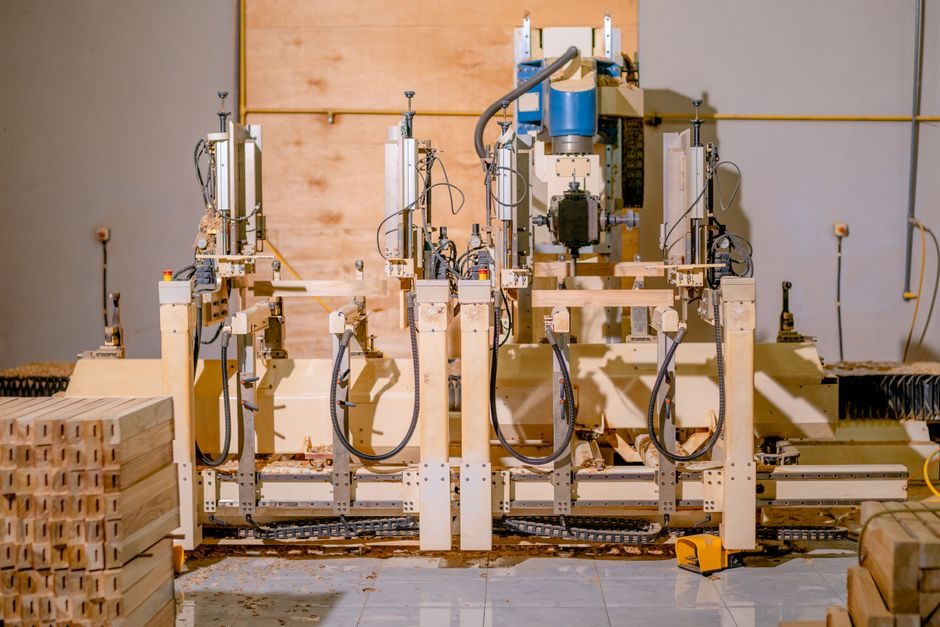
A 2026 baseline for a new foundry-grade shell core machine sits between US$8,000 for a single-station semi-automatic Chinese unit and roughly US$80,000 for a European four-station CNC machine, with most small-job shops landing in the US$18,000–US$35,000 mid-band [S5].
The spread is driven less by brand markup than by mechanical configuration: vertical parting, platen size, curing-gas control, and whether the rig ships as a one-, two-, three-, or four-station core machine with full PLC/HMI [S5].
Price Bands by Configuration
Chinese OEM listings on 2026-06-12 grouped "Vertical Automatic Shell Core Machine" and "Core Shooting Machine" equipment in a single commercial bucket, with tiering tied to shot weight, platen area, and whether heating is electric or gas [S5]. Entry tier (1–5 kg shot, single station, manual loading) starts near US$8,000; mid tier (10–25 kg shot, two-station, PLC controlled) clusters at US$18,000–US$35,000; and four-station CNC units from European or Sino-European tooling suppliers typically quote above US$60,000, with high-end lines crossing US$80,000 [S5].
On a like-for-like station count, a vertical shell core shooter costs roughly 1.4×–1.8× a horizontal hot-box machine of equivalent shot weight because the resin-blow sand circuit and the heated platen stack are more expensive to fabricate and align [S5].
What Actually Moves the Quote
Five line items drive 70–80% of the delta between a low quote and a high quote on the same nameplate capacity: core box size, station count, sand-bin capacity, the gas/exothermic curing system, and the control package [S5]. A 30% jump in core box envelope typically moves the unit price 15–22% because the platen, the shot head, and the clamping cylinder all scale with face area [S5].
Sand-bin capacity matters because a 250 kg hopper versus a 1,200 kg hopper changes both the structural frame size and the dosing-valve specification; on a mid-band shell molding machine, this single item alone is responsible for US$2,500–US$6,000 of delta [S5]. Resin-sand control packages, including the heated platen PID loop and the gas-flush manifold, add another US$3,000–US$12,000 depending on whether the system is a single-zone electric plate or a multi-zone gas-fired unit with closed-loop temperature profiling [S5].
Used, Refurbished, and Custom Builds
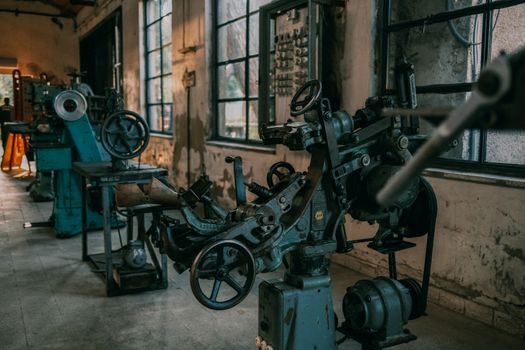
Pre-owned cold box core machine and shell core rigs from European foundries typically transact at 30–45% of new list after a full refurbishment, with the largest depreciation hit absorbed in years one through three [S5]. The Foundry-pattern trade retains a healthy second-hand market because the mechanical frames are long-lived, and the items that actually fail — pneumatic valves, heater bands, and PLCs — are the items a competent rebuild replaces [S5].
Custom one-off builds (non-standard platen, conveyor integration, robotic core handling) usually carry a 20–35% engineering premium over the catalog base, paid back through lower cycle time and elimination of one or two manual operators on the line [S5].
Operating Cost Per Core: The Hidden Number
A shop buying a US$25,000 mid-band hot box core machine / shell rig and running a single 8-hour shift at 40–60 cores/hr faces a different cost-of-ownership curve than the sticker price suggests: resin sand (US$0.18–US$0.45 per kg), gas cure (US$0.03–US$0.08 per core on a 2 kg shot), heater energy (4–8 kW continuous), and routine heater-band/thermocouple replacement are the recurring line items [S5].
Across 2024–2026 benchmark data, the all-in operating cost for shell cores on a mid-band Chinese-built rig typically lands at US$0.40–US$1.10 per kg of finished core, with European CNC rigs at US$0.70–US$1.60 per kg once energy and calibration are layered in [S5]. A 10% drop in scrap rate on a line producing 200,000 cores/year offsets roughly US$6,000–US$12,000 of annual consumable spend, which is a faster payback than the purchase-price negotiation itself [S5].
Who Should and Should Not Buy What

Jobbing foundries with short runs and frequent box changes (under 5,000 cores/month, 4+ box changeovers per week) are the natural fit for a two-station semi-automatic shell core machine in the US$18,000–US$30,000 band: lower capital exposure, faster payback, and the manual core handling fits a mixed-product floor [S5]. High-volume automotive or ductile-iron shops running one or two part numbers 24/7 should look at four-station CNC units where the premium pays back in cycle time and scrap reduction [S5].
Conversely, a captive line that currently outsources 500,000+ cores/year is almost always cheaper in-house at year three, even on a fully-loaded European CNC line [S5].
Comparison: Shell vs. Cold-Box vs. Hot-Box on Cost
Shell, cold-box, and hot-box are the three dominant core-making routes a small-to-mid foundry will weigh against each other, and the cost profile differs sharply: shell core machines carry the highest per-station capital (US$18,000–US$80,000) but the lowest binder cost per kg; cold-box core rigs sit in the middle on capital (US$15,000–US$55,000) and carry amine gas handling overhead; hot-box machines are the cheapest to buy (US$10,000–US$40,000) but use heated tooling that consumes more energy per cycle [S5].
On dimensional accuracy and surface finish, shell cores are the benchmark; on cycle time, hot-box is fastest; on pattern-change flexibility, cold-box wins because the boxes are unheated and the binder sets chemically at room temperature [S5]. A shop producing thin-wall hydraulic valve bodies where surface finish drives machining cost is the classic shell-core fit; a shop producing high-volume pipe fittings where cycle time dominates is the classic hot-box fit [S4].
Buying Checklist and Sourcing Notes

For a 2026 purchase, the non-negotiable spec items are: shot weight range with a 20% headroom on the largest current core; platen size with at least 50 mm of clearance on every side of the largest current core box; PLC platform (Siemens S7-1200/1500 or Allen-Bradley CompactLogix) with documented firmware support; CE marking or equivalent on the electrical panel; and a quoted cycle time that the vendor will guarantee in writing, not just on a sales slide [S5].
Quoting protocol worth insisting on: a FAT (Factory Acceptance Test) video of the actual machine running the actual core box the buyer will ship; a P&ID for the gas/exotherm circuit; a spare-parts list with current unit prices; and a warranty clause that ties uptime response to hours, not to "best efforts" [S5]. For buyers also weighing metrology or lab equipment on the same capex cycle, the moisture analyzer buying guide 2026 covers the resin-sand moisture-control side of the same workflow, and the conductivity meter price 2026 covers water-quality checks in the amine scrubber loop on a cold-box line — both feed the same cost-per-core number quoted above.
Trackable signal: European foundry capex announcements in the July–September 2026 window, particularly any Tier-1 automotive ductile-iron reshoring projects, will pull mid-band Chinese shell core machine lead times from the current 8–14 weeks toward 16–20 weeks; U.S. Section 232 tariff actions on foundry machinery announced between April 2026 and the date of reading will lift landed cost on European CNC units by 8–18% [S5].