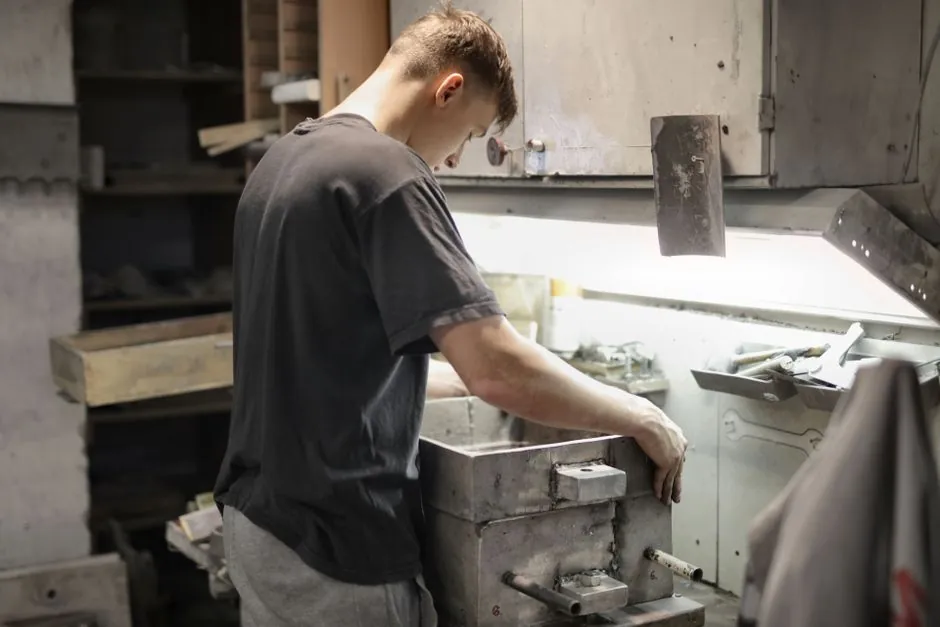
Oil-and-gas valve, wellhead, and manifold castings demand shell cores in the 5–20 kg range, with horizontal-mount machines delivering 4–6 bar blow pressure, electric core-box heating at 440 V 3-phase, and full PLC or SCADA automation [S4].
Foundries serving upstream and midstream programmes typically pair a hot shell process for thin-wall valve cores with a cold-box line for larger manifold bodies, and the spec window for both lines now spans 3 kg to 100 kg of core weight on a single machine frame [S2].
Why shell, not cold box, for hydrocarbon-service castings
Shell cores produced in heated die boxes at 200–300 °C give the higher tensile strength and lower gas evolution that API 600 gate-valve and ASTM A216 WCB body foundries need, and the process leaves almost no residual amine or phenolic breakdown products in the mould cavity [S1][S4]. A shell line running 12–20 kg cores with 4–6 bar blow pressure is the typical baseline for valve and fitting castings in NACE MR0175 sour-service material grades [S4]. Cold-box amine-cured sand is faster on large manifold cores but the gas-evolution and dimensional-stability trade-off still pushes most oil-country foundries toward shell for the high-pressure bodies [S2].
Spec window for an oil-and-gas shell core line
The Makewell product line covers the valve-and-fitting cell: 5–10 kg cores on the standard frame, 10–20 kg on the automatic and roll-over frames, blow pressure 4 bar or 6 bar, 440 V 3-phase supply, electric core-box heating, PLC control with Mitsubishi controllers, and Industry 4.0 / SCADA on the higher-end model [S4]. Cycle-time targets in this class sit at 25–40 s per shot, which matches the throughput window most jobbing oil-and-gas foundries plan around [S2]. Kelsons' cold-box and shell range starts at 3 kg shot capacity and scales through 7, 10, 15, 20, 30, 50, 80, and 100 kg sizes, with PLC + MMI, 415 V 3-phase 50 Hz 4 kW, and pneumatic or hydraulic drive options on the same frame [S2].
Selection criteria: blow pressure, heating, and parting line
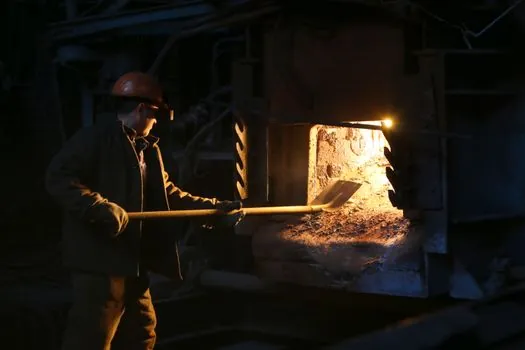
Three spec numbers decide the machine class for a given casting: shot capacity in kg per cycle, blow pressure in bar, and parting-line orientation. For a 6-inch API 600 gate-valve body core, 20 kg shot at 6 bar on a horizontal-parting frame with hydraulic clamping is the working point [S4]. For a 12-inch manifold body core, the Kelsons 50 kg or 100 kg vertical-parting frame is the usual pick, with the universal frame as a fallback when the job mix mixes small and large cores [S2]. Heated core-box temperature control with separate zones on the two box halves, as offered on Makewell's automatic frame, is the minimum for repeatable shell thickness on thin-wall valve cores [S4].
Process logic, sand control, and machine interface
Resin-coated sand with a thermosetting phenolic binder, fed through a measured sand hopper with a level sensor, is the standard oil-and-gas shell input [S4]. The shooting cycle is PLC-coordinated: clamp, shoot, dwell, cure, eject, and the Makewell automatic frame adds multiple shooting per auto cycle to compensate for thin-wall sections that need sand densification on the second pulse [S4]. Kelsons' 100 kg frame integrates data logging and Industry 4.0 monitoring, which the firm lists as a standard feature for high-pressure valve and fitting cells [S2]. A related selection walk-through, covering the same spec axis from a process-engineering angle, is laid out in this spec-first guide to shell core shooters.
What the oil-and-gas buyer should skip

Manual core retrieval and 3 kg shot frames are the wrong class for hydrocarbon-service castings, since most valve and manifold cores weigh 5 kg or more and the cycle-time penalty of manual ejection wipes out the machine's productivity gain [S2]. Used Shalco U-180 shell machines, gas-fired with dual gas systems and gun-drilled heater plates, are widely available in the rebuilt market and suit small jobbing foundries, but they lack the SCADA layer that oil-company auditors now expect on new cells [S3]. Hot-box core shooters, which cure with hot air rather than a heated die, are a different process class and are covered separately in this hot-box selection walk-through; substituting a hot-box line for a shell line on valve bodies generally fails the surface-finish and gas-evolution spec.
Standards, sourcing, and machine-class limits
API 600 and API 6D govern the cast-valve bodies that drive most oil-and-gas shell-core demand, while NACE MR0175 sets the sour-service material limits that push foundries toward shell rather than cold-box cores for high-pressure bodies. For reference frames on the shell core shooter class itself and the broader shell moulding equipment family, the cycle-time and shot-capacity numbers above sit well inside the published 3–100 kg envelope used by Indian and Chinese OEMs serving the valve-fitter supply chain [S2][S4].
Trackable signals for 2026 sourcing: Kelsons published its core-shop range with Industry 4.0 monitoring on 2026-08-27, indicating active product-line updates for the oil-and-gas valve segment [S2]; Makewell's automatic frame with SCADA was last published with a 440 V 3-phase, 6 bar, 20 kg spec sheet still on offer for export orders [S4]; rebuilt Shalco U-180 gas-fired units remain the cleanest used-market option for foundries that need shell capability under 50 kg shot without new-machine lead time [S3].
Component reference pages worth checking: shell core machine.