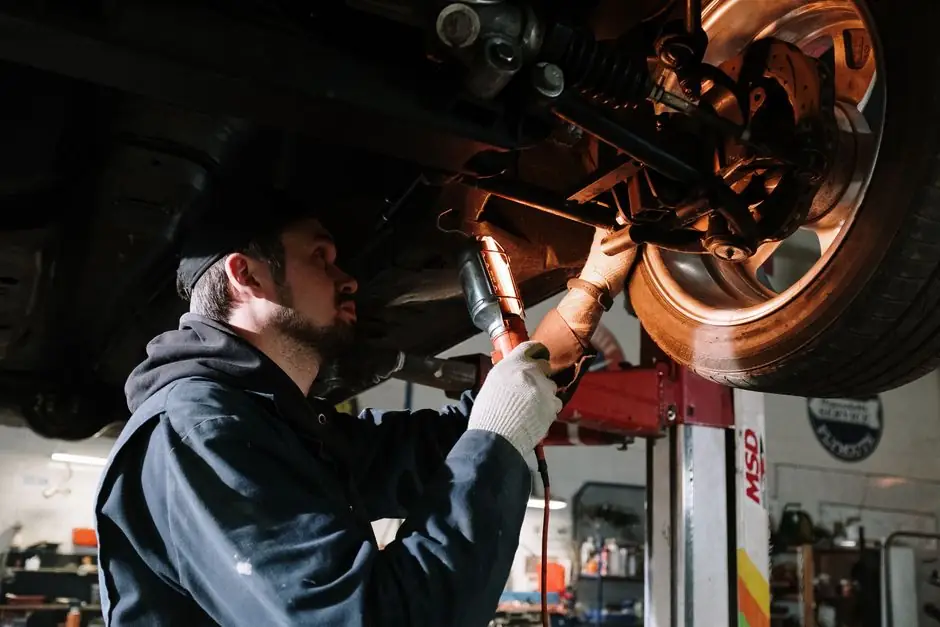
Twin-tube hydraulic dampers remain the dominant OE suspension architecture for passenger vehicles, accounting for the bulk of the 600+ reference-part families produced at dedicated shock absorber plants serving heavy-duty truck and trailer programs [S1]. Selection on an automotive line is a process-engineering problem, not a catalog purchase, because the same part must meet ride comfort, braking-distance, and fatigue-life targets across the vehicle's operating envelope.
The global automotive shock absorber market was valued at USD 15.2 billion in 2024 and is forecast to reach USD 23.5 billion by 2030 at a 5.1% CAGR, with selection decisions concentrated around three axes: damping curve shape, energy capacity per cycle, and process capability (Cp, Cpk) of the production line itself [S5][S6].
What the Damper Has to Do in an OE Program
The functional job of a twin-tube hydraulic shock absorber is to convert the spring's stored kinetic energy into heat as fluid is forced through orifices in the piston, a behavior widely confirmed in industrial reference material [S4]. In OE terms, the damper does not "absorb the bump" by itself; the spring absorbs the impact, and the damper controls the spring's subsequent oscillation so the chassis settles within one to two cycles.
Three performance outcomes are checked at the vehicle level: reduced braking distance on rough surfaces, stable tire-road contact in transient cornering, and vibration isolation over low-amplitude road input [S5]. Studies cited in recent MDPI work quantify a measurable energy-consumption reduction in a B-class SUV when damping is correctly specified, confirming that damper selection feeds back into drivetrain efficiency, not just NVH [S5].
For production engineering, the damping force-versus-displacement curve is the spec that travels through the supply chain: piston-valve washer count, orifice area, gas-charging pressure, and oil viscosity all roll up into that curve, and each is a process-control variable on the assembly line [S5].
Construction Choices: Twin-Tube vs Mono-Tube vs Additive
Twin-tube dampers (cab, chassis, and steering variants) are the workhorse of OE passenger and commercial programs because they tolerate packaging constraints and offer a tunable rebound/compression split via the bottom valve group [S1]. Mono-tube designs are reserved for high-performance and motorsport applications where piston-rod diameter, gas separation, and thermal capacity matter more than cost.
Construction differences directly affect process-capability metrics. A 2025 study on five prototype damper variants used SPC (Cp, Cpk, stability graphs) to compare designs, finding that deliberate changes to piston valve geometry changed the force-displacement repeatability band and the compression/rebound symmetry ratio [S5]. A damper that is symmetric in compression and rebound is usually preferred for OE ride tuning, while asymmetric curves are tuned for handling-biased programs.
Additive-manufactured polymeric dampers have been demonstrated at coupon scale for future automotive applications, but the published work to date covers feasibility and prototype characterization rather than series production [S2]. For 2026 sourcing, additive dampers remain a development item, not a line-of-fitment option for tier-1 OE programs.
Selection Criteria a Production Engineer Can Actually Use

Four criteria are the practical filter for an automotive damper callout: (1) damping force at a defined piston velocity, typically measured at 0.3 m/s and 1.0 m/s on a dynamometer; (2) energy capacity per cycle, in joules, with a 30% safety factor applied when cyclic rates exceed 240 events/hour per industrial guidance [S8]; (3) stroke length matched to suspension travel, with bump-stop clearance; (4) temperature class covering the −30 °C to +80 °C operating window, since hydraulic oil viscosity and gas-charging pressure both drift with temperature [S5].
For commercial-vehicle cab dampers, two further filters apply: mounting orientation (horizontal or vertical) and whether the cab is sprung by a coil or air spring, with self-leveller variants adding a height-control interface to the damper package [S1]. A damper specified for a self-levelling air-sprung cab is not interchangeable with a coil-sprung cab unit, even at the same damping force, because the valve group is tuned to a different moving mass and spring rate.
Fixed versus adjustable damping is a separate axis: fixed orifices give repeatable, tamper-proof behavior at lower cost and are the OE default; adjustable designs (mechanical, self-regulating, or semi-active) are specified when a single part must cover multiple trim levels or regulatory markets [S3]. Semi-active electronic systems add a sensor and ECU loop and are typically the only route to real-time damping change in passenger-car adaptive suspensions.
Component-Level Build Quality That Drives Field Life
Three components decide whether a damper survives its warranty period, and each is a process-control checkpoint on the assembly line. The piston rod is induction-hardened and hard-chrome-plated to resist stone-chip corrosion and side-load wear at the oil seal [S1]. The valve group uses precision-sized washers in special spring steel, rated to retain their elasticity after millions of cycles, which is the single largest lever on damping-curve stability over time [S1]. The rod guide bushing creates a low-friction layer on the chrome surface and is the dominant contributor to breakaway force, a parameter that 2025 SPC work identified as a leading source of process variation [S5].
Material and process certificates matter at the sourcing gate. OE-tier suppliers typically hold Ford Q1 plus ISO/TS recognition and operate in-house mold, tooling, sheet-metal, rubber-vulcanization, surface-treatment, and aluminum-injection cells, which keeps rod, bushing, and seal interfaces under one quality system rather than split across subcontracted heat-treat and plating shops [S1]. For an automotive program, that vertical integration is a selection criterion, not a footnote: it shortens the variation-feedback loop when a Cpk drifts on a critical characteristic.
Process Capability: Why Damper Selection Is a Manufacturing Decision
Damping force is the most-sampled characteristic on a damper production line, but the 2025 MDPI study showed that five prototype designs with similar rated damping force had materially different Cp and Cpk values, with the worst-performing design showing a compression/rebound asymmetry that only became visible once piston-velocity sweeps were run [S5]. That is a production-engineering argument against single-point force checking at end-of-line: a damper that passes 0.3 m/s can still fail the customer if the rebound curve is unstable.
Negative aeration in twin-tube designs is a known failure mode: entrained gas in the working chamber causes uncontrolled vibration and damping drift, and it is one of the parameters bench-tested in temperature-cycled protocols alongside heating and friction behavior [S5]. Production lines that omit temperature-cycled leak-down and gas-decay checks ship dampers that meet room-temperature force specs but fail the first hot-soak test at the vehicle assembly plant.
The cycle-rate safety factor is the bridge between damper sizing and line design: a body shop or trim shop that generates more than 240 shock events per hour on a fixture needs the 30% energy-capacity safety factor applied at the damper selection step, not added later when the fixture is already built [S8].
Application Fit: Passenger, Commercial, and Off-Highway
For passenger-car programs, twin-tube hydraulic dampers in cab, chassis, and (where fitted) steering-damper roles are the standard, and the OE decision is usually which supplier holds the relevant platform contract rather than which technology to pick. For commercial-vehicle and trailer programs, the catalog splits into light-duty, light-commercial, heavy-commercial, and complete-suspension dampers, with horizontal twin-tube variants common on steering and tag-axle positions [S1].
Industrial applications (machine tools, robotics, material handling) are a different selection problem: the energy per cycle is higher, the cycle rate is often higher, and the damper is usually selected as a piece of process equipment rather than a chassis component, as outlined in industrial sourcing guidance [S3]. A production engineer specifying a damper for an automated-cell fixture should not pull a part out of an automotive OE catalog; the energy-per-cycle, cycle-rate, and safety-factor math is different.
For agricultural and off-highway equipment, sizing rules of thumb based on velocity, energy per stroke, and available stroke length are documented in dedicated guidance, and the shock absorber sizing approach for agricultural and pulp-and-paper applications is worth reading alongside any automotive program for the cross-industry perspective on cyclic loading.
Failure Modes and Field Returns to Watch
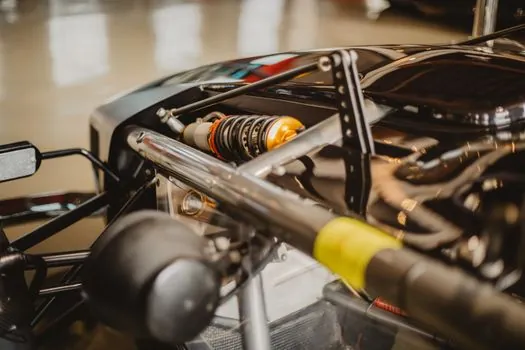
Three failure modes dominate automotive damper field returns: oil seal leakage past the rod guide, fade from aeration or gas-charging decay, and damping-curve drift from valve-washer set. Each is traceable upstream to a process step: seal interface finish, gas pre-charge pressure and leak-down rate, and valve-washer thickness distribution [S5]. SPC on those three checkpoints (surface roughness Ra, leak-down in cm³/min, washer thickness in µm) is the cheapest insurance against warranty exposure.
Friction force at low piston velocity, particularly the breakaway spike, is increasingly studied because it dominates vibration transfer to the passenger over light road roughness, and is sensitive to bushing material, oil viscosity, and seal design [S5]. A damper that is well-tuned at 0.3 m/s can still transmit unacceptable low-speed vibration if breakaway force is uncontrolled.
For related context on how fixture-level sensor and damping choices interact on automotive lines, the height-sensor and IO-Link loop used in VLM dynamic slotting is a useful parallel: both are examples of where the sensor or damper selection is inseparable from the production-process design.
For sourcing on a 2026 automotive program, the trackable signals to watch are: twin-tube process-capability data (Cp, Cpk) on damping force at multiple piston velocities, not just one rated point [S5]; cycle-rate energy-capacity margin against the 30% safety factor for any application above 240 events/hour [S8]; and vertical-integration evidence at the supplier (rod heat treatment, chrome plating, valve-washer pressing, and bushing production under one quality system) to keep the variation-feedback loop short [S1]. See also our shock absorber encyclopedia entry for the underlying physics of orifice flow and damping-curve generation.
Spec-level background on the components involved: pressure transmitter, and flow meter.