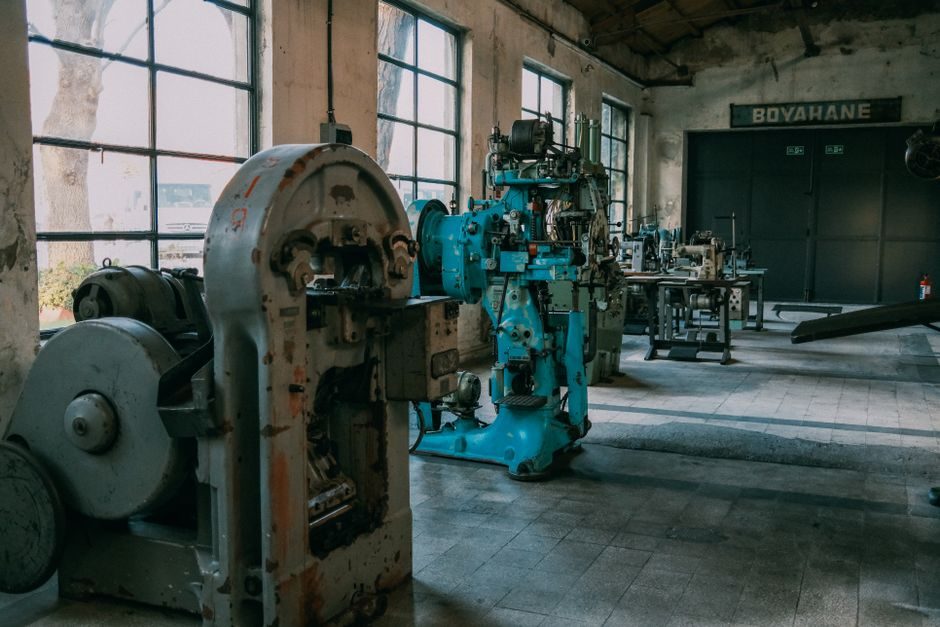
A shot blasting machine propels steel shot, cut wire, or grit at 60-80 m/s via centrifugal blast wheels, removing mill scale, rust, and old coatings in a single pass on steel plate, profiles, and castings [S3]. Productivity on a roller-conveyor pre-treatment line typically reaches 1.5-4 m/min for 6-30 mm plate, with surface cleanliness consistently meeting Sa 2.5 to Sa 3 per ISO 8501-1 when properly calibrated [S3].
The equipment family covers ten geometry-specific configurations: hook type, hanger, roller conveyor, tumble belt, drum, rotary table, catenary, wire mesh belt, wire rod in coils, and steel pipe / anchor chain variants, each matched to a workpiece shape class [S5][S6]. Portable road-marking units add a mobile tier for bridge decks and floor scarifying, with 550 mm and 850 mm blast-width models common in the Chinese road-shotblasting segment [S7].
Core Advantages of Centrifugal Shot Blasting
Surface profile (anchor pattern) is controllable between 40-100 µm Rz by swapping shot size, which directly affects coating adhesion for epoxy and zinc-rich primers [S3].
Versatility is built into the machine geometry: a single shot blast cabinet can clean cast iron, forged steel, aluminum die-castings, and welded fabrications by adjusting blast wheel RPM, abrasive type (steel shot S330/S550, cut wire, or aluminum oxide), and dwell time [S2][S4]. Qingdao KEEJOO's 30-year product line covers everything from cold-roll texturing abrators for steel mill service to heavy-section anchor-chain descaling machines [S5][S6]. For a primer on the equipment class, see the shot blasting machine reference page.
Main Types and Decision Criteria
Type selection is driven by workpiece geometry, batch size, and required throughput rather than by abrasive type alone. Tumble belt machines handle small castings and forgings below 30 kg in bulk lots; roller conveyor and catenary machines feed plate, section, and long workpieces continuously; hook/hanger machines process fragile or oversized parts one at a time on overhead conveyors [S5][S6]. A drum type machine suits batch cleaning of small stampings, while a sand blasting machine (compressed-air driven) is the alternative when the part is too thin-walled or complex for impeller impact, or when the abrasive must be glass bead / aluminum oxide for non-ferrous substrates [S2].
Selection criteria, ranked: (1) workpiece geometry and weight class, (2) target cleanliness per ISO 8501-1 (Sa 2.5 typical, Sa 3 for marine / offshore), (3) hourly throughput in kg or m², (4) abrasive recovery loop (closed-loop pneumatic vs. screw conveyor), and (5) dust collector capacity matched to airflow. A four-criteria comparison:
Centrifugal shot blasting (impeller): high throughput (1-10 t/h per wheel on plate lines), low abrasive cost (steel shot reclaimable), best for steel sections 3-100 mm thick, requires 6-10 m workspace for blast chamber and recovery [S1][S3]. Compressed-air sand blasting: gentler impact (good for thin wall, non-ferrous), higher abrasive consumption, slower m²/h, suited to manual / cabinet work and field repair [S2]. Wet / vapor blasting: dust suppressed, used in explosion-risk zones and food-grade stainless; lower productivity [S2]. Portable road shotblasting: mobile, 200-500 m²/h on concrete or asphalt, depth control 0.5-3 mm per pass, road-marking prep specialty [S7].
Where Shot Blasting Wins and Where It Falls Short

It is FOR: high-tonnage steel fabrication, ship hull descaling, automotive frame and chassis cleaning, anchor chain / wire rope processing, cold-roll mill texturing, and bridge / road surface profiling before coating [S2][S5][S6]. It is NOT for: thin-wall sheet under 1.5 mm (distortion risk), precision machined surfaces with tight tolerances (impact peens the surface), very small batch production (changeover cost dominates), or jobs requiring glass-bead / aluminum-oxide finish on non-ferrous parts (use sand blasting machine variants instead) [S2].
Failure modes and operating constraints are concrete: blast wheel impeller blades wear and must be replaced at 600-1200 operating hours depending on abrasive and RPM, with the blade material grade (typically high-chrome cast iron) governing the interval [S3]. Dust collector filter clogging drops suction and raises airborne particulate above permissible levels; the OEM spec on cartridge filter area and pulse-jet cleaning pressure is a hard constraint, not a guideline [S2][S5]. Steel shot consumption for Sa 2.5 on standard structural steel runs in the 0.3-0.8 kg/m² range under normal operating conditions, and any sustained rise above that band signals impeller wear, seal leakage, or wrong shot size [S3].
Energy, Dust, and Maintenance Overhead
Power draw is dominated by the blast wheel motor, typically 7.5-45 kW per wheel depending on wheel diameter and throughput class, with a 4-wheel roller conveyor line drawing 90-180 kW total under load [S2][S5]. Dust collection is a parallel system sized to capture 4,000-15,000 m³/h, with cartridge filtration and pulse-jet cleaning as the standard configuration on current OEM builds [S2][S5]. The abrasive-recovery screw conveyor or pneumatic elevator consumes an additional 2-5 kW and represents the second-largest maintenance item after the wheel itself [S1][S3].
Operator-side consumables to budget: blast wheel blades (high-chrome cast iron), control cage (wear-resistant steel), side liners (Mn steel), rubber or PU sealing strips, and cartridge filter elements. A preventive maintenance cycle of 200-400 hours on the wheel, 800-1200 hours on liners, and 1500-2000 hours on the dust collector cartridge set is the typical OEM guidance on current production lines [S3][S5]. Related maintenance-cost methodology is laid out in the worm gear reducer TCO stack reference, which applies the same energy-plus-consumable logic to rotating equipment.
Standards, Sourcing, and Vendor Map
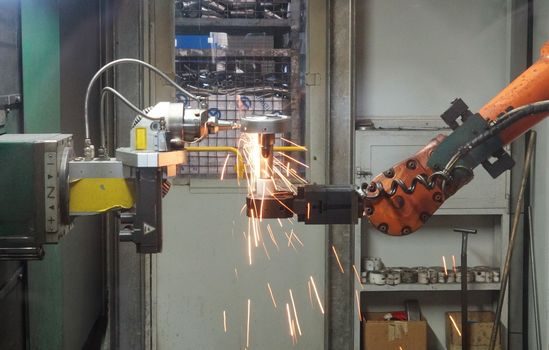
Surface preparation grade is the contractual reference: ISO 8501-1 defines Sa 1, Sa 2, Sa 2.5, and Sa 3 visual cleanliness grades after blasting, with Sa 2.5 the dominant commercial-blast spec and Sa 3 reserved for immersion service, marine, and heavy-duty coating systems. Surface profile is reported as Rz or Ra per ISO 8503, with 40-100 µm Rz the typical band for epoxy / polyurethane primer adhesion [S3]. For the equipment itself, CE conformity under the Machinery Directive and ATEX 2014/34/EU for dust-zone classification are the European gating requirements when the unit is installed in a paint-booth or coating-line area.
Sourcing channels are concentrated: Changzhou Taisheng Machinery, Qingdao KEEJOO Group, Qingdao TAAE Machinery, and Qingdao Huachuan supply the export market with the full type matrix (hook, roller, catenary, drum, tumble belt, table, wire rod, steel pipe, anchor chain, road / mobile) [S2][S5][S6][S7]. Shree Shot Equipment Pvt. Ltd. is the leading Indian integrator focused on heavy-duty blast turbines for foundries and structural steel [S4]. Most OEM lines are sold as 20-40 ft container-load exports with international standard export packing, lead time 30-60 days ex-works China on standard configurations [S2][S6]. Comparable cutting-class equipment selection methodology is covered in the 2026 laser cutting machine makers map and the TIG welding machine selection map, where geometry, throughput, and consumable-cost stacks drive the same decisions.
Verifiable next nodes to track: blast wheel motor kW-per-tonne throughput benchmarks for 2026-model roller conveyor lines, and any shift to PLC-integrated Industry 4.0 telematics for abrasive consumption and wheel-vibration monitoring on OEM production units. For a structural comparison of related surface-treatment equipment classes, see the shot blasting machine and sand blasting machine encyclopedia entries.
For the relevant spec sheets and selection criteria, see shot sleeve.