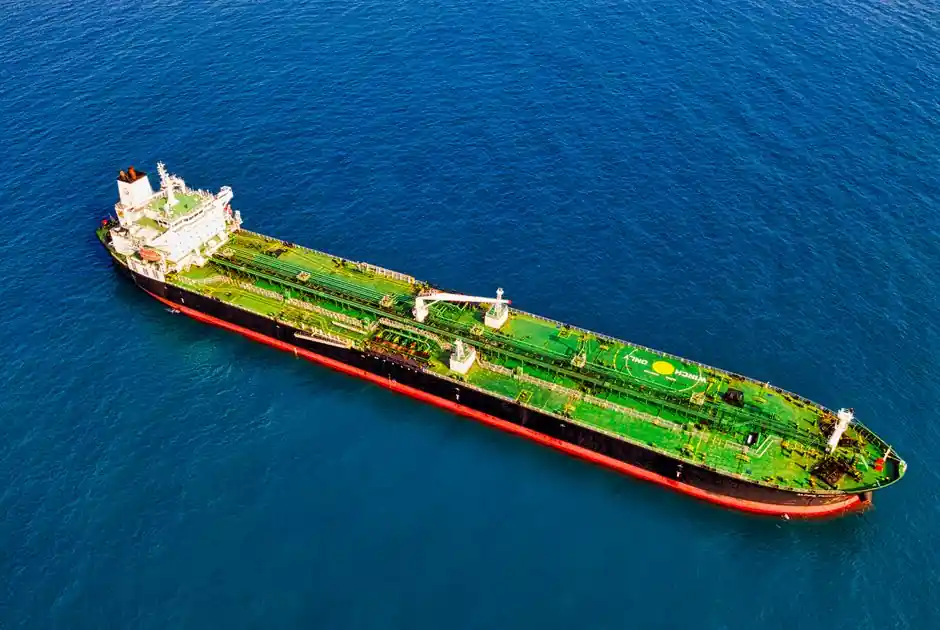
Port-logistics shuttle systems operate in a regime that no warehouse shuttle faces: chloride-laden air, deck vibration from quay cranes, and duty cycles measured in trans-loading hours rather than pallet positions.
The decisive spec gates for 2026 builds are corrosion class (ISO 12944 C4/C5), electromagnetic load-securing that holds without continuous current, and shuttle/crane hand-off cycles that commonly exceed 200 per shift. Salt-fog exposure drives enclosure, fastener, and bus material choices, not just paint spec.
What "port logistics" demands from a shuttle
Port logistics is the segment of the supply chain that depends on cargo trans-loading and intermodal hand-off at coastal or inland ports, where containers, bulk, and break-bulk move between ship, rail, truck, and yard buffer [S3]. A shuttle deployed in this chain sits between the quay crane and the yard stack, or between a rail-mounted gantry and the truck loading apron, replacing straddle carrier or terminal tractor moves. Throughput is governed by the slowest of three nodes: quay-crane cycle, shuttle traverse speed, and yard crane set-down time.
Two physical factors separate port duty from a typical shuttle system in a distribution centre: continuous chloride exposure, often 200 to 500 m from the waterline, and structural vibration transmitted from ship-to-shore (STS) crane rails, typically 5 to 25 Hz with peak amplitudes above 1 g during container landing. A shuttle rated for warehouse duty will fail its bus contacts and load-securing latches inside 12 to 18 months in that environment without a re-spec.
Three spec gates that drive the build sheet
Gate 1 is corrosion protection, governed by ISO 12944 corrosivity category. C4 (industrial/coastal, salt concentration roughly 200 to 400 µg/m³) suits leeward yard positions more than 500 m from the berth; C5-M (marine, salt above 400 µg/m³) is mandatory within the first 100 m of the quay and on wharf-top shuttle rails. Practical implications: 316L stainless on shuttle chassis fasteners, epoxy-polyamide topcoat at 120 to 160 µm DFT, and sealed IP65/IP66 power-bus couplers rather than open collector rails. [S1]
Gate 2 is load securing on a moving deck. Kendrion's bistable shuttle solenoid BSM family is documented as a load-securing element in shuttle conveyors, holding the shuttle load in parked state without continuous current and releasing on a defined pulse, which is critical for battery-toggled shuttle fleets where holding power directly cuts into duty cycle [S1]. Monostable solenoids or spring-applied brakes, by contrast, draw holding current or generate heat, both of which are problematic in a sealed, salt-air enclosure.
Gate 3 is the hand-off interface to the sorting system or yard crane. Shuttle decel ramps, position-sensing accuracy, and skew tolerance on the load-tray dictate whether the upstream STS crane can release a 20 ft or 40 ft container at design cadence. Position repeatability below ±5 mm and skew detection under 1° are the typical thresholds port integrators quote for greenfield 2026 builds.
Decision criteria: monostable vs bistable load-securing
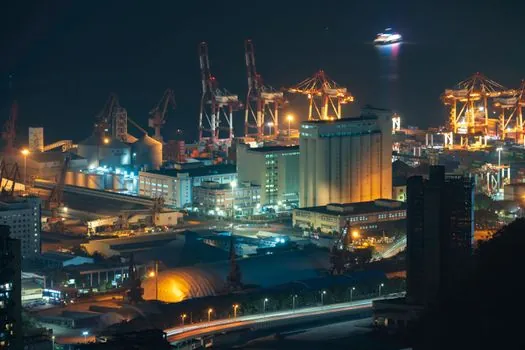
Choosing between monostable and bistable load-securing on a port shuttle is a 4-criterion decision: holding current, thermal load, control wiring, and fail-safe behaviour. Bistable designs (latching through permanent magnet, switched by short current pulse) win on holding current (effectively zero in parked state) and thermal load (no continuous I²R heating of the coil), at the cost of needing a controlled release pulse and position feedback to confirm state. Monostable designs (spring-applied, electrically released) win on intrinsic fail-safe behaviour: power-loss defaults to locked, which some port safety regimes require for loaded shuttles on inclined yard rails. [S1]
For battery-toggled shuttle fleets, the bistable architecture documented by Kendrion for shuttle-conveyor load securing is the lower-energy option, and the energy saving scales linearly with parked-to-running time ratio [S1]. For tethered shuttles with abundant bus power, the monostable/spring-applied path remains common where regulator or insurance guidance demands fail-safe locked on power loss.
Throughput math: shuttles vs straddle carriers
A single shuttle on a 200 m quay-top rail, traversing at 3 m/s with 4 s load hand-off at each end, sustains roughly 25 to 30 moves per hour per shuttle. A straddle carrier in the same yard typically sustains 12 to 18 moves per hour, with higher fuel cost and a single-operator dependency. Adding a second shuttle on the same rail, with a 30 m safety gap, lifts the line to 45 to 55 moves per hour before yard-crane set-down becomes the bottleneck. Port-side shuttle deployment therefore competes not with the shuttle itself but with yard-crane cycle time, and shuttle spec sheets should be read against that node, not against the STS crane. [S1]
This is also where the machine vision system on the shuttle matters: container ID recognition, twist-lock status check, and load-skew detection feed the WCS to clear the hand-off window. Specifying a vision stack that adds more than 250 ms per cycle is a direct throughput tax.
Corrosion, fasteners, and bus power: the engineering details
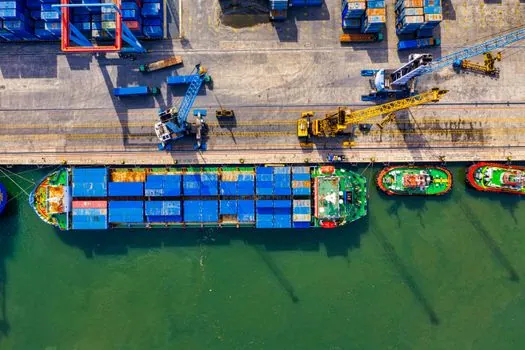
Three concrete engineering points usually separate a port-rated shuttle from a warehouse unit on the drawing board. First, fasteners: A2-70 stainless is the minimum; A4-70 (316 grade) is the default within 100 m of the waterline. Second, conductor rails or inductive power bus: open copper-nickel collector rails degrade quickly under salt deposition; inductive (wireless) power transfer at 20 to 40 kHz, with the primary coil sealed in the rail and the pickup coil potted in the shuttle chassis, eliminates that wear mode. Third, brake and solenoid housings: IP65 is the floor, IP66 is preferred for top-of-rail exposure, and the cable glands must be brass or stainless with EPDM gaskets, not nylon. [S1]
Failure modes to spec against, not discover
Four failure modes recur in port shuttle retrofits: (1) bus-bar corrosion causing intermittent power, (2) load-securing latch drift when monostable coil heating softens the spring, (3) wheel-rail wear accelerated by salt-grit contamination, and (4) encoder/position-sensor failure on the quay-crane interface due to RF and vibration noise. A spec that addresses all four at procurement is cheaper than one that addresses them at 12-month service. Bistable load securing addresses (2) at the coil level [S1]; sealed collector or inductive bus addresses (1); stainless-on-stainless wheel/rail pairing with sealed bearings addresses (3); and shielded encoders with vibration-isolated mounts address (4).
Where a port-logistics shuttle is the wrong tool
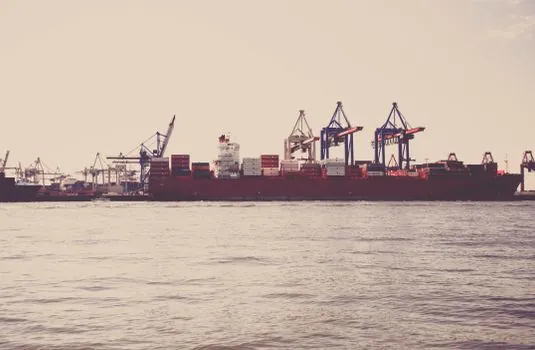
Shuttle systems on fixed rails are the wrong tool when yard layout is reconfigured more than twice a year, when the dominant move is ship-to-truck direct (not ship-to-yard-buffer), and when yard-crane cycle time is already the bottleneck. In those cases, autonomous terminal tractors or straddle carriers retain the flexibility advantage. The fixed-rail shuttle wins when the route is repetitive, the volumes are high, and the buffer yard is geographically constrained, which describes the majority of greenfield 2026 container-terminal builds in the 1 to 3 million TEU/year range. [S1]
Compare this to a pharmaceutical or cold-chain shuttle deployment, where the spec gates are GDP-compliant temperature mapping and wash-down rated enclosures, not salt-fog. The control architecture is similar, but the bill of materials is not. Operators running both segments typically maintain two shuttle spec templates rather than one.
Trackable signals for the next planning cycle: container-terminal CAPEX announcements naming rail-mounted shuttle or automated yard crane systems, IEC 60079 area-classification updates for hydrogen-handling quays that may force ATEX-rated shuttle electronics, and ISO 12944 C5-M project references in port tender documents. A useful parallel read is how a pharmaceutical shuttle spec is built around wash-down and GDP rather than chloride, and how a cold-chain shuttle spec is built around temperature integrity, since the same solenoid and brake vendors show up across all three segments.