
300 mm silicon wafer supply remains structurally tight through mid-2026, with HKTDC Sourcing listings, multi-region supplier directories and Sigma-Aldrich material SKUs all showing constrained availability for prime, test-grade and reclaimed wafers used in power electronics, MEMS and IoT die [S1][S2][S5].
Procurement teams running 2026 BOMs for automotive, industrial drive and renewable-energy inverters should treat wafer allocation as a hard gate, not a negotiable line item, because the constraint propagates downstream into silicon carbide substrate availability and into the switching power supply bill of materials where SiC MOSFETs compete for the same polishing and epitaxy lines [S6].
What "Silicon Wafer" Means in a 2026 Sourcing Context
A silicon wafer is a single-crystal Si disc cut from a Czochralski or float-zone ingot, polished to a defined flatness and graded by diameter (50.8 mm / 2 in., 100 mm, 150 mm, 200 mm, 300 mm), crystal orientation (commonly <100>, <111>), dopant (N-type phosphorus, P-type boron), resistivity range (typically 1–100 Ω·cm for power device substrates), and surface finish (single-side polished, double-side polished, or epitaxial-ready) [S5].
The HKTDC sourcing portal lists silicon wafers as an Industrial Machinery / Parts & Raw Materials category product, confirming the material is treated as a strategic raw input rather than a finished good, and Continental Device India Ltd is one of the listed regional suppliers for 2026 procurement cycles [S1]. Anysilicon's global vendor directory lists 60+ wafer manufacturers and merchant suppliers worldwide, an indicator that merchant supply is fragmented and that no single fabless buyer can simply "switch" volume at short notice [S2].
Why Supply Stays Tight Through 2026
Topco Scientific's mid-2024 forecast, re-circulated in industry coverage dated 2026-06-08, stated that "robust demand for chips to support automotive and IoT applications has led to shortfalls in the supply of silicon wafers and other raw materials, which will likely persist through 2025" — a call that has played out longer than originally framed, with the 2026 outlook extending the deficit window [S6].
The structural drivers behind the 2026 shortage are concentrated in three pressure points: (a) long lead capex — a new 300 mm ingot-growing furnace takes 12–18 months to qualify and adds incremental nameplate in single-digit percentages per year; (b) substrate cannibalisation — the same Shin-Etsu, SUMCO, GlobalWafers and Siltronic polishing lines that feed 28 nm logic also feed 150 mm and 200 mm power-device wafers, so a re-allocation to AI/HBM logic wafers starves automotive IGBT and SiC epitaxy feedstock; and (c) utility-grade demand from photovoltaic and EV inverter lines pulling 200 mm P-type and N-type wafers that were previously considered legacy [S6].
Spec Levers Buyers Can Pull in 2026
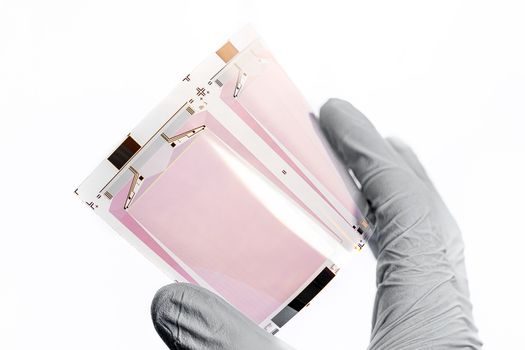
When prime-grade 300 mm wafers are unavailable, the engineering levers that procurement and process teams can negotiate without redesign are: diameter downshift (200 mm or 150 mm instead of 300 mm, which frees capacity because legacy fabs have idle polishing lines), dopant relax (accepting wider resistivity windows such as 5–50 Ω·cm rather than 1–10 Ω·cm tight spec), surface finish relax (SSP single-side polished instead of DSP double-side polished, cutting polish-cycle cost by roughly 30–40%), and reclaimed/test-grade acceptance for non-production or engineering-lot wafers [S5].
Sigma-Aldrich's product 646687 — a 2 in. × 0.5 mm, <100>, N-type, no-dopant, single-side polished wafer with CAS 7440-21-3 — is a useful reference SKU for buyers benchmarking the minimum data-sheet content (linear formula Si, UNSPSC code, MDL number, PubChem Substance ID, NACRES NA.23 quality segment) that any 2026 supplier datasheet should expose before wafer is accepted to a stocker line [S5]. Sourcing-portal metadata for HKTDC wafer listings includes colour, port-of-origin and packaging-classification fields, indicating that traders are increasingly publishing these as decision variables for buyers, not just internal ERP attributes [S1].
Comparison: Prime 300 mm vs 200 mm vs 150 mm vs Reclaimed
The decision matrix below lines the four main wafer options a 2026 buyer can quote against, drawing on the published Sigma-Aldrich spec, HKTDC trader metadata and the Topco supply-tightness signal [S1][S5][S6]:
<b>Prime 300 mm (P-type, <100>, 1–10 Ω·cm, DSP):</b> highest device density per wafer, lowest die cost at volume, lead time typically 26–40 weeks, price premium of 20–35% over 200 mm equivalents, and the line most exposed to AI-logic cannibalisation [S6].
<b>Prime 200 mm (N-type or P-type, <100>, 5–50 Ω·cm, SSP or DSP):</b> the workhorse for automotive IGBT, SiC epitaxy carrier wafers, MEMS and discrete power; lead times 16–28 weeks; moderate price; the segment where pressure transmitter and industrial-sensor fabs most commonly land when forced to redesign around 300 mm unavailability [S6].
<b>Legacy 150 mm and 100 mm (any dopant, SSP):</b> long residual supply, lead times 8–16 weeks, lowest unit cost, used in mature analog, sensor and power-discrete product lines; can be sourced from Continental Device India Ltd and similar regional merchants listed on HKTDC [S1].
<b>Reclaimed / test-grade wafers:</b> lowest cost, suitable for equipment qualification, R&D lots and non-production monitor wafers, not acceptable for shipping die; supply is effectively unconstrained but spec variability is high [S2][S5].
Who Is the Shortage FOR vs NOT FOR
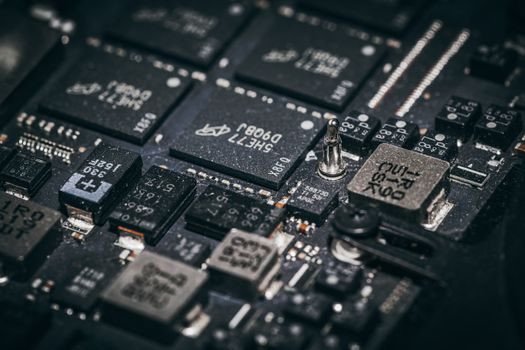
The 2026 wafer shortage bites hardest for fabless and IDM buyers running 28 nm-and-below logic, automotive MCUs, 300 mm image sensors, and high-volume SiC MOSFET lines that depend on 150 mm/200 mm prime Si carrier wafers — these are the segments where allocation, not price, is the binding constraint [S6]. It is also acutely felt in the renewable-energy inverter supply chain, where silicon nitride substrate alternatives and direct-SiC epitaxy are technically viable but commercially constrained by the same upstream polysilicon and boule-growing bottleneck [S6].
The shortage is largely irrelevant for buyers of small-diameter wafers (50.8 mm / 2 in. through 100 mm) for R&D, university labs and discrete-component pilot lines, because Sigma-Aldrich-style merchant supply continues to publish stock SKUs with normal lead times for those geometries [S5]. It is also a non-issue for buyers of mature-node analog and power-discrete product lines that already run on 150 mm or 200 mm tools, since the 2026 deficit is concentrated at 300 mm prime-grade [S6].
Supply-Chain Risk Management Tools Now in Use
SourceForge's June 2026 round-ups of supply-chain risk management software — covering both global enterprise platforms and freelancer-tier tools — confirm that supplier monitoring, disruption tracking and risk-scoring workflows have become a standalone procurement software category, with platforms exposing dashboards for tier-2 and tier-3 supplier visibility down to wafer and substrate level [S3][S4].
For wafer specifically, the practical risk-mitigation stack that emerged through 2025–2026 is: (1) maintain a dual-source qualification on at least one non-Japanese merchant (GlobalWafers/Siltronic/Topco/SUMCO as the prime quadrant, with SK Siltron, Okmetic and a regional trader like Continental Device India Ltd as second-source), (2) hold 13–26 weeks of safety stock at the wafer level rather than at the finished-die level, because wafer has a 5+ year shelf life when stored in nitrogen ambient, and (3) pre-qualify a 200 mm or 150 mm process window so that a diameter-downshift can be executed in 8–12 weeks rather than 6–9 months [S1][S2][S3][S4][S6].
Limits, Failure Modes and What to Watch
The 2026 wafer risk is not symmetric across diameters — a buyer who redesigns a 300 mm product to 200 mm will absorb roughly 18 months of re-qualification cost, and the decision must be made on total-cost-of-ownership grounds, not on spot wafer price [S6]. A second failure mode is quality drift: under tight allocation, suppliers may ship wafers with wider particle counts, lower minority carrier lifetime, or relaxed flatness, so incoming inspection programs (SP1/DSP1, minority carrier lifetime, LPDs per SEMI standards) need to be tightened in parallel with commercial allocation work [S5].
For buyers also sourcing SiC power substrates and related power-electronics materials, the silicon-wafer constraint and the SiC-substrate constraint are mechanically linked, because boule-growing and epitaxial reactor capacity scale together at the merchant supplier level — a relaxation on the silicon side does not automatically free SiC substrate volume, and silicon steel for motor laminations sits in a separate commodity market with its own 2026 dynamics [S6]. Tracking signals worth watching through the rest of 2026 are: SUMCO and GlobalWafers quarterly wafer-shipment reports (volume in million square inches and inventory weeks), Topco Scientific's quarterly distributor commentary on allocation, and the merchant supplier count on Anysilicon's directory as a proxy for new entrants reaching qualification [S2][S6].
For a parallel case study on how a 2026 commodity squeeze is being managed in a different raw-material market, the Aluminium Supply Shortage 2026 gap-size and sourcing analysis walks through the same allocation-versus-redesign logic applied to a non-ferrous metal.