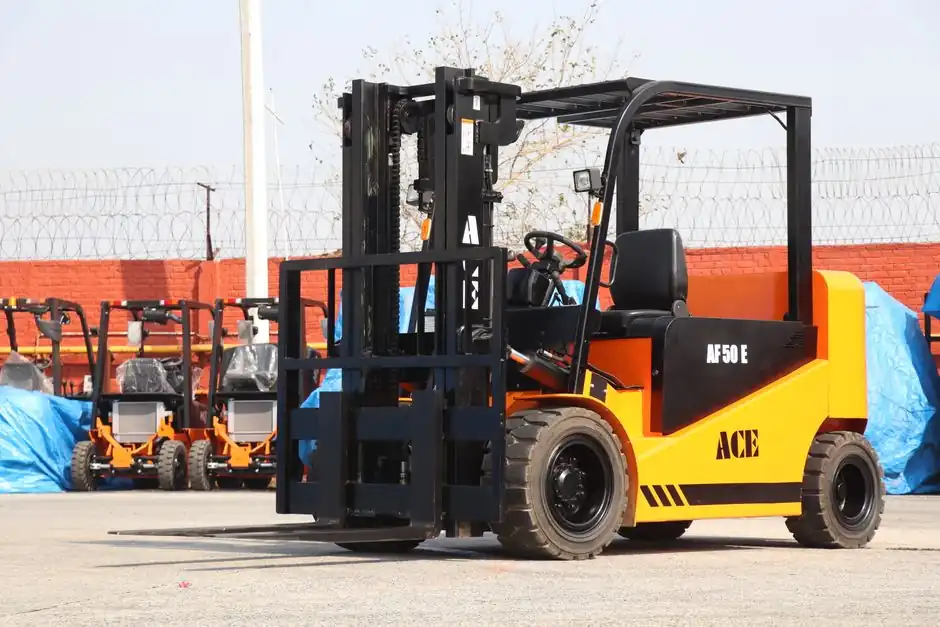
A simplex mast has a single stage with no free lift, a duplex mast has two stages with limited free lift, and a triplex mast has three stages that combine a compact collapsed height with high reach, per OEM guidance published 2026-09-14 [S1]. The mast stage count drives four buyer-critical dimensions: maximum fork height, overall lowered height, free lift, and overall raised height [S2].
For counterbalanced warehouse trucks, duplex masts typically cap out near 4–5 m of lift while triplex masts are commonly specified for racking in the 6–8 m band, with full or partial free-lift stages that let the carriage rise inside a container or trailer before the outer stages extend [S3][S4]. Free lift is the distance the forks can rise before the mast sections increase the truck's total height, a separate number from maximum fork height that frequently determines whether a unit can work inside a standard 2.44 m (8 ft) shipping container [S2].
Vertical-Envelope Specs: The Four Numbers That Decide Fit
Maximum fork height (MFH) is the highest point the fork-supporting surface reaches, and matching it exactly to the rack beam without headroom to clear the pallet is a common buying error [S2]. Overall lowered height (OALH) is the mast's fully collapsed height, and it must clear doorways, containers, trailers, mezzanines, and shipping clearance; a buyer who checks the overhead guard but overlooks a taller collapsed mast often discovers the mistake on delivery [S2].
Free lift, or free fork height, is the distance the forks rise before the first mast stage extends, and a triplex with generous free-lift can place a pallet at 1.5 m without exposing the outer stages while a duplex would require the entire mast to rise at the same carriage position [S3][S2]. Overall raised height (OARH) is the highest point of the extended mast, sometimes including the load backrest, and it must clear ceilings, beams, sprinklers, lighting, and roof structures that the nominal ceiling height alone will not reveal [S2].
Simplex Mast: Single Stage, Zero Free Lift, Best Visibility
A simplex mast has one set of rails and no free lift, so the whole mast extends as one unit and the operator gets the best forward visibility of any mast type [S5]. Lift height is limited, which makes simplex masts impractical for warehouse racking but well suited to outdoor yard work, low stacking, and ground-level pallet handling [S5][S1].
Typical simplex applications are truck loading at low dock heights and ground-level stacking, and simplex masts are often paired with pallet lifters and stackers rather than full counterbalanced rider trucks [S8]. Because the carriage and mast rise together, simplex masts require overhead clearance equal to the lift height, which rules them out for container, trailer, and low-ceiling work [S2][S5].
Duplex Mast: Two Stages, Free Lift, 4–5 m Typical Reach
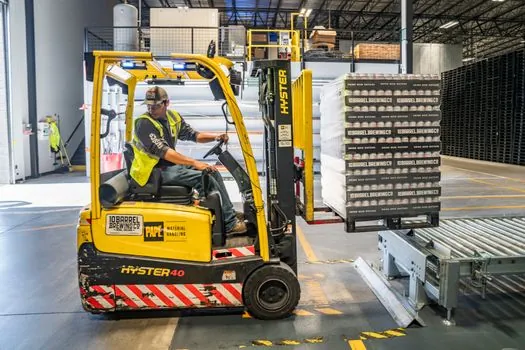
A duplex mast has two stages (outer and inner) and provides greater lift height than a simplex while maintaining relatively good visibility through the mast [S7]. Duplex masts are strong, have fewer moving parts, deliver predictable lifting speeds, and are common on counterbalance trucks used for general pallet handling with moderate heights up to 4–5 m [S3].
Duplex is the workhorse for cross-docking, double stacking, and trailer/container work, and when configured as a true full free-lift two-stage mast it is often called a "trucker's mast" because the forks can rise to a usable working height before the outer mast starts to extend [S1][S5]. The simpler chain arrangement means lower maintenance and fewer wear components than more complex multi-stage masts, which lowers the cost of ownership for fleets that do not need triplex reach [S3].
Triplex Mast: Three Stages, Compact Collapsed Height, 6–8 m Reach
Triplex masts add a third stage, allowing higher lift while keeping collapsed height compact, and they often incorporate a free-lift stage (partial or full) that lets operators lift within tight overhead spaces before the outer stages extend [S3]. Triplex is the go-to configuration for racking beyond duplex range where door and ceiling clearances are a concern, including 6–8 m warehouse racking with constrained travel height [S3].
Triplex is the most common mast type for warehouses and distribution centers because it delivers high fork reach with a low collapsed height that allows indoor use, reaching high racking without sacrificing the ability to move through standard doorways [S5]. A buyer comparing a duplex and a triplex for the same truck should confirm permitted capacity at the required height with the selected forks and attachments, because a triplex that reaches the rack may still be unsuitable if its residual capacity, visibility, or fully extended height does not fit the application [S2].
Decision Matrix: Simplex, Duplex, Triplex on Cost, Reach, Visibility, Maintenance

On maximum lift, simplex is limited, duplex typically reaches 4–5 m, and triplex typically reaches 6–8 m, so the rule of thumb is to choose the minimum mast that meets the highest required lift to reduce complexity and wear [S3][S1]. On collapsed height, simplex is the shortest and triplex is the most compact at full extension, which is why triplex wins in low-clearance warehouses while simplex wins in outdoor yards [S5].
On forward visibility, simplex is best because the whole mast extends as one unit, duplex is intermediate, and triplex obstructs visibility more because of the additional stages, though optimized channel designs and camera options can offset this on premium builds [S5][S3]. On maintenance overhead, more stages mean more rollers, chains, and sheaves to inspect and replace, so simplex is cheapest to maintain, duplex is moderate, and triplex carries the highest routine service cost of the three [S3]. A duplex mast with adequate free-lift is often ideal for distribution centers with 3–4 m racking and frequent trailer loading, while a triplex mast with strong free-lift is the better fit for multi-client 3PL operations servicing 6–8 m racking [S3].
Free-Lift, Container Work, and Residual Capacity at Height
Full free-lift masts allow the forks to rise without increasing overall mast height, which is essential for shipping containers, truck trailers, low-clearance warehouses, and mezzanine storage, and they are built by adding an inner free-lift cylinder independent of the main lift cylinder [S1]. The trade-off is that full free-lift masts may slightly reduce forward visibility because of the additional hydraulic components located within the mast assembly [S1].
As the mast extends, the rated capacity drops, so lift capacity at height is a separate spec from nameplate capacity and a critical safety number; operators must work from the truck's data plate, not the marketing brochure, when loading at extension [S5]. This is the most common specification error on a triplex retrofit, because a truck that lifts 2,500 kg at 3 m may lift only 1,500–1,800 kg at 6 m depending on mast, load center, and tire configuration, and the residual capacity curve must be on the quotation before the order is placed [S2][S5].
Selection Workflow: Site Survey, Data Plate, and Quotation Checklist
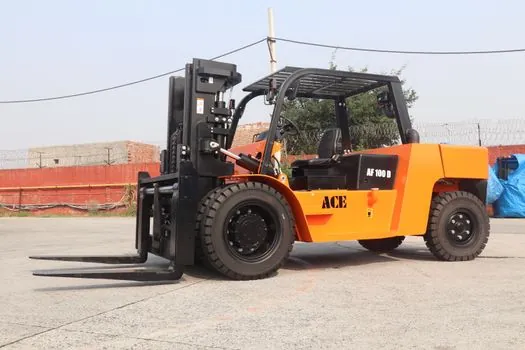
The site measurement must use the lowest real obstruction, not only the nominal ceiling height, and should include sprinkler pipes, lighting, door tracks, rack beams, heaters, and any pallet or load projection [S2]. Where tolerances are tight, a dimensioned layout and photographs beat a verbal "standard container" or "normal warehouse door" description, because 8 ft containers vary by door header height and warehouse doors vary by track clearance [S2].
The quotation should confirm, for the exact forklift model and mast, the maximum fork height, overall lowered height, free lift, overall raised height, and permitted capacity at the required height with the selected forks and attachments [S2]. Manufacturers do not always use uniform terminology: one specification may call a mast "two-stage," another "duplex," and a third may distinguish a standard two-stage mast from a two-stage full-free-lift mast, so the buyer should treat the name as a pointer to a data table rather than a substitute for one [S2]. The forklift class, tire type, and power source still set the baseline, and the mast selection sits on top of the chassis choice covered in Forklift Class I to VII: power source, tires, and where each applies.
Trackable signals to watch over the next procurement cycle: residual-capacity curves at full extension on triplex masts in the 6–8 m band becoming a standard line item on OEM data sheets, and free-lift cylinder designs moving from optional to default on two-stage builds for container and trailer work [S1][S3]. Fork sizing on the carriage side is the next constraint after mast selection, and the matching spec is covered in Forklift Fork Length and Width Selection by Pallet Type: 2026 Sizing Field Guide.
The underlying component specifications are covered under dry type transformer, forklift, and rough terrain forklift.