
Single girder cranes cover the bulk of indoor light-to-medium duty lifting below the ~20 t mark, and the welded I-section girder is the variant that dominates both factory cost and lead-time discussions across Chinese OEM catalogues and European FEM 1.005 designs [S2]. Zhejiang Xiecheng Crane Machinery lists single girder, double girder and suspension (under-running) product lines as the three base options a buyer must sort through before any spec is locked [S1].
For a process or maintenance engineer the question is not "what is a single girder crane" but "under which combination of span, capacity, duty and headroom does a single girder crane win on total installed cost, and where does it fail?" — and that answer is set by seven mechanical and code-driven criteria that any supplier quotation must be checked against [S1][S2].
1. Span, Bay Length and Building Column Spacing
Single girder cranes are normally specified for spans inside the typical factory bay of 7.5–31.5 m, where the welded I-girder mass and deflection remain manageable without going to a box-section double girder [S2]. Xiecheng's product list segments single girder, double girder and suspension configurations as the three under-30 t class options a buyer chooses between, with span usually driven by the building column grid rather than the crane itself [S1].
If the column grid pushes span above ~28 m for an indoor top-running unit, the welded I-section mass grows fast and the comparison should be re-run against a double girder — at that point the gantry crane class or a double girder indoor unit usually wins on girder weight per metre of lift.
2. Capacity Class and Hoist Tonnage
Single girder cranes are dominant up to 10 t and remain a defensible choice to about 20 t, beyond which hoist trolley weight, hook approach dimensions and girder bending moment push designers toward double girder geometry [S1]. The welded I-girder mass optimization study in the International Journal of Steel Structures treats the single-beam bridge as a lighter, lower-cost variant of the heavier double-beam crane rather than a heavy-lift solution in its own right [S2].
For capacities above 20 t — or where a very low headroom between hook and girder is mandatory — a European-style low-headroom wire-rope hoist on a double girder is the more usual answer, and the choice should be made on girder section depth and hook approach, not on OEM marketing language [S1].
3. Duty Class: FEM / ISO Group Selection
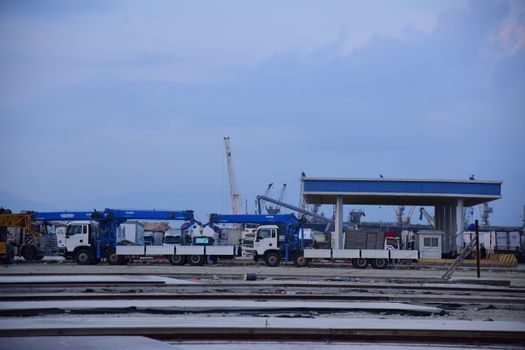
Duty class is the criterion that quietly decides whether a single girder spec survives a 12-month operating-cost review. Single girder units are typically selected for FEM 1.005 / ISO 4301 groups up to roughly 1Cm / M4 (stand-by infrequent use) or 2m / M5 (light production), with the welded I-section deflection limit usually set to span/500–span/750 depending on the FEM/ISO group and whether the crane handles a vacuum lifter or magnet [S2].
For duty groups above 2m / M5 — heavy fabrication bays, scrap handling, two-shift stamping — the welded I-girder fatigue exposure and the wire-rope hoist service life drop together, and a mobile crane class or outdoor double girder is often the better-fitted tool than forcing the single girder into a higher group.
4. Hoist Type: Electric Wire Rope vs Electric Chain
The hoist is the second-largest cost line after the girders and the single biggest maintenance liability. For single girder under-running (suspension) cranes the electric chain hoist on a low-headroom trolley is the default Chinese-OEM configuration [S1][S4]; for top-running single girder units the European wire-rope hoist in a low-headroom or standard-headroom build dominates the under-10 t segment [S1].
Chain hoists win on first cost and on overall height in tight-headroom mezzanines; wire-rope hoists win on duty-cycle life, hook speed options and the ability to add a crane scale for invoiced weighments, which is why the choice is rarely a straight price comparison [S1].
5. End Carriage, End-Truck Approach and Runway Rails
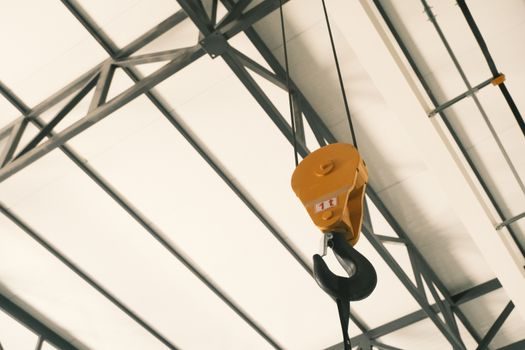
End-carriage wheelbase and rail-centre alignment decide whether an indoor single girder crane will run for a decade or grind its flanges in year two. Top-running single girder units run on square-bar runway or rail-mounted end trucks with the wheelbase set to roughly span/6 to span/8 to keep skew and wheel loading inside FEM 1.005 limits; under-running (suspension) units run on the lower flange of the runway I-beam and are far more sensitive to rail joint alignment and rail straightness tolerance [S1][S4].
If the building runway is older than 15 years, a walk-down survey of the existing rail joints, splice plates and bracket bolts is mandatory before quoting the crane — a single girder crane inherits the runway's geometric errors and amplifies them into wheel-flange wear.
6. Deflection, Skew and Welded I-Girder Optimization
The static deflection of a single girder crane is usually limited to span/500 for standard hand-operated or slow-speed electric service and span/750 for continuous-duty electric operation, with dynamic amplification factors added when vacuum lifters or magnets are used [S2]. The Springer welded I-girder optimization paper shows that mass can be cut by minimizing plate thicknesses subject to these deflection and stress constraints, but only within the FEM/ISO group limit the crane is being designed to [S2].
For process engineers the take-away is that pushing the deflection limit to span/1000 to chase lower mass is not a free option — it raises the natural frequency of the girder, which can clash with the hoist cross-travel frequency and drive hook sway on sensitive lifts, so deflection is a coupled dynamic decision, not a static one [S2].
7. Standards, Documentation and Indoor-Only Footprint
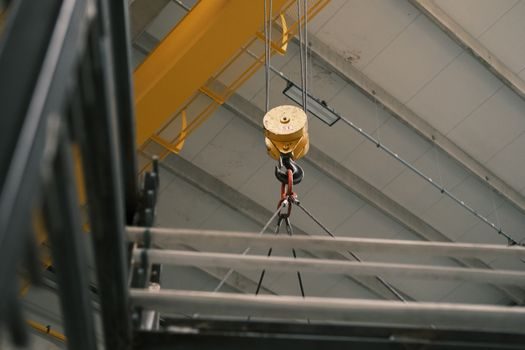
Single girder cranes are an indoor, low-elevation product — they are not specified for outdoor heavy-lift or high-wind service where a crawler crane or stacker crane is the right tool. The design basis is FEM 1.005 / ISO 4301 for classification, EN 15011 for mechanical requirements, and the supplier's CE / GB / EAC documentation pack which Xiecheng and other Zhejiang OEMs routinely publish on request [S1][S2].
For a comparable spec methodology outside the lifting world, the seven-criterion logic used here mirrors the field guides applied to Pt100 RTD selection and to magnetostrictive level transmitters — capacity, duty, environment, code basis, lead time and verification each get a line in the spec before any vendor sees the enquiry.
Comparison: Single Girder vs Double Girder vs Suspension vs Mobile
Across the four indoor-and-outdoor options a buyer typically pits against each other, the criteria stack as follows: [S1]
Single girder: lowest first cost for spans up to ~28 m and capacities up to ~20 t, indoor top-running or under-running, FEM groups up to 1Cm/2m (M4/M5), lower headroom, faster delivery from Chinese OEMs [S1][S2].
Double girder: higher first cost, but required for capacities above ~20 t, for very low hook approach where the hoist sits between the girders, and for FEM 2m/3m (M5/M6) and above where welded box-section fatigue life and hoist service access are mandatory [S1].
Suspension (under-running) single girder: lowest building height requirement, runs on the lower flange of the runway I-beam, best for light- to medium-duty mezzanines and machine shops; cannot be used for outdoor service and is sensitive to runway rail alignment [S1][S4].
Mobile / crawler / gantry / stacker cranes: chosen when the lift is outdoor, on uneven ground, or where the load is too heavy for an indoor runway beam; not a substitute for an indoor single girder on cost-per-lift basis [S1].
Signals to Track Through Q3 2026
Two trackable signals will sharpen the next selection review. First, the welded I-girder mass-optimization literature is still adding plate-thickness and flange-web ratio refinements that will tighten FEM 1.005 / ISO 4301 deflection limits for single-beam bridges, which is the engineering basis most Chinese OEM datasheets cite [S2]. Second, Zhejiang and other coastal OEM product pages for single, double and suspension cranes were refreshed in mid-June 2026, which is the first signal that 2026-H2 indoor-crane lead times are tightening and that any non-urgent indoor single girder enquiry is worth issuing before Q3 [S1][S3].