
A 12 inch water main takes a NPS 12 (DN 300) butterfly valve whose body face-to-face sits between flanges bored for a 323.8 mm OD pipe, with a 200 psi WOG pressure class available for sizes 2 to 12 inch under API 609 [S1][S4].
Line-size match is the starting point, not the finishing one: water-main duty at 12 inch is the upper end of the 2 to 12 inch API 609 bracket and also sits inside the AWWA C504 rubber-seated range, so the specifier has to pick a body style (wafer, lug, flanged) and then derate the published Cv before selecting the actuator [S1][S2][S3].
Match the line, then check the outside diameter
A 12 inch nominal pipe corresponds to DN 300 with an outside diameter of 323.8 mm, and the corresponding butterfly valve bore must be machined to clear that OD without forcing the disc into the pipe wall [S4]. The standard butterfly-valve / pipe-size table lists 12 inch / DN 300 / 323.8 mm OD in the first comparison column, and a parallel table lists DN 300 with an outside-diameter range of 324 to 325 mm to absorb mill tolerance on the pipe [S4].
Two practical consequences follow for a 12 inch water main. First, a wafer body needs flange bolts long enough to clamp the valve between the flanges and clear the valve's face-to-face, which is the dimension API 609 normalises across vendors [S1]. Second, if the pipe schedule is heavier than Schedule 20 (for example Schedule 40 or STD), the pipe OD stays at 323.8 mm but the bore shrinks, so the engineer has to confirm the valve's disc clearance, not just the flange compatibility, before ordering [S4].
Choose body style by shut-off and maintenance duty
Wafer butterfly valves are clamped between two flanges with through-bolts and are the lowest-cost option for a 12 inch water-main block-valve or sectionalising duty, with lug bodies allowing dead-end service when only one side is bolted [S2]. Flanged bodies are heavier and cost more but remove the bolt-length calculation entirely and are common on 12 inch and larger water service where maintenance crews want a drop-in spool [S2].
For a 12 inch potable-water main, the rubber-seated AWWA C504 short body is the typical pick because the standard covers sizes through 72 inch and the elastomeric seat gives bubble-tight shut-off at the low differential pressures seen in distribution work [S1]. For a 12 inch raw-water or treated-water line that also sees a pump discharge or a chlorination skid, the API 609 lug or wafer body becomes the default because it shares face-to-face dimensions with ball valves and check valves of the same nominal size, simplifying spare stocking [S1][S2].
Pressure class and shut-off rating for a 12 inch water duty
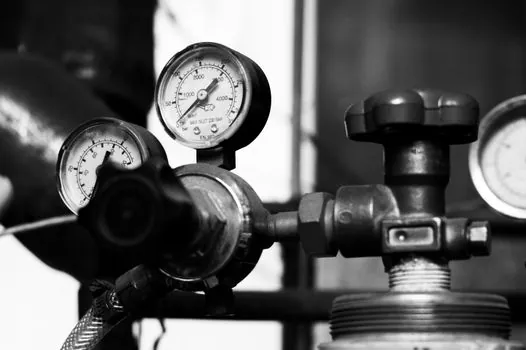
API 609 lists 2 to 12 inch butterfly valves at 200 psi gauge WOG (water-oil-gas) and 14 to 30 inch at 150 psi gauge WOG, so a 12 inch valve sits at the top of the higher-pressure bracket [S1]. The Johnson Controls engineering data book confirms that high-pressure butterfly valves are bubble-tight up to 175 psig differential for the 2 to 12 inch range, dropping to 150 psig for 14 to 20 inch [S5].
On a typical municipal water main, working pressure is 100 to 150 psi with a 1.5x or 2x test pressure during commissioning, so a 200 psi WOG body with a 175 psig bubble-tight shut-off rating is normally adequate without stepping up to a high-performance (double- or triple-eccentric) body [S1][S5]. If the line is a pump-discharge header or a raw-water intake that can see transient spikes, the engineer should add a margin or move to a Class 300 body, particularly where the line is also used as a balancing valve for flow-splitting between parallel pumps.
Derate line-size Cv: 12 inch is rarely the right control size
Published Cv for a 12 inch butterfly valve is high (the Johnson Controls data book cites 22,339 Cv as the upper end of their butterfly range, with 6 in. units around 350 Cv), so a line-size valve on a 12 inch water main is almost always oversized for modulating duty [S5]. Sizing two-way valves for stable control on water service means selecting a smaller nominal size, typically one or two DN steps down, so the design flow lands at 60 to 80% of the wide-open Cv at the planned disc angle [S5].
Three rules cover most 12 inch cases. First, calculate the required Cv from Q (gpm) and ΔP (psi) using Cv = Q / sqrt(ΔP), then pick the valve whose published Cv at 60 to 70% opening is at or slightly above that value. Second, if the line is strictly a 12 inch water main with no modulation, accept the line-size match and document that the duty is isolation only. Third, when the same 12 inch valve has to throttle (for example on a ballast water treatment bypass or a cooling-water cross-tie), use a ball valve or a globe valve for trim and leave the butterfly as the open/closed block valve, because a butterfly throttled below 20% opening loses stable control authority [S5].
Disc, seat, and materials for potable and raw water
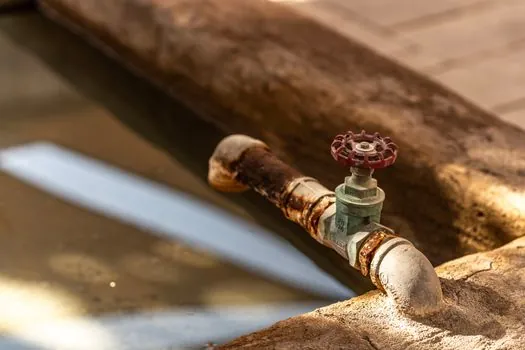
For 12 inch potable-water mains the seat is usually EPDM or Buna-N rubber bonded to a ductile-iron or stainless-steel disc, and AWWA C504 lists the body, disc, and seat combinations that NSF/ANSI 61 requires for drinking-water service [S1]. The seat and disc are the wear parts: on a 12 inch line that is cycled daily, EPDM typically gives 50,000 to 100,000 cycles before leakage starts; on a line that is opened once a quarter, the same EPDM seat can last 15+ years [S1][S2].
For raw-water, seawater, or chlorinated service, the disc moves up to 316 stainless or a duplex grade, and the seat moves to EPDM with a peroxide cure or to Viton for higher temperatures, because standard Buna-N swells in continuous chlorine exposure above 1 to 2 ppm free residual [S1][S2]. If the 12 inch main also feeds a ballast water treatment skid or a chemical dosing line, confirm seat compatibility with the chemical carrier separately, not just with the bulk water.
Actuator sizing, face-to-face, and installation checks
Actuator torque on a 12 inch butterfly comes from three sources: seating/unseating torque against the differential pressure, bearing friction, and dynamic (flow-induced) torque on the disc, and all three have to be summed before sizing the gear operator or pneumatic actuator [S5]. A 12 inch valve at 150 psi differential in a water main typically needs 1.5x to 2x the seating torque as a margin for the actuator, and gear operators on 12 inch valves are the norm rather than the exception because manual-handle torque exceeds operator limits above 8 inch [S5].
Five installation checks keep a 12 inch butterfly valve from being a chronic leak source. First, confirm the pipe OD against the table (323.8 mm for 12 inch) and the flange class against the body data sheet (ANSI 125/150 is the default for water mains) [S1][S4]. Second, orient the valve so the disc shaft is horizontal for solids-bearing water and vertical for clean water, to keep sediment out of the lower shaft bearing [S2]. Third, leave clearance for the disc to swing fully open without hitting adjacent piping or structural steel. Fourth, pressure-test the installed valve at 1.5x working pressure with the disc slightly open. Fifth, when the same line carries an online water analyzer sample line, take the sample upstream of the butterfly and add an isolation needle valve, because the analyser's flow cell is sensitive to the pressure transients a throttled butterfly creates [S5].
Comparison: wafer, lug, and flanged 12 inch butterfly bodies on water duty

Three body styles compete for a 12 inch water main. A wafer body is the cheapest, weighs the least, and is correct for a block valve between two flanges where dead-end service is not required, but bolt length has to be calculated and the valve cannot be used as a dead-end closure [S1][S2]. A lug body costs roughly 20 to 40% more than a wafer of the same pressure class, allows dead-end service when only the upstream flange is bolted, and is the safer default on 12 inch lines that have to be isolated for maintenance on the downstream side [S2]. A flanged body costs 1.5x to 2x a wafer, weighs the most, and is the easiest to install, but its face-to-face dimension does not always match API 609 short pattern, so spare-valve interchangeability has to be checked [S1][S2].
On materials, ductile-iron body + EPDM seat + 316SS disc is the standard combination for 12 inch water mains and meets AWWA C504, while a high-performance double-eccentric body with a PTFE or metal seat is the right pick only if the line carries hot water above 120 degC or a non-water fluid that attacks EPDM [S1][S2]. If you are also balancing flow between parallel pumps, a butterfly valve used as a balancing device needs the disc-position indicator marked in degrees and a memory stop on the actuator, because a balanced circuit is meaningless if the operator cannot return the valve to the same opening.
Failure modes and limits specific to 12 inch water duty
The most common 12 inch butterfly failure on water mains is seat wear, not body corrosion, because the disc edge cuts into the elastomer every time the valve closes under pressure [S1][S5]. The second is water hammer on sudden closure, which is why 12 inch valves on pump discharge are either geared (slow-close) or fitted with a downstream check valve, since the Johnson Controls data book flags water-hammer potential as a known butterfly weakness [S5].
A third, less obvious limit is that a 12 inch rubber-seated valve is not built for frequent throttling below 30% opening, because the disc edge sits in the high-velocity jet and erodes the seat; for that duty a globe or a ball valve is the right trim device, with the butterfly kept fully open or fully closed [S2][S5]. If the line also branches to an online water analyzer or a sampling skid, add a dedicated isolation ball valve at the take-off so the butterfly can be cycled without starving the analyser.
Trackable signals to confirm a 12 inch water-main spec
Three checks tell you whether a 12 inch butterfly selection is grounded before purchase. First, verify the body data sheet lists API 609, AWWA C504, or MSS SP-67, and that the size code reads 12 inch or DN 300 with an OD of 323.8 mm [S1][S3][S4]. Second, confirm the seat material (EPDM for potable water, Viton for chemical or high-temperature service) and the disc material (316SS for chlorinated or raw water, ductile iron for clean water) against the line's fluid data sheet [S1][S2]. Third, run the Cv calculation at design flow and confirm the required Cv lands at 60 to 80% of the published Cv at the planned disc angle, and if it does not, drop one nominal size or change the duty from modulating to isolation [S5]. If all three checks pass, the 12 inch water-main butterfly is correctly sized.
This topic is covered further in Selecting a Submersible Pump for Solids-Laden Municipal Wastewater.