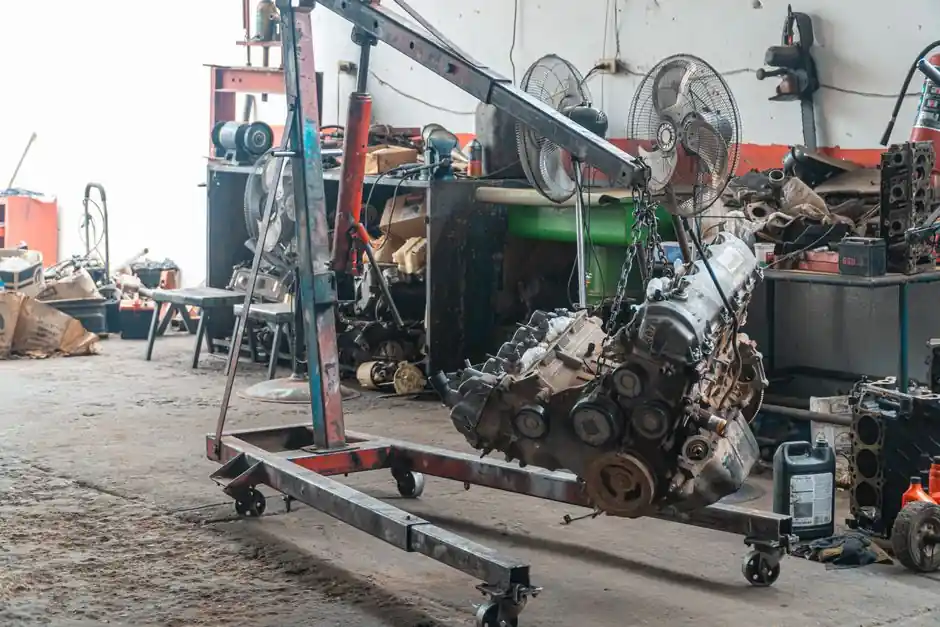
A well-maintained skid steer loader runs 5,000 to 7,000 hours before its first major overhaul, and the full working life of a skid steer loader typically spans 6,000 to 12,000 hours across both wheeled and compact track configurations [S5][S6].
Annual utilization sits around 1,200 to 1,500 hours for most general-contractor fleets, putting realistic calendar life at 5 to 8 years before a rebuild decision is forced [S2]. Hour bands, not calendar years, are the spec that actually drives the replacement call.
Expected Service Hours by Machine Class
Wheeled skid steers and compact track loaders share a common life envelope, with a Cat-branded baseline of roughly 5,000 hours under proper maintenance and a wider 5,000 to 7,000-hour band to first overhaul for mainstream fleets [S1][S6].
Long-term survivors stretch into the 6,000 to 12,000-hour range when operators stay disciplined on fluid, filter, and undercarriage service [S5]. Above 5,000 hours, used buyers should expect powertrain, hydraulic, and chassis wear that materially shifts residual value [S8].
Wear Parts That Drive the Replacement Math
Rubber tracks on compact track loaders are the dominant wear cost outside the engine, lasting 1,200 to 1,600 hours under normal conditions and stretching to 3,000 hours only with light-duty cycles and clean operating surfaces [S4].
Abrasive terrain (rock, demolition debris, asphalt) cuts track life sharply, while wet, cold, or muddy sites demand specific tread geometry and cold-weather rubber compounds to avoid catastrophic carcass failures [S4]. The same abrasive loading also chews through wheeled-skid-steer tires, so tire or track cost per hour is a useful proxy for overall machine abuse.
Selection Criteria: Hours, Application, Resale Curve
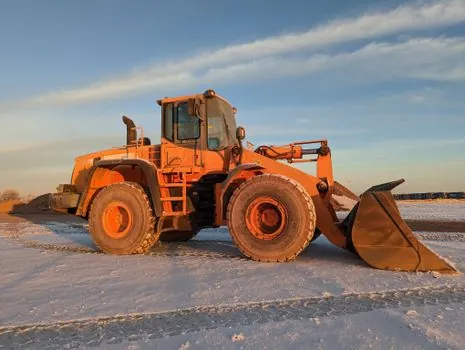
Buying a used unit: target 2,000 to 3,500 hours for the best balance of remaining life versus purchase price; above 5,000 hours, expect powertrain and hydraulic intervention in the near term [S8].
Application fit matters as much as hours. A skid steer cycling 1,500 hours per year on landscaping dirt will outlive the same machine on a quarry face, where dust loading, side-loading, and track spin accelerate wear on every rotating group. Compare three procurement scenarios on the same 1,500 hr/yr schedule:
Scenario A: New wheeled skid steer, 5,000 hr first-overhaul target, 5+ years to overhaul, lowest near-term repair cost, highest depreciation in years 1 to 3.
Scenario B: Used compact track loader at 2,500 hr, ~2,500 hr runway to first overhaul, moderate purchase price, track replacement likely within 1,000 to 1,500 hr on abrasive sites [S4].
Scenario C: Rebuilt unit at 4,000 hr post-rebuild, ~2,000 hr runway, low acquisition cost, but verify what the rebuild actually covered (engine only, or hydraulics, pins, and undercarriage too).
Operating Conditions That Cut Life
Environment is the single biggest non-mechanical lifespan variable: extreme heat, cold, abrasive materials, and irregular surfaces all accelerate wear on a skid steer loader, while indoor or sheltered applications routinely outlast outdoor equivalents [S2].
Operator behaviour compounds the effect. Repeated high-speed skid turns spin the tracks or scrub the tires, generating heat that degrades rubber compounds and loads the final drives asymmetrically. Training operators to make slower, wider turns and to avoid counter-rotating in place is a cheap, measurable life extender.
Maintenance Discipline vs Undisciplined Ownership
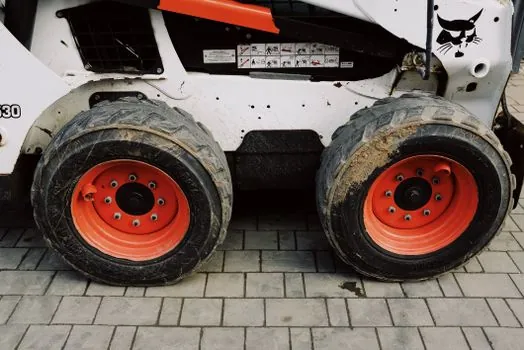
Preventative maintenance is the lever that pushes a machine from the 5,000-hour floor to the 7,000 to 12,000-hour ceiling, covering filter and fluid intervals, greasing, and inspection cadence that flags wear before it cascades [S2][S3].
Deferred maintenance shortens service life across the whole construction machinery and equipment category, not just skid steers: skipped fluid changes contaminate hydraulics, missed greasing accelerates pin and bushing wear, and ignored filter service starves the engine of clean air.
End-of-Life Signals and Standards Anchors
The standard buy-versus-rebuild decision trigger is the O&O cost sweet spot: O&O costs fall through the early depreciation phase, level out across the productive midlife, then climb as wear parts and powertrain components fail faster than they can be economically replaced [S2].
Concrete end-of-life cues: chronic hydraulic leaks that return within weeks of repair, engine oil consumption above maker spec, structural cracks around the lift-arm pins, and track or tire replacement intervals that have collapsed to under 500 hours. For a comparable class reference, wheel loader lifespans run 7,000 to 12,000 hours, so a 5,000-hour skid steer at midlife often has more remaining runway than a same-year wheel loader of similar duty [S2].
Also worth tracking: OEM-published first-overhaul hour targets on 2026-model machines, which several makers have begun publishing with stricter intervals than the legacy 5,000-hour rule of thumb [S6].
Related analysis: Aerospace Optical Glass Selection: Material Trade-offs for Windows, Domes, and Sensors.