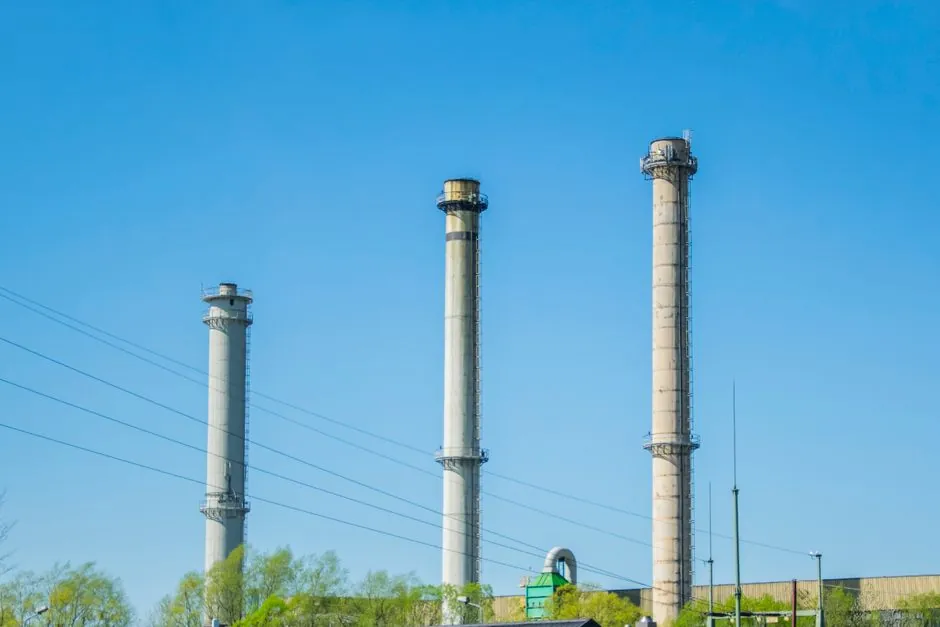
In rolling-mill and tundish-turntable duty, slewing drive output torque spans 1 kNm for small solar-class units to 350+ kNm for stacker-reclaimer-class equipment, and steel-mill selection sits in the upper third of that range because of elevated radial and overturning moment loads on the rotating turret [S8].
Rolling-mill screw-down drives operate at 600-1,500 RPM motor input and 2-15 RPM screw output, implying 50:1 to 200:1 overall ratios, and the housing must absorb rolling forces that can exceed 30 MN on hot strip mill finishing stands, so a planetary or right-angle planetary reduction paired with a hardened slewing bearing is the standard arrangement [S2].
Service Factor, Torque Class, and FEM/AGMA Duty Mapping
For metallurgical screw-down and ladle-turntable duty, the recommended service factor on calculated steady-state torque is 2.0 to 2.5, applied before consulting catalogue output ratings, because shock loading from cobble events, roll-bite transients, and mill-stop deceleration routinely doubles the static figure [S2]. The torque class for cold-mill screw-down sits at 18,000-35,000 Nm at the gearbox output shaft, while hot-strip-mill screw-down runs at higher ambient and accepts reduced positioning accuracy, generally sub-0.05 mm versus sub-0.02 mm for cold mill [S4]. When a slewing drive is selected for a tundish turret or ladle transfer car, FEM class M5 (T5-L2) is the FEM duty benchmark for output speeds up to 25 rpm, while AGMA 2001 is the parallel North American loading-class reference; either duty class anchors a procurement audit when coupled to ISO 9001:2015 manufacturer certification [S1][S2].
Rolling-Mill Duty Cycle: Hot Strip, Cold Mill, and Winch Lifting
Hot strip mill finishing stands deform steel above 900 °C and run the screw-down against rolling forces that reach 8,000 tonnes on a single stand, so the gearbox on screw-down duty sees both thermal ambient load and the largest shock spectrum of the mill, favouring a right-angle planetary housing with the screw mounted vertically and a horizontal motor mount on the mill housing side structure [S2][S3]. Cold reversing mill screw-down trades thermal ambient for tighter thickness tolerance and accepts a reduced ambient envelope, but the sub-0.02 mm positioning accuracy requirement drives backlash specification down to single-arc-minute class on the reduction stage [S4]. For overhead crane and ladle-handling winches in the mill bay, winch-drive planetary gearboxes in the EP400W to EP419W3 series cover 870 Nm to 275,000 Nm output torque at ratios from 6.09:1 up to 365:1, and dimensional interchangeability with Rexroth GFT…W and Bonfiglioli 800 series units simplifies retrofit on existing mill cranes [S1].
Sealing, Backlash, and IP Rating in Mill Ambient

Mill ambient combines iron-oxide dust, rolling-mill emulsions, hydraulic-oil mist, and ambient temperatures commonly above 40 °C, so the minimum ingress protection on a slewing drive specified for a steel-mill turret is IP65, with IP66 or IP67 selected when the drive sits within 2 m of a cooling-descale spray zone [S8]. Backlash class for screw-down duty is typically single-arc-minute, and the slewing ring bearing raceway hardness specification is typically 55-62 HRC with surface finish below 0.4 µm Ra on the raceways to hold the backlash class over a 40,000-hour design life. Drive shafts in UK rolling mills routinely operate in ambient up to 90 °C from the mill housing conduction path, so input-side universal-joint and cardan-shaft components on a slewing-drive feed train must be specified for that thermal envelope and protected by a heat-reflective shield where they pass close to the mill stand [S9].
Drive Motor, Brake, and Hydraulic Interface
For slewing drives paired with hydraulic orbit motors or axial-piston hydraulic motors on mill equipment, the catalogue options list a hydraulic-released parking brake as a request-item and a pressure-relief valve plus overcenter valve on the motor interface, both of which should be specified when the slewing drive powers a ladle turret or coil-handling car that must hold position under loss of system pressure [S1]. Electric-drive configurations pair the same planetary or worm-gear reduction housing with an AC induction or servo motor, and where the mill PLC demands precise turret indexing the drive motor side is sized for 1.5-2.0× the running torque to maintain the positioning step under upset conditions. The braking torque column on EP400W-series data runs 130 Nm on the smallest frame to 3,000 Nm on the EP419W3 frame, and the chosen brake rating must equal or exceed the maximum overhauling load from a tilted ladle or full coil reel, not the static holding figure [S1].
Comparison: Slewing Drive Types for Steel-Mill Duty
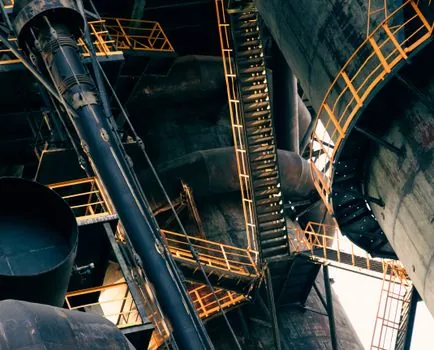
Three slewing-drive architectures compete for steel-mill applications, and the selection maps cleanly to torque, accuracy, and ambient. Worm-gear slewing drives are the lowest-cost option, offer inherent self-locking for elevated turrets, but run at lower efficiency (typically 30-50%) and accumulate backlash under reversing duty, so they fit signage-class and slow ladle-turntable duty rather than screw-down [S7]. Epicyclic (planetary) slewing drives are offered with rated output torques from 1 kNm up to 350+ kNm, are used in stacker-reclaimer and other heavy-duty applications, and are typically integrated with a DC or AC drive motor [S8]. Right-angle planetary gearboxes, as in EP400W-series and screw-down mill housings, are the standard answer when the motor shaft is horizontal and the driven shaft is vertical, because the bevel stage combines 90° direction change with reduction in one housing [S1][S2].
Who Should Use a Slewing Drive Here, and Who Should Not
The slewing-drive package is the correct spec path for any mill-stand equipment that rotates a load about a vertical axis: tundish turrets, ladle transfer cars, coil-reel turrets, scrap-chute positioning, and billet-cooling-bed transfer arms [S6][S8]. It is not the correct spec path for in-line rolling-mill main drives that connect the motor to the work roll through a cardan or universal-joint shaft, because those applications transmit torque collinearly, not about a vertical axis, and a right-angle planetary or worm-gear reduction on that path costs efficiency without a functional benefit [S3][S5]. Stepper drive and servo drive architectures are only relevant on the mill's positioning axes downstream of the slewing drive, not on the slewing drive itself, which carries a multi-kW motor, reduction, and bearing package in a single sealed housing [S7].
Verification, Standards, and Failure Modes to Audit
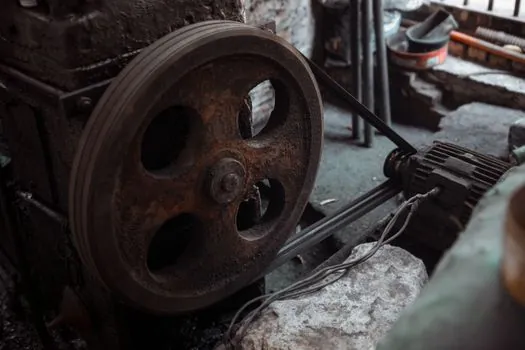
Procurement audits in steel mills should reject any gearbox supplier that cannot present ISO 9001:2015 certification and ISO 17485 bevel-gear accuracy documentation for right-angle units, because these are baseline credentials at every major steel-producer audit [S2]. The most common in-service failure modes on mill slewing drives are: raceway brinelling from moment overload on a tilted ladle, oil seal failure from emulsions and dust, and backlash growth from reversing duty beyond the design cycle count, with the audit-trail fix being the use of EP-series frames that share spare-parts with Rexroth GFT and Bonfiglioli 800 series [S1][S2]. When a mill's rolling-mill main drives connect motors to work rolls through cardan shafts, the same thermal ambient up to 90 °C applies and the shaft supplier specification should be checked against the mill housing conduction path before commissioning [S3][S9]. Trackable signal to watch through 2026: revisions to ISO 17485 bevel-gear accuracy classes and tighter IP66/IP67 default specifications on new EP-series winch-drive frames.
See also our earlier report, Gas Suppression for Chemical Plants: Agent, Cylinder, and Standard Selection.