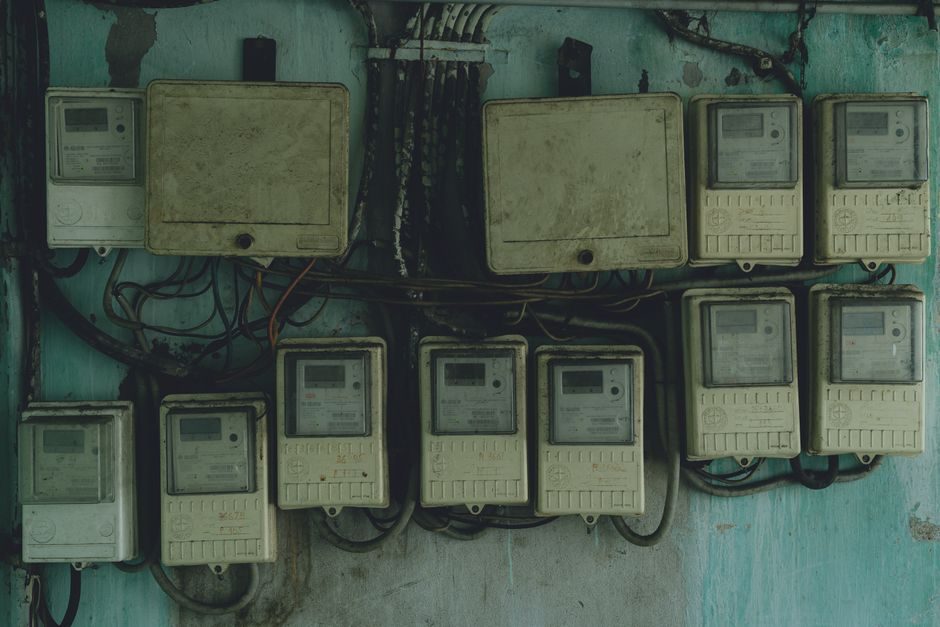
Smart meters and multifunction power meters are routinely conflated on procurement RFQs, yet they target different layers of the electrical network: smart meters are billing-grade endpoints with two-way communications, while multifunction power meters are panel-mount instrumentation for sub-metering, PQ analysis, and SCADA telemetry.
A working definition set: a smart meter is a certified revenue meter with a communications module (PLC, RF, NB-IoT, or cellular HAN/COSEM OBIS) tied to a utility head-end; a multifunction power meter is a DIN-rail or panel-cutout device exposing V/I/Hz/P/Q/S/PF/THD over RS485 Modbus or Ethernet. The selection hinges on whether the load is utility billing, tenant sub-billing, or plant power-quality monitoring.
Functional Scope: What Each Class Actually Measures
Multifunction meters cover 4-quadrant measurements — active, reactive, and apparent power per phase and total, power factor, Cosφ, frequency, demand, and THD — across AC and DC variants, with auxiliary supplies typically 85–264 VAC [S1]. The EMS-D6 family enumerates exactly that scope: phase voltage, phase current, 4-quadrant power, P.F., Cosφ, frequency, and MAX/MIN/AVERAGE statistical channels [S1]. Reactive-power-specific variants in the same catalogue, such as T203PM300-MU, add instantaneous plus average/max/min channels for A/Q/S, PF, frequency, and THD [S1]. Smart meters, by contrast, focus on billing registers: import/export kWh, kvarh, kVAh, time-of-use tariffs, and tamper logs, with a sealed enclosure meeting revenue-meter accuracy classes.
The MI 2992 reference unit extends multifunction scope to medium-voltage power generation, renewable systems, UPS power-quality assessment, and low-voltage site surveys, with harmonic analyzer functionality built in [S1]. For commercial sub-metering the MCM2400 series integrates a 4-channel three-phase energy meter in one chassis for branch-circuit monitoring [S1].
Communications and Protocol Stack
Smart meters communicate over utility-grade bearers: DLMS/COSEM over PLC, RF mesh, NB-IoT, or 4G, exposing OBIS-coded register objects to the head-end. The HAN-port reference design (Aidon/Hafslund/Eidsiva) parses an M-Bus serial stream into OBIS records per DLMS UA 1000-1 Ed. 12.0, with the COSEM Blue Book grammar of `startmark(7E) / packagelen(4-byte ASCII) / frameheader(9-byte) / payload / CRC / endmark(7E)` [S3]. Multifunction meters, in contrast, expose industrial protocols: RS485 Modbus RTU, Ethernet Modbus TCP, BACnet, M-Bus, and increasingly OPC UA (the SENECA R204-2-L-U explicitly returns single/three-phase values over OPC UA) [S1].
Practical rule: if the upstream system is a SCADA/EMS polling registers on a schedule, a multifunction meter on Modbus is the lower-friction path; if the upstream is a utility AMI head-end, a smart meter with a certified DLMS stack is non-negotiable.
Accuracy, Standards, and Revenue-Grade Certification
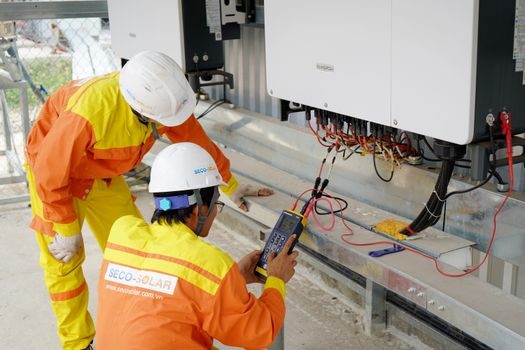
Smart meters deployed for billing must hit Class 0.2S / 0.5S / 1 accuracy per IEC 62053-22 (static AC active energy) and be tamper-sealed under MID or equivalent national regimes; multifunction meters used for sub-metering typically meet IEC 61557-12 PMD performance classes (PMD-DD/K70) for V/I/P/Q, which is a different conformance stack. The 3,500 Vac isolation between power circuits and the 10–30 Vdc logic supply shown on the SENECA R204-2-L-P is a typical multifunction-meter insulation envelope, not a smart-meter billing requirement [S1].
Accuenergy (Beijing) and Zhejiang Yongtailong (Tongxiang, ISO 9001/9000) are listed with parallel product lines that include both smart meters and multifunction meters, confirming that single-vendor sourcing across both classes is common [S4][S5]. Beijing Hezhong Huineng Electric similarly lists Power Meter, Smart Meter, and Single Phase Multifunction Meter as a single OEM/ODM product family [S2].
Decision Matrix: Pick by Use Case
Three criteria separate the two classes cleanly. First, billing authority: anything feeding a regulated tariff — utility revenue, tenant cost allocation under MID, or export credit — must be a sealed smart meter; sub-billing inside a plant boundary can be served by a multifunction meter with kWh registers over Modbus. Second, analytics depth: harmonic analysis to the 31st or 63rd order, flicker, sag/swell, and transient capture are features of PQ-class multifunction meters (MI 2992, PQRM5300), not standard smart meters [S1]. Third, integration effort: a smart meter with NB-IoT or PLC HAN requires an AMI head-end, COSEM object modelling, and key management; a multifunction meter on RS485 Modbus drops into an existing PLC/SCADA in an afternoon.
Concrete match-ups from the supplier index: SICAM P50/55 for panel/rail-mount display, MI 2992 for PQ site surveys, R204-2-L-U for OPC UA integration, EMS-D3/EMS-D6 for 4-quadrant sub-metering, EMM-4L-96 for backlit flush-mount 85–264 VAC aux supply with RS485 + pulse output, and MCM2400 for 4-channel branch sub-metering [S1]. For revenue-grade endpoints, OEM families at Accuenergy and Yongtailong cover smart and multifunction SKUs under one QA umbrella [S4][S5].
Where the Choice Is Forced

Smart meters are NOT a substitute for multifunction meters when: PQ compliance reporting under IEEE 519 or IEC 61000-4-30 is required; load disaggregation needs per-phase harmonics; or SCADA needs real-time P/Q/S over Modbus without a COSEM driver stack. Multifunction meters are NOT a substitute for smart meters when: the meter is the legal point of metering for a regulated tariff; a sealed register must be presented to a revenue authority; or the head-end system requires DLMS/COSEM OBIS objects rather than Modbus registers. Cross-wiring a Modbus multifunction meter into a COSEM AMI head-end is a known anti-pattern; cross-wiring a smart meter into a PLC expecting 100 ms Modbus polls is equally mismatched [S3].
Sourcing and Lead-Time Notes
Made-in-China directories list 2,000+ multifunction-meter manufacturers with 6,000+ products, with FOB reference points around US$5,000–8,000 per piece on portable/reference standard meters from Jiaxing/Zhejiang suppliers [S6]. Tier-1 multifunction-meter brands (SICAM, MI 2992, SENECA R204, Accuenergy, Yongtailong) carry 4–8 week lead times on panel-cutout SKUs and 10–14 weeks on PQ analyzers; smart-meter SKUs from the same vendors typically run 6–12 weeks depending on certification and HAN module choice. Spec-by-spec sourcing logic for a broader metering rollout is mapped in this Smart Meter Buying Guide 2026.
Trackable next signals to watch: (1) any revision to IEC 62053-22 static-energy accuracy class testing that tightens Class 0.2S acceptance bands; (2) growth in OPC UA adoption on panel-mount multifunction meters as Ethernet-APL rolls out in chemical and refinery brownfields; (3) consolidation between smart-meter and multifunction-meter vendors as the AMI/SCADA boundary blurs, signalled by single-vendor product lines already visible at Accuenergy, Yongtailong, and Hezhong Huineng [S2][S4][S5].