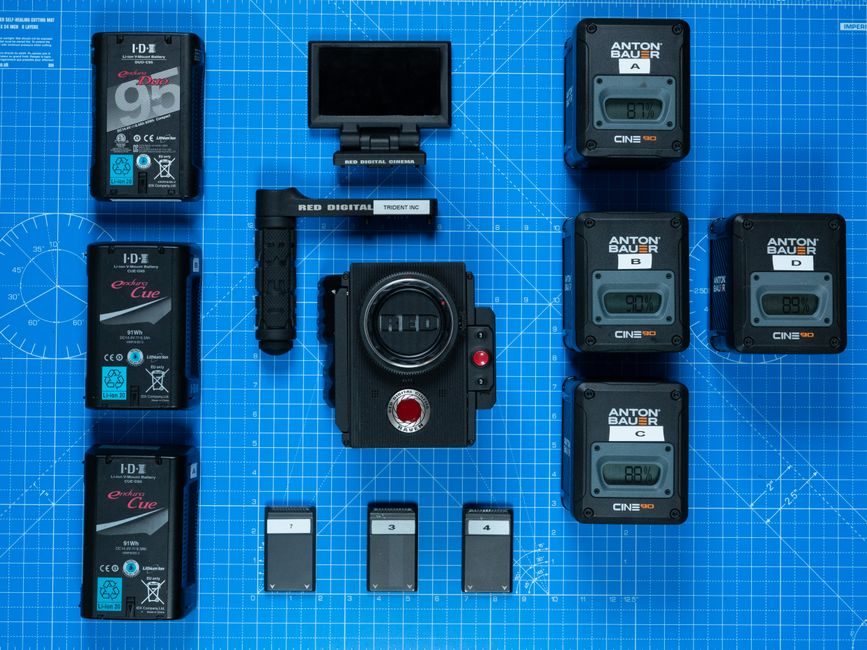
Panasonic, Samsung SDI, LG Energy Solution, Sony (now Murata), BAK and Lishen continue to anchor the 18650 cell supply that 2026 pack integrators build around, with CATL-aligned Chinese assemblers driving LiFePO4 pack pricing into new lows [S2][S5].
The 2026 commercial pack market runs on two parallel tracks: cylindrical 18650/21700 lithium-ion for power tools, medical carts and portable broadcast gear, and prismatic LiFePO4 packs for e-bikes, golf carts, telecom backup and residential solar [S1][S2][S5]. Wholesale listings on Made-in-China.com as of 2026-06-10 place a 14.8V 2600mAh 18650 2p4s replacement pack at US$1.85-1.94 (200-piece MOQ) and a 51.2V 105-150Ah LiFePO4 golf-cart pack at US$542-854 (1-piece MOQ) [S5].
Tier-1 cell makers still set the 18650 spec envelope
The 18mm x 65mm 18650 format originated as a Sony cost-reduction standard, and 2026 cell datasheets keep nominal voltage at 3.6V (some 3.7V) and the discharge cut-off at 2.75V [S2]. Across the Tier-1 lineup, capacity now spans 1500-3500mAh and continuous discharge ratings run 4.9-30A, so engineers match cells to load profile rather than brand alone [S2].
Panasonic NCR18650B delivers 3400mAh at a 4.9A continuous rating for low-power, long-runtime packs; LG INR18650HG2 and Samsung INR18650-30Q both push 3000mAh at 20A and 15A respectively for mid-drain tools; Sony VTC5D and Samsung 20S reach 25-30A for high-current packs [S2]. These four Japanese and Korean vendors, plus BAK, Lishen and the Chinese LARGE house cell, form the practical shortlist for industrial 18650 pack builds in 2026 [S2].
Pack integrator landscape: from China trading hubs to OEM pro-AV lines
Pack assembly is heavily fragmented and increasingly Chinese. Made-in-China.com's 2026 product index lists 917 rechargeable-pack suppliers covering Li-ion, LiFePO4, LiPo, Ni-MH and 18650 SKUs, with wholesale price ranges from US$0.43-0.86 per piece for bare 18650 cells up to US$3-500 per piece for finished packs depending on chemistry and capacity [S9]. A typical custom 18650 pack builder covers cell selection, mechanical structure, BMS, voltmeter and charger design as an integrated service for medical, security, comms and handheld-industrial buyers [S2].
Outside the merchant-assembly pool, OEM-branded pack programs continue for specialised end use. Panasonic Connect's pro-AV accessory line lists the AG-VBR118G (11,800mAh), AG-VBR89G (8,850mAh) and AG-VBR59 (5,900mAh) for its camera and camcorder chargers, with all three quick-charging on the AG-BRD50 dual-bay charger [S6]. That kind of closed-ecosystem pack is a counter-example to the merchant model and explains why broadcast and medical buyers still pay a premium for OEM-branded assemblies.
LiFePO4 pack pricing is the disruptive variable in 2026

LiFePO4 pack pricing has compressed sharply versus cylindrical Li-ion on a per-kWh view, and 2026 golf-cart and e-bike packs are the visible bellwether. Shenzhen Kebe lists a 51.2V 105Ah or 72V 105Ah LiFePO4 golf-cart pack with a 5-year warranty at US$542-854 per piece with 1-piece MOQ [S5]. A 36V e-bike Li-ion pack sized for a Prophete Alu-City 26-inch Navigator 1.4 frame is quoted at US$95 per piece at 50-piece MOQ [S10]. For comparison, a 14.8V 2600mAh 18650 2p4s consumer-replacement pack sits at US$1.85-1.94 per piece, but only delivers about 38Wh versus roughly 5.4kWh in the 51.2V 105Ah Kebe pack, so the per-kWh gap between small-format Li-ion and large-format LiFePO4 is what is reshaping integrator margins [S5][S10].
For a deeper read on how LiFePO4 and cylindrical Li-ion pricing interact at the pack level, see this China battery pack pricing and chemistry map, and for the cross-format outlook including flow cells, this pack-level LFP and flow-cell comparison lays the same numbers against flow-battery economics.
Consumer power-bank market: 38800-100000mAh solar units dominate the 2026 retail list
On the consumer side, the 2026 retail power-bank market clusters around 38800-100000mAh solar-capable units priced US$13.99-43.99, with price-per-mAh ranging US$0.000379-0.000520 across 18 listings on a 2026 price tracker [S3]. The 52800mAh 5V/3A solar bank with 4 built-in cables and dual outputs sits at US$19.99 (US$0.000379/mAh), the 100000mAh 35W super-capacity unit at US$39.99 (US$0.000400/mAh), and 80000mAh 35W 7-port units at US$39.99 (US$0.000500/mAh) [S3].
These numbers matter less for industrial spec work and more for context: the same Shenzhen and Dongguan vendors selling on Made-in-China.com also feed the consumer solar-bank channel, and the per-mAh curve flattens out above roughly 50,000mAh, meaning industrial buyers sourcing 18650 cells for higher-discharge packs pay a different price than retail power-bank assemblers [S3][S9]. For a sense of how this retail pricing sits against upstream raw-material cost curves, this lithium demand forecast 2026-2030 and this lithium-anode sourcing map at 33.6% CAGR put the pack-level numbers in raw-material context.
18650 chemistry and continuous-rating comparison for pack designers
Pack designers in 2026 select cells on three axes: nominal capacity (mAh), continuous discharge rating (A), and chemistry family (ICR/INR/NMC/NCR), with protected button-top variants adding roughly 5mm of length and PCM cost [S2]. The four key 2026 benchmarks are: Panasonic NCR18650B at 3400mAh / 4.9A (energy-density, low-drain), LG HG2 at 3000mAh / 20A (mid-drain tools), Sony VTC5D at 2800mAh / 25A (high-drain), and Samsung 20S at 2000mAh / 30A (power-density, e-mobility and high-C packs) [S2].
Chinese challenger cells from BAK, Lishen and LARGE all cluster in the 2000-3200mAh / 0.4-0.67A continuous range, which positions them for low-to-mid-drain replacement-pack and energy-storage use rather than high-disrate power-tool packs [S2]. The 5x to 50x gap in continuous rating between Tier-1 Japanese/Korean cells and Chinese merchant cells is the single most important selection variable, because mistaking a 0.67A BAK N18650CP-33 for a 20A HG2 in a 10A continuous pack application will trip the BMS within minutes [S2].
Selection criteria: matching a 2026 pack vendor to the use case
For medical-device, special-equipment, security and comms pack builds where a 1500-3500mAh 18650 2p4s or 4p4s configuration is enough, the practical shortlist is Panasonic, LG, Samsung, Sony/Murata, BAK, Lishen and LARGE, with pack assembly sourced from Chinese merchant integrators offering BMS-included packs from 100-piece MOQ at the consumer end and 1-piece MOQ on the LiFePO4 industrial end [S2][S5][S9].
For golf-cart, e-bike, residential-solar and telecom-backup applications above roughly 1kWh, the practical shortlist is CATL, EVE, CALB and Shenzhen Kebe-tier LiFePO4 pack assemblers, with 51.2V 105Ah packs at US$542-854 and 36V e-bike packs at US$95 representing the 2026 price floor on Made-in-China.com [S5][S10]. For broadcast and pro-AV OEM programs, the practical shortlist is the camera-OEM captive line (Panasonic AG-VBR series and equivalents from Sony, Canon, Blackmagic), where pack and charger are sold as a locked pair and 1-2 year OEM support is part of the price [S6].
Limitations, constraints and sourcing risks to flag in 2026

Three constraints bind 2026 pack sourcing. First, cell datasheet values are nominal, and the same 3000mAh 18650 from two different Tier-1 vendors will deliver different cycle life at 1C continuous, so vendor-specific cycle-test data should be requested alongside the standard datasheet [S2]. Second, Made-in-China.com pricing is MOQ-conditional, with 1-piece MOQ LiFePO4 quotes typically 10-20% above the 200-piece tier, and the cheapest 18650 cells at US$0.43-0.86/piece carry 100-1000 piece MOQs that exclude prototype-stage buyers [S5][S8][S9]. Third, the 14.4V 2500mAh Ni-MH packs on the consumer market at US$1.30-1.76 per piece are a different value chain entirely from Li-ion and LiFePO4 and should not be cross-substituted in BMS-controlled packs [S1].
For context on the broader industrial sourcing environment that surrounds this pack market, the sight glass price and cost guide 2026 and the baler machine price and cost guide 2026 use the same MOQ-and-tier methodology that 2026 pack buyers should apply to cell and pack sourcing.
The 2026 pack market is now structurally bipolar: a high-volume, low-margin cylindrical Li-ion and LiFePO4 merchant-assembly pool in China, and a low-volume, high-margin OEM-captive pool in Japan, Korea and the US. Trackable signals over the next two quarters: 18650 cell spot prices on Made-in-China.com (currently US$0.43-0.86/piece), 51.2V LiFePO4 pack floor prices (currently US$542/piece for 105Ah), and any new 21700-format pack entries from Samsung SDI, LG Energy Solution or CATL breaking the 18650-dominated merchant listings.
For component-level specifications, see pressure transmitter, flow meter, and industrial valve.