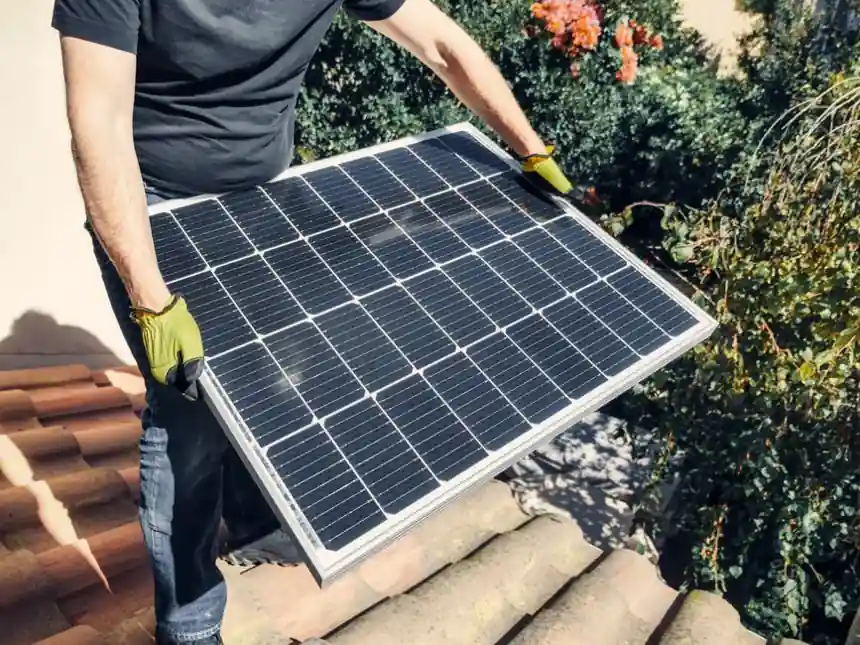
Solar photovoltaic glass consumption is projected to climb from 32.24 million tons in 2026 to 75.08 million tons by 2031 at an 18.42% CAGR, and the manufacturing footprint behind that volume is being rewired around Industry 4.0 controls rather than added furnace tonnage alone [S1]. Float lines still account for 67.78% of 2025 solar-glass volume, and rolled-glass output is forecast to expand at 19.56% CAGR through 2031, both routes now anchor cases for AI-based process control [S1].
Anti-reflective coated glass held 57.12% of 2025 solar PV glass share, while transparent conductive oxide glass is the fastest-growing coating chemistry at a 22.43% CAGR to 2031, a mix shift that raises the bar on optical inspection tolerance [S1]. The dollar-side view is steeper: the global solar PV glass market is sized at USD 17.09 billion in 2025 and is forecast to reach USD 236.29 billion by 2035, a 30.04% CAGR, which is the capital pool now chasing smart-factory retrofits [S3]. The two figures disagree on price-per-ton assumptions, so procurement should weight tonnage forecasts for furnace planning and revenue forecasts for instrumentation budgets, not collapse them into one number.
Where AI Actually Hits the Float Line
AI's clearest production role in 2026 is pattern recognition on the cutting and inspection stages, where the optical signatures of float glass, anti-reflective coatings, and TCO layers are distinct enough to classify in-line. Per the 2026 market write-up, AI determines the most efficient way to cut glass sheets, reducing material waste and saving expenses, and AI-driven optical sorters sort glass cullet by color and composition, enhancing recycling rates and decreasing energy for new glass production [S3]. These two applications, cut-path optimisation and cullet sorting, are where the payback maths is short enough for line managers to sign off without a board case.
The downstream layer is predictive: AI models forecast degradation rates and even support efficient material recovery at the end of a panel's life, feeding the EU's recycled-cullet demand curve, which Mordor Intelligence pegs at +1.9% impact on CAGR as a long-term driver [S1][S3]. On a glass-quartz comparison axis, solar PV cover glass and high-purity quartz share a brittleness and surface-defect sensitivity that makes sub-millimetre AI vision valuable, even though their downstream specifications diverge sharply. The practical spec gate is defect-classification accuracy at line speed: anything below 95% true-positive on bubble and inclusion detection forces a manual re-inspection station and erodes the labour-saving case.
Process Control Stack: Furnace, Tin Bath, Annealing, Coating
Solar-grade float lines run four control zones, and the Industry 4.0 retrofit question is which zones get smart sensors first. Furnace pressure and combustion stoichiometry are the easiest wins because the existing thermocouples feed directly into model-predictive loops. The tin bath is harder, optical-glass-index uniformity in the float bath is the spec that downstream module makers actually grade incoming glass on, and inline index meters have only become line-rate-viable since about 2022. [S1]
Annealing lehr temperature profiles drive residual stress, which feeds directly into the tempering step for glass-glass modules. The shift to bifacial and glass-glass modules is a +3.8% CAGR impact driver on the solar-glass market, and that shift doubles the per-watt glass intensity in qualifying projects, raising the cost of any lehr-related break rate [S1]. Coating-zone control, especially for anti-reflective and TCO stacks, is where the 22.43% TCO CAGR pulls in new spectrophotometry capex, because even a 1% coating-thickness drift shifts module output more than the line's scrap budget can absorb [S1].
The shared instrumentation language across these zones is pressure transmitter density on gas and air lines, often specified as HART or wirelessHART to feed the historian, and a parallel network of inline optical and temperature sensors. Buyers evaluating a retrofit should map the existing sensor count per zone first; the Industry 4.0 lift is usually a software-and-analytics layer over already-installed sight-glass and pressure hardware, not a full sensor replacement.
Anti-Reflective vs TCO vs Float vs Rolled: A 2026 Comparison

Selection between glass types in 2026 is a four-axis decision: volume share, growth rate, manufacturing process fit, and Industry 4.0 readiness. Anti-reflective coated glass is the volume leader at 57.12% of 2025 solar PV glass share, runs primarily on float lines (67.78% of 2025 process mix), and is mature enough that AI inspection delivers incremental rather than step-change gains [S1]. TCO glass is the chemistry growth story at 22.43% CAGR, but it demands tighter coating-zone control and is where new spectrophotometry and AI vision capex concentrates.
Rolled glass is the process story at 19.56% CAGR through 2031, preferred for patterned and ultra-clear figured substrates used in crystalline silicon cover glass, and it pairs with patterned-roller vision systems that are cheaper to retrofit than full float-bath instrumentation [S1][S3]. CIGS thin-film is the technology growth outlier at 23.42% CAGR by 2031, but the absolute volume is still small compared to crystalline silicon's 90.90% 2025 demand share, so its Industry 4.0 tooling market is narrower [S1].
BIPV and Transparent Glass: A Separate Control Problem
BIPV glass sits at the intersection of building-envelope and module-maker specs, and the volume ramp is steep: the global BIPV glass market is projected to grow from USD 8.78 billion in 2025 to USD 64.17 billion by 2035, at a 22.01% CAGR [S2]. In November 2025, AGC joined a Panasonic-led consortium to develop and demonstrate glass-type perovskite solar cells for BIPV applications, accelerating commercialisation of energy-generating building materials [S2]. That consortium move signals that the control challenge is shifting from glass-making to cell-on-glass integration, where line speed is set by the building-product lamination cycle, not the float bath.
On the spec side, BIPV glass-curtain-wall installations pull double duty as structural envelope and generator, so the Industry 4.0 stack adds façade-integrated power monitoring and DC-arc-fault detection to the usual float-line controls. Transparent solar panels, marketed for window retrofits, sit on a different curve again: their appeal is visible-light transmittance in the 30-60% band while still generating power, and the manufacturing spec is closer to architectural optical-glass than to crystalline silicon cover glass [S4]. Procurement teams should not conflate BIPV glass and transparent solar glass; the former is a structural power-generating cladding, the latter is a window-attached PV layer, and the certification regimes and inspection tolerances diverge.
Standards, Trade Rules, and the Cost of Getting It Wrong

Trade policy is now as binding as any standard on solar-glass sourcing. India imposed anti-dumping duties of USD 570-664 per ton on Chinese and Vietnamese solar-glass imports in December 2024, an instant landed-cost reversal that re-routed procurement back to domestic and Southeast Asian suppliers [S1]. China's Ministry of Industry and Information Technology issued draft rules in mid-2025 requiring that at least 60% of a module's glass be sourced within provincial borders, a local-content quota that complicates any pan-Asia procurement plan [S1]. Buyers running 2026 tenders should price these duties and content rules into the landed-cost basis, not treat them as tail risk.
On the factory side, the safety and quality standards governing float lines, hydrogen-fired furnaces, and lehr atmospheres remain anchored in IEC and ISO frameworks, with module-side testing carrying the IEC 61215 and IEC 61730 burden. Specific 2026-revision dates for those standards were not in the public material reviewed for this article, so spec writers should confirm the current edition with their certification body before freezing a tender. The Kyoto Protocol Act, cited as a regulatory tailwind, is also best treated as a backdrop policy rather than a procurement clause [S3]. For a broader view of how this sector's sister process, solar cell manufacturing, is also being rewired with Industry 4.0 tools, see the parallel spec map on module-line equipment adoption, and for the upstream polysilicon supply picture that sets furnace feedstock economics, the Asian-lead polysilicon outlook is the relevant companion read.
Who This Is For, and Where the Spec Fails
Industry 4.0 solar-glass retrofits pay back fastest on lines producing anti-reflective coated float glass at scale, where the cutting, cullet, and coating stages have the clearest waste-reduction cases [S1][S3]. They make less sense for a single-line rolled-glass operation running short runs of figured substrate, where changeover time and pattern-specific tooling dominate the cost structure. BIPV and transparent glass lines sit in between: the consortium-led perovskite push is moving fast enough that 2026 control specs may be obsolete within two product cycles, so locking in proprietary vision stacks carries risk [S2].
Where the 2026 spec map still has gaps: the public material does not give a defensible installed-base percentage for AI-vision systems on solar-glass lines, so any retrofit business case has to be built on first-principles waste and yield modelling rather than market-share benchmarks. The two headline forecasts also disagree on dollar size (USD 236.29 billion by 2035 per Precedence versus a 75.08 million-ton volume forecast by 2031 per Mordor), and the gap is a price-per-ton assumption that the buyer has to lock before sizing instrumentation capex [S1][S3]. For the defect-limit and compliance side of the spec, solar-glass quality standards is the directly relevant reference.
Trackable signals to watch through 2026 Q4: any new anti-dumping or local-content rule from the EU or GCC on solar-grade float imports, the first commercial perovskite-BIPV line capacity announcements from the AGC-Panasonic consortium or its peers, and the next round of float-line cullet-sorting retrofits in EU core markets where the +1.9% recycled-glass CAGR driver is concentrated [S1][S2].