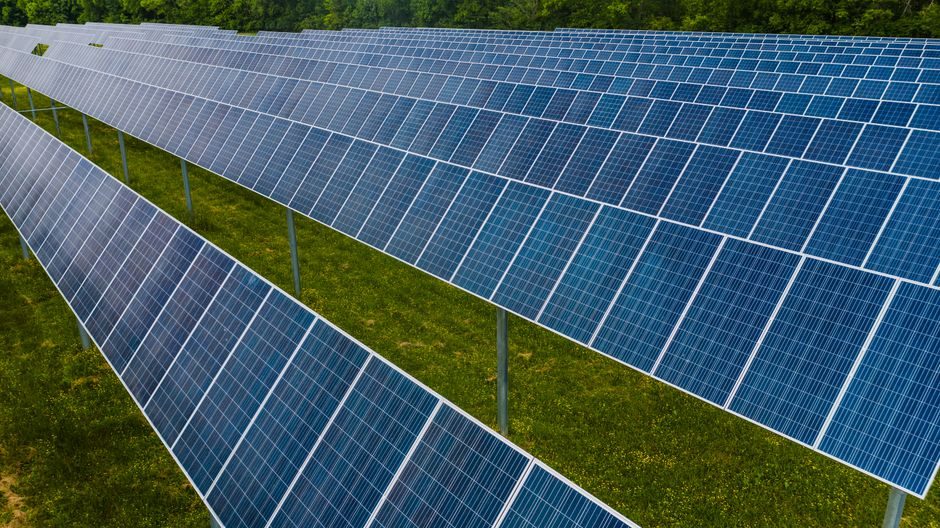
As of June 2026, the average installed residential PV system in Brooklyn, NY prices at $3.31/W including labor and balance-of-system, with the typical local system sized at 9.9 kW [S4]. That single number anchors the 2026 buyer-facing market and sits on top of a decade-long cost collapse: the same Singapore market guide reports that the cost of solar globally has declined by 89% in the last 10 years [S1].
The 2026 competitive landscape now spans at least four cell architectures (BSF, PERC, TOPCon, HJT), a long-tail of legacy OEMs still under warranty (Sharp, Sanyo, Kyocera, BP, Suntech, SolarWorld), and an active roster selling today (REC Alpha HJT, Canadian Solar HiHero HJT, plus incumbent mono PERC lines) [S3]. Solar lighting — landscape and garden SKUs at 5,000 pcs/year production runs — is a parallel, low-voltage branch of the same supply chain that lists inverter, module and balance-of-system vendors on a single sourcing portal [S2].
Installed Cost Benchmarks and What Drives the Spread
Brooklyn's $3.31/W installed figure as of June 2026 covers module, inverter, racking, labor, permitting and overhead for a 9.9 kW residential system [S4]. The same source flags that local installer Infinity Energy was named EnergySage "Installer of the Year 2025 & 2026," a back-to-back award that signals installer-level differentiation is now a procurement variable alongside module wattage and cell chemistry [S4].
Globally, the 89% decade-long cost decline cited for PV is the dominant price-shaping force; against that, residential electricity tariff inflation (Singapore's 2022 spike is the worked example) has shortened payback to 6–8 years on systems rated for at least 25 years of service [S1]. For a 2,480 sq ft Singapore home, a full-offset array runs 15 to 22 panels; an 11,000 kWh/yr load maps to 17–42 panels depending on per-panel wattage [S1].
Cell Architectures: BSF, PERC, TOPCon, HJT Compared
The four architectures competing in 2026 each carry a distinct spec profile. Monocrystalline PERC remains the volume mainstream, with TOPCon and HJT sitting one generation ahead on efficiency and temperature coefficient; the 2026 reference library covers Czochralski growth, BSF vs PERC vs TOPCon vs HJT, N-type vs P-type silicon, and half-cut cell design as the engineering decision points [S3]. HJT (originally Sanyo's HIT) is highlighted for its superior temperature coefficient, lower degradation and bifacial capability, which is why REC Alpha HJT and Canadian Solar HiHero HJT are the two named 2026 commercial offerings in the active-OEM roster [S3].
Polycrystalline is now a value-tier fallback rather than a default — the reference library explicitly asks "whether poly still makes sense for any application in 2026," and amorphous silicon (thin-film) is kept in scope for BIPV, RV, off-grid and overcast-climate duty, where Staebler-Wronski degradation is acceptable against the architectural fit [S3]. String-ribbon (Evergreen Solar's zero-kerf process) is documented as a commercial failure but remains relevant for owners of legacy ES-A-195/200/205 arrays still in the field [S3]. For buyers cross-checking panel interfaces against inverter or HMI panel monitoring stacks, this generation split is what determines the datasheet value to compare first.
Legacy OEM Long Tail vs Active 2026 Brands
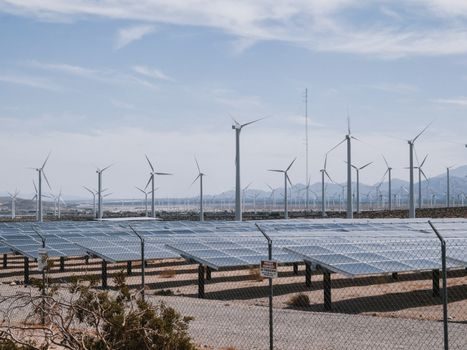
Sharp, Sanyo, BP, Suntech, Kyocera, SolarWorld, Schott and Evergreen all retain installed fleets even though several are out of Western retail; the 2026 reference library maintains full model specs for Sharp NT-175/NU-235/ND-224, Sanyo HIP-195/215/220, Suntech STP230/250/280, BP BP380J/BP3230T, Kyocera KC85T/KD230, Evergreen ES-A-195/200/205 and SolarWorld SW230–SW300 [S3]. Kyocera is singled out for a "legendary 30-year durability record" that affects residual-value and O&M pricing on second-life arrays [S3].
Active 2026 brands are REC (Alpha HJT) and Canadian Solar (HiHero HJT, plus TOPCon lines), with the inverter stack treated as the most critical single component — string, microinverter, power optimizer and hybrid topologies, MPPT behaviour and expected lifespan are the four inverter selection axes [S3]. Sharp's 1959–2026 history entry confirms it is no longer a primary Western retail brand but is still indexed for owners of installed product [S3]. The same long-tail data set is useful to engineers cross-referencing lightweight partition panel sourcing against rooftop load budgets for older arrays.
Singapore and Tropical Asia: Rooftop, Reservoir, Land Constraints
Singapore's solar market runs on rooftops and reservoir floats because land is the binding constraint, not solar resource [S1]. In Q2 2023 the North-East Region had the most solar panel installations, but the West region held the highest installed solar capacity at 476.4 MWp — a clear example of per-installation size differing sharply from installation count [S1]. A typical 2,480 sq ft home here needs 15–22 panels to fully offset annual load, against an 11,000 kWh/yr household mapping to 17–42 panels depending on per-panel wattage [S1].
Global LCOE data points to solar as the cheapest form of electricity generation in 2026, and Singapore's 2022 tariff spike is the worked example of how retail electricity inflation shortens payback [S1]. A typical residential array pays back inside 6–8 years against a 25-year-plus service life, which is the financial backbone of the rooftop business case across the region [S1].
Adjacent Product Branches: Solar Lighting and the B2B Sourcing Channel
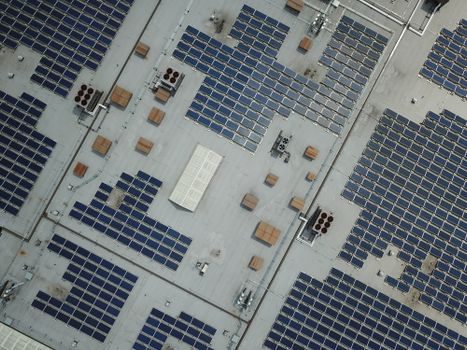
Outside grid-tied PV, the same China-based supply chain services 12V solar landscape and garden lighting, with 5,000 pcs/year production capacity for a single SKU and negotiable MOQ pricing on Made-in-China.com [S2]. The product attributes listed include 3 m height class (per the truncated spec) and on-site scanning plus precise digital duplication capability for buyer verification, all of which are typical for OEM-grade export SKUs [S2].
The Made-in-China sourcing portal — covering Agriculture, Construction, Electrical & Electronics, Industrial Equipment, Lights & Lighting, and Instruments & Meters — is the channel where the same factories that ship modules and inverters also list solar lamps, which means a B2B buyer can RFQ modules, lights and a digital panel meter in the same inquiry basket [S2]. Audited suppliers, secured trading service and SourcingAI are the platform's stated risk-reduction tools on the buyer side [S2]. The same diversification logic shows up in adjacent categories such as machine vision in smart manufacturing, where the 2026 camera-stack and SCADA integration choices ride on a comparable multi-vendor sourcing decision.
Selection Criteria: How a 2026 Buyer Should Compare
Four criteria separate the 2026 shortlist. (1) Cell architecture: mono PERC is the cost baseline; TOPCon and HJT carry an efficiency and temperature-coefficient premium; poly is the value fallback; amorphous thin-film is a duty-specific pick [S3]. (2) Brand status: active 2026 OEM (REC, Canadian Solar) versus legacy long-tail (Sharp, Kyocera, Sanyo, BP, Suntech, SolarWorld, Schott, Evergreen), with Kyocera's 30-year durability record as the residual-value benchmark [S3]. (3) Installed price: Brooklyn's $3.31/W for a 9.9 kW system is the U.S. residential reference as of June 2026 [S4]. (4) Installer channel: tier-1 vs tier-2 contractors, with awards like EnergySage Installer of the Year 2025 & 2026 used as a proxy for service quality [S4].
For B2B procurement teams, the practical filter is module datasheet value (wattage, Voc, Isc, temperature coefficient, bifaciality, degradation curve) crossed with inverter topology (string / microinverter / power optimizer / hybrid) and MPPT window, with the four inverter types each setting different stringing and shading rules [S3]. The same data set is what feeds the rooftop load budget for aluminum veneer panel and alc panel building-integrated envelopes, where panel mass per m² and wind load set the structural design point. Tracking two signals in the next 90 days will confirm or break the 2026 cost curve: the next quarterly EnergySage local-data refresh for installed $/W by ZIP, and any new HJT or TOPCon capacity announcement from REC or Canadian Solar, both of which are the named active-OEM reference points for cell-architecture pricing today [S3][S4].