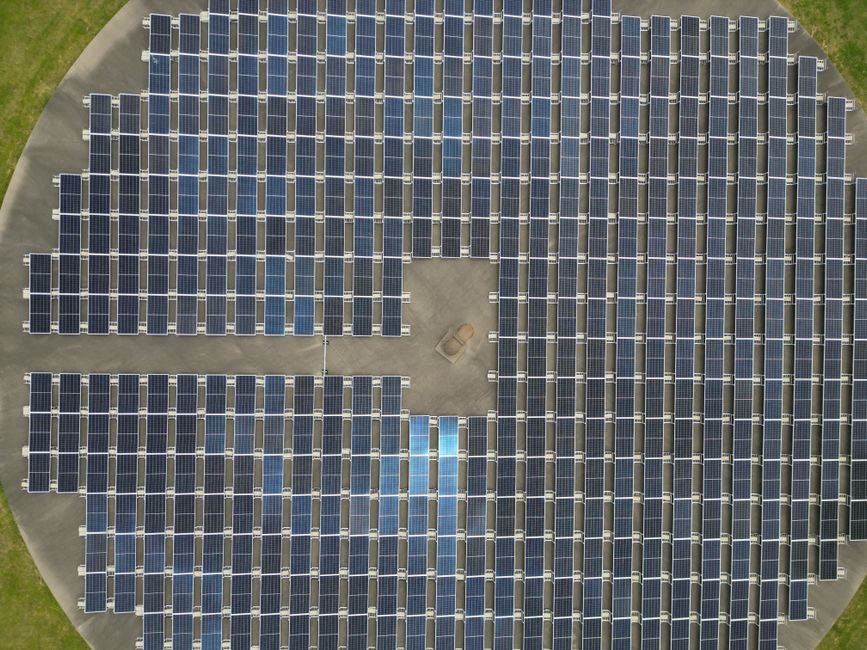
June 2026 U.S. residential pricing landed at an average of $3.01/W including installation in Michigan, equating to roughly $35,548 for a typical 11.82 kW rooftop system before incentives [S7]. That figure is the cleanest public benchmark for what an end-customer actually pays once labour, racking, inverter and permitting are absorbed, and it sets the demand-side ceiling for everything that flows down the module supply chain.
On the upstream FOB line, Chinese mono cell spot pricing on 2026-06-21 was $0.14–0.16/W at 5 W cells in 100,000 W MOQ lots, and $0.21–0.22/W at 320 W rooftop-grade cells in 1,000 W MOQ [S4]. Solar module waterproof DC1000V connectors with ISO 9001 / ISO 45001-certified suppliers cleared $1.897–1.937 per 100-piece pack on 2026-06-06 [S8], so the balance-of-system hardware is still cheap enough that BOS drag on $/W remains in cents, not dimes.
Residential Installed Price Benchmark and What It Contains
EnergySage's 2026-06 Michigan quote — $3.01/W installed, $30,216 to $40,880 range, on an 11.82 kW average system — is the most recent per-watt data point in the U.S. residential market [S7]. At the high end, $40,880 is roughly 1.35× the average, and the low end is 0.85×, so a buyer shopping three quotes should expect ±15 % just from installer overhead, not module cost. The This Old House 2026-05 review puts a single panel near $1,200 fully installed, which works out to about $3/W for a 400 W module and tracks the EnergySage number [S5].
Three variables dominate that installed number: module cost, inverter + racking, and soft costs (permits, labour, margin). Module cost per watt in 2026 is sitting near the bottom of its 10-year real range in China, but U.S. soft costs — interconnection studies, permitting queues, and financing overhead — have not fallen at the same rate, which is why $/W decline has slowed even as cell prices keep grinding lower.
Upstream FOB Bands: Cells, Modules and Absorbers
The 2026-06-21 mono cell quote screen is the tightest wholesale signal in the dataset: 5 W mono cells at $0.14–0.16/W (Flagsun, MOQ 100,000 W), and 320 W rooftop cells at $0.21–0.22/W (MY Solar, MOQ 1,000 W) [S4]. The 5 W cells are not what gets bolted to a roof — they are diced cells sold to module assemblers — so the apples-to-apples rooftop comparison is the 320 W line. At $0.21–0.22/W for the cell alone, a 400 W module in a TOPCon or HJT config typically adds 10–18 ¢/W for glass, EVA, junction box and frame, putting ex-works module cost in the high 20s to low 30s of cents per watt for an OEM volume buyer.
Adjacent SKUs reinforce the floor. Solar absorber panels — flat-plate thermal harvesters used in hot-water and process-heat loops — listed on 2026-05-17 at $95–$120 per 5-piece MOQ and $7,500 per 1-piece engineered skid from a Zhejiang Diamond supplier [S6]. Thermal-absorber pricing runs on copper-aluminium fin geometry and selective coating, not silicon cost, so it is a separate market but the same demand cycle. Camera-integrated solar SKUs (4G/WiFi hunting cameras, 6 MP SIM cameras) cleared $100–$120 per piece with solar panels in the 100–200 Wp class on 2026-06-07 [S2] — these are not utility products but they show the volume-tier floor for small-format crystalline modules with integrated electronics.
Downstream Stack: Connectors, Brackets and Soft Costs

Waterproof PV connectors with Hermaphrodite quick-plug bodies and DC1000V rating, ISO 9001 and ISO 45001:2018 audited, quoted $1.897–1.937 per 100-piece pack on 2026-06-06 [S8]. At one connector pair per module, that is roughly $0.005/W of BOS cost on a 400 W module, which means connector pricing is a rounding error in 2026 — the interesting question is no longer cents per pair but UL/TUV dual certification and IP68 vs IP65 ratings. Stackable, rack-mounted LiFePO4 storage paired with solar quoted $2,500–$3,000 per 51.2 V / 100 Ah unit on 2026-06-18, rated −20 °C to +60 °C operating [S1], and that 5 kWh class stack has become the de facto residential battery SKU on Chinese OEM channels.
Soft costs are where the 2026 number is sticky. U.S. permitting, inspection and customer-acquisition cost (CAC) for residential solar is reported in industry data as the single largest line item above modules and inverters, and it does not fall when polysilicon falls. This is why 2026 installed prices are not collapsing even with cell FOB below $0.22/W — installers are not passing through the full upstream deflation.
Module Technology Mix and 2026 Buyer Map
Market Research Future segments the global solar panels market through 2035 by technology (Solar PV and Concentrated Solar Power), by module type (Thin Film and Crystalline), by grid connectivity (On-Grid and Off-Grid), and by application (Residential, Commercial and Industrial) [S3]. The Market Research Future 2035 forecast segmentation by Technology (Solar PV vs CSP), Module Type (Thin Film vs Crystalline), Grid Connectivity (On-Grid vs Off-Grid), and Application (Residential, Commercial, Industrial) is the cleanest taxonomy for sourcing-side planning [S3].
For spec-driven buyers, mono-PERC and TOPCon modules in 2026 typically ship with a 25-year linear power warranty (0.55 % annual degradation) and IEC 61215 / IEC 61730 certification; bifacial gain of 5–20 % is commonly specified for ground-mount. Buyers cross-checking 2026 pricing should reference the HMI panel guide approach to part-number decoding, where every auxiliary input is itemised — the same discipline applies when reading a 2026 module datasheet: which IEC test, which degradation curve, which junction-box brand.
How the $/W Stack Breaks Down in 2026
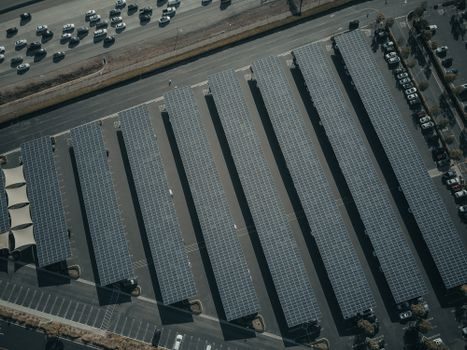
On a 10 kW U.S. residential system at $3.01/W installed [S7], the rough split is: modules ~25 %, inverter + racking + BOS ~25 %, labour ~20 %, soft costs (permitting, CAC, margin) ~30 %. At Chinese OEM ex-works ($0.25–0.32/W fully built module on a TOPCon line), a 10 kW module shipment is $2,500–$3,200 — the rest of the $30,116 system price is everything except the silicon. This is the structural reason why 2026 wholesale cell deflation does not translate 1:1 into 2026 retail price drops.
Industrial and commercial buyers in 2026 should anchor negotiations on the $0.21–0.22/W 320 W cell line [S4] as the FOB floor, then add 12–18 ¢/W for module assembly, and another 30–45 ¢/W for inverter, racking and DC cabling before containerised freight and duties. Comparing that landed cost against the $3.01/W U.S. residential retail band [S7] tells the whole margin story: the upstream market is rationalised; the downstream is local-services-driven.
Failure Modes and Sourcing Risks Buyers Should Price In
Three failure modes drive 2026 panel-related warranty claims, and each is a cost line buyers should negotiate explicitly: hotspot and cell-cracking under hail (>25 mm ice ball impact per IEC 61215), PID (potential-induced degradation) on strings above 1000 V DC without proper grounding, and LID (light-induced degradation) in the first year of PERC modules. The connector side is no different: the $1.897–1.937 quick-plug connector [S8] is fine for residential but for utility-scale buyers, mated-cycle rating (≥100 mating cycles), contact resistance (<0.5 mΩ), and UL 6703 / TUV Rheinland certification are the items that prevent arc-fault callbacks, not price.
For diversified industrial buyers using 2026 solar to hedge energy cost, the global EV production capacity map is a useful parallel read on how China-OEM channels move into downstream applications, and the die-casting machine supplier map shows the same Jiangsu/Zhejiang/Guangdong factory clustering that dominates solar module and racking OEM supply. Both confirm the structural story: 2026 solar pricing is set in a few Chinese coastal clusters, and the procurement playbook is to anchor on those factory lines.
2026 Outlook: Floor, Ceiling and Trackable Signals

The 2026 floor for a Chinese OEM 320 W mono cell sits at $0.21/W FOB [S4]; the 2026 ceiling for U.S. residential installed sits near $3.40/W at the high end of the EnergySage Michigan band [S7] and $1,200 per panel according to This Old House's 2026-05 retail review [S5]. Between those two, the system-level story is: continued gentle cell-price softening through the second half of 2026, installer-channel soft costs holding the line, and bifacial / TOPCon share creeping into commercial and industrial tenders as the LCOE math tilts away from older PERC lines. [S3] projects a multi-year volume growth profile through 2035 across the PV, CSP, on-grid and off-grid segments, which is consistent with the 2026 wholesale FOB quotes still clearing aggressively on volume-tier MOQ.
Trackable signals to watch in H2 2026: polysilicon spot price (the upstream driver of $0.14–0.22/W cell quotes), U.S. installer ASP drift in EnergySage's monthly data, Section 201 / AD-CVD rulings on Southeast Asian module flow (any change moves the $0.25–0.32/W Chinese ex-works baseline materially), and the cadence of TOPCon factory ramp announcements from Jiangsu and Zhejiang. The aluminum veneer panel reference and the lightweight partition panel breakdown both illustrate the same rule that applies to 2026 solar pricing: in a mature OEM market, the durable cost edge is not the cell price — it is the supplier's ability to ship certified, warrantied, traceable product on the volume-tier MOQ the buyer actually needs.