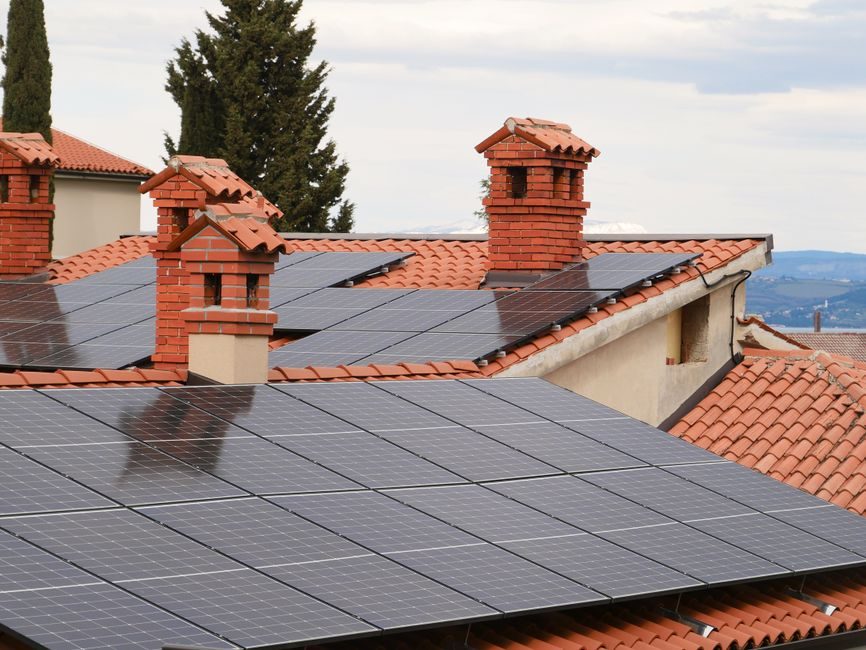
A turnkey solar panel production line in 2026 is sold as a 5 MW to 600 MW annual capacity block, with Chinese OEMs (SHUOGU, Ooitech, Shuofeng, Linksun) offering CAD-to-3D factory layouts covering cell sorting, stringer layup, lamination, framing, and final IV/EL test stations on a single supply contract [S2][S5].
Specification is anchored to ISO 9001:2015 quality management, CE machinery conformity, and the IEC 61215 / IEC 61730 module qualification family, with PV module laminators, BIPV-special laminators, and continuous glass laminating furnaces representing the differentiated capital items buyers compare [S1][S2].
Capacity Tiers and Throughput Anchors
Vendor published capacity bands cluster at 5 MW, 10 MW, 100 MW, 200 MW, 300 MW, and 600 MW annual output, with the 100–300 MW band dominating middle-market new builds across India, Vietnam, Indonesia, and the Gulf states [S2][S10].
For reference projects, Ooitech has documented a full 10 MW Bahrain production line using automatic solar cell stringer-layup cells feeding a downstream lamination stack, and a 300 MW overseas shipment of solar panel making machines completed by the same supplier [S2]. Output grades covered by these lines run from 275 W poly modules up to 380–400 W mono and half-cell modules, plus 1/3 and 1/8 shingled-string formats [S2][S5].
Process Stations: From Cell Sorting to Final EL
The canonical station sequence is: cell sorting and IV pre-test, automatic stringer, layup table (with optional robot loading), pre-lamination EL inspection, lamination, edge trimming, framing, junction-box attach, curing, post-lamination EL, hi-pot / hipot dielectric test, and final flash test [S2][S5].
Full Auto Solar Glass Loading Machines, Semi-Auto Solar Panel Laminators, PV Cell Stringer Layup Machines with robot integration, and Automatic Solar Module EL Defect Testers are the four capital items most frequently named in vendor BOMs [S2]. The lamination station — a vacuum sandwich encapsulating furnace for EVA / TPT / glass stacks — is the single highest-priced subsystem, and is also the most commonly re-purchased sub-line for new entrants, with double-layer photovoltaic module laminators now in serial production at SHUOGU [S1].
Certifications, Standards, and Audit Baseline
Buyers should anchor a 2026 line specification to ISO 9001:2015 (supplier QMS, mandatory on every credible Chinese integrator), CE marking for the complete machinery, and module-level testing under IEC 61215 (design qualification) and IEC 61730 (safety qualification) [S1][S2].
For bifacial, shingled, or BIPV products, line equipment is additionally expected to support UL 61730 (North America) and IEC 62941 (PV module manufacturing quality system), though the latter is generally buyer-driven rather than OEM-declared on the laminator itself [S1]. SHUOGU explicitly holds ISO 9001:2015, CE, and a Hebei Provincial High-tech Enterprise designation, with export shipments recorded to the United States, the United Kingdom, India, Indonesia, South Korea, Vietnam, Iran, and Malaysia [S1].
Layout, Footprint, and Material-Handling Logic
CAD-to-3D simulation of the full factory layout — including conveyor routing, MES-buffered WIP between stations, and shift scheduling — is now standard scope on 100 MW+ orders, with AnyLogic and similar discrete-event tools used to size buffer capacity and balance station cycle times before steel goes up [S5][S9].
The major line builders we cover — SHUOGU, Ooitech, and Shuofeng — all use a modular station concept so a 5 MW semi-auto pilot can later be upgraded to 100 MW full-auto by adding stringers, robots, and a second lamination furnace, without redesigning upstream conveyors or downstream test stands [S1][S2][S4]. For a broader view of how this stacks against other capital-equipment TCO math, see the Solar Panel Manufacturing Cost Breakdown 2026: BOM Stack, Drivers, and Tier Math reference and the Solar Panel Manufacturing Quality Standards: IEC, UL, and Factory Audit Map audit checklist.
Equipment Comparison: Auto vs Semi-Auto at the Lamination Cell
Full-automatic lamination lines (double-chamber vacuum, robotic glass loading, automatic EVA/TPT cut-and-place) deliver 1.5–2× throughput per operator versus semi-auto cells, at roughly 2–3× the capex per station, with payback typically claimed inside 24–36 months for any line above 50 MW annual output [S1][S2].
For new entrants under 30 MW, semi-auto laminators with manual layup remain dominant because the lower capex (often 30–50% of a full-auto cell) protects cash flow and the throughput penalty is masked by lower shift counts [S2]. This same full-auto / semi-auto trade-off shows up in the broader industrial-equipment cost literature; for context, the Plasma Cutter Total Cost of Ownership: 5-Year Spend Stack and Driver Map walks through the same auto-vs-semi decision math for fab shops.
Sourcing Channels, Lead Time, and Export Logistics
Direct OEM contracting remains the primary route, with engineering design solutions typically offered free of charge by Chinese builders and contract execution running 6–9 months for a 100 MW greenfield in Asia, longer for first-time buyers needing on-site commissioning [S5][S7].
Independent B2B inquiries on platforms such as globalimporter.net confirm sustained Indian buyer interest in complete Chinese production-line packages through 2026, and Okorder-listed CNBM offerings explicitly market shorter construction cycles and faster cost recovery as differentiators versus European line builders [S7][S8]. A typical engagement is paid in three milestones — 30% on order, 60% on FAT (factory acceptance test) video, 10% on SAT (site acceptance test) — with the laminator and stringer cells shipped first and framing/junction-box stations last [S1][S7].
What This Line Is For — and What It Is Not
A 2026-vintage Chinese turnkey line is a fit for greenfield module-assembly plants in the 5–600 MW range, for buyers who already have cell sourcing (TOPCon, PERC, HJT, or shingled) secured and who can fund USD 5–25 M capex depending on tier [S2][S5][S10].
It is not a fit for buyers seeking wafer-to-cell integrated ingot / wafering capacity (that is a separate USD 100 M+ capex class), nor for producers targeting space-grade or MIL-STD module certification, where IEC 61215 alone is insufficient and additional environmental and mechanical-load testing is required [S1][S2]. Buyers in the latter categories should contract a Western integrator or specify an explicit deviation list against the standard Chinese BOM.
Trackable signals for the next buying cycle: confirmation of which Chinese OEMs formally list IEC 61215-1:2021 and IEC 61730-2:2024 test reports on their FAT packages, and how the post-2026 cell-technology mix (TOPCon vs HJT vs shingled) shifts the lamination temperature window and EVA/TPT stack-up on shipped lines [S1][S2].
For component-level specifications, see molding line, automatic molding line, and conveyor sorting line.